Kawahara Keiga
Kawahara Keiga (1800-1853) was one of the foremost Japanese painters operating at the pivotal intersection of Eastern and Western visual culture during the late Edo period. Based primarily in Nagasaki, and frequently serving the Dutch Factory on Dejima, Keiga held the rare distinction of working directly for European patrons during Japan's period of national seclusion. His active career spanned over fifty years, during which he served not only as a portraitist and chronicler for local society in Nagasaki, Edo, and Kyoto, but critically, as a visual ethnographer for foreign interests.
Keiga’s versatility was extraordinary, encompassing a comprehensive documentation of life around him. His portfolio included detailed natural history studies- from flora and fauna, including plants, fishes, birds, reptiles, and crustaceans- to broader social scenes, landscapes, and formal portraits. The meticulous realism inherent in his style satisfied the Western demand for accurate visual data, creating some of the most comprehensive extant records of Japanese material culture and biological specimens accessible to Europe during the 19th century.
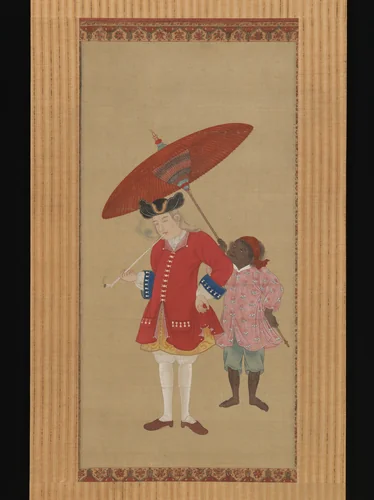
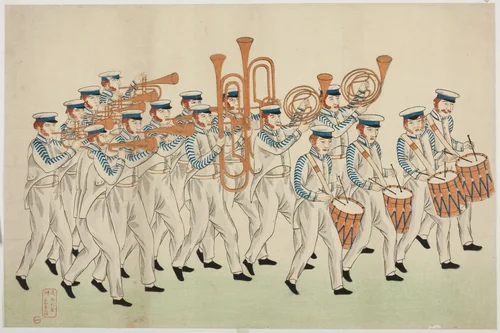
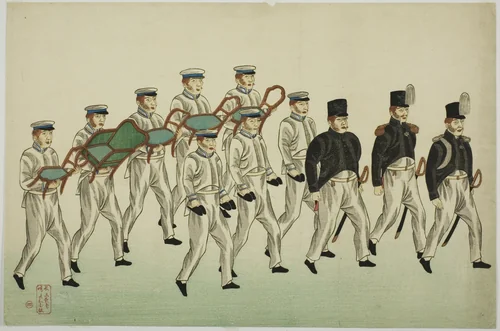
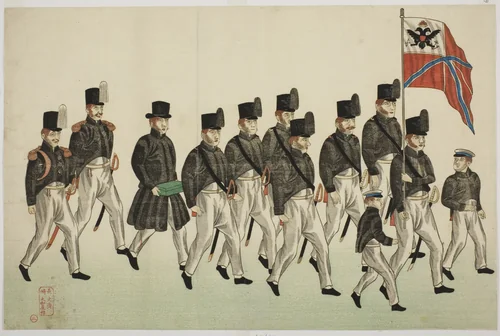
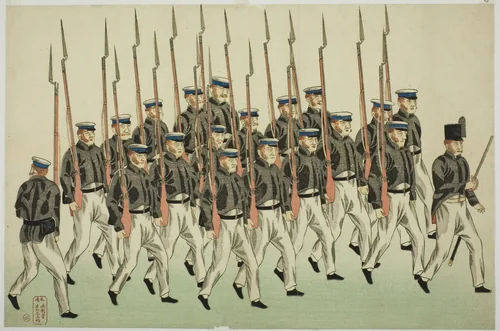
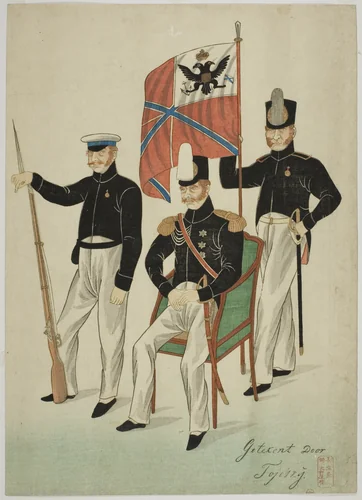
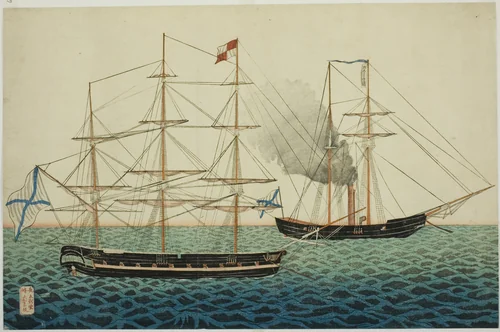
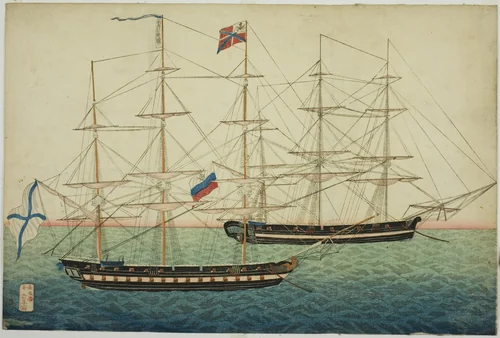
His historical impact is particularly visible in a specialized corpus of work focused on foreign interaction. This includes the subtle observation of cultural exchange seen in works like Dutchman with a Servant and the fascinating series of documentation prints, Roshia seigi shashin kan (Album of seven prints of Russian Army and Warship). This album, featuring scenes such as Procession of Russian Officers and Procession of Russian Soldiers with Bayonets, offers a highly unusual look at foreign military presence. Keiga documented these imposing figures- their distinctive uniforms and precise marching patterns- with an almost clinical clarity, reflecting the intense curiosity and guarded documentation that defined Japan’s official encounters with the West. These Kawahara Keiga prints and paintings offer museum-quality documentation of events that few Japanese citizens would have ever witnessed.
Today, Kawahara Keiga’s legacy endures through his vast output held in major institutions worldwide, including the Metropolitan Museum of Art and the Art Institute of Chicago, as well as collections in Japan and the Netherlands. His work provides an invaluable- and occasionally wry- visual account of life when Japan was selectively opening its doors to the outside world. Many of his historical illustrations, being over a century old, are now available as royalty-free downloadable artwork, ensuring that this crucial record of cross-cultural observation remains widely accessible.
Source: Wikipedia · CC BY-SA 4.0