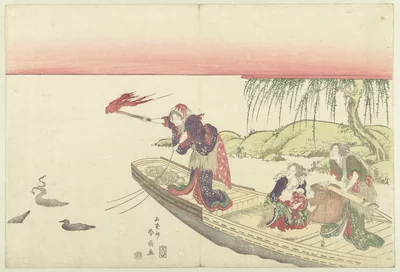
Katsukawa Shunsen
Katsukawa Shunsen, also recognized under the prestigious professional name Shunkō II, holds a significant place among the second generation of designers working within the influential Katsukawa school of ukiyo-e. Born in 1762, his career trajectory illustrates the fluid movement between traditional artistic lineages during the late Edo period.
Shunsen’s formal artistic training began not within the printmaking ateliers, but with the Rimpa school artist Tsutsumi Tōrin III. This early influence provided a foundation in decorative composition and stylized representation. However, his direction shifted dramatically around 1806 or 1807 when he entered the studio of Katsukawa Shun'ei, aligning himself with the school defined by its robust and expressive yakusha-e, or actor prints. Shedding the moniker Kojimachi Shunsen, he dedicated himself to this specialized form of portraiture.
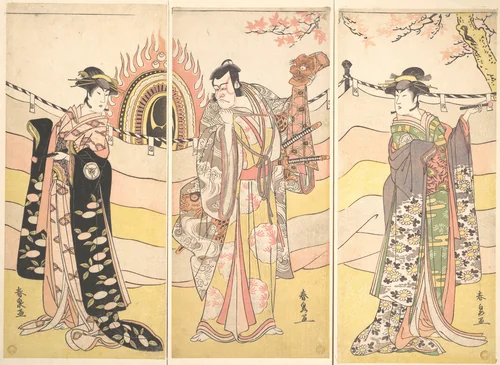
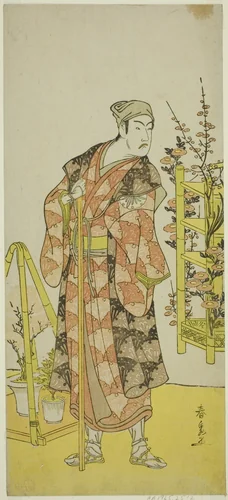
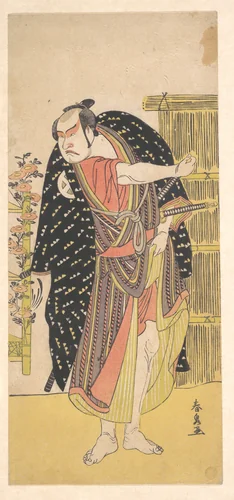
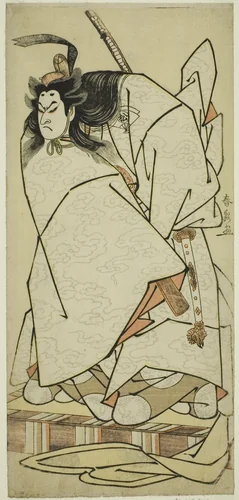
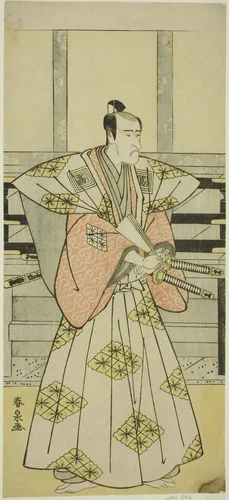
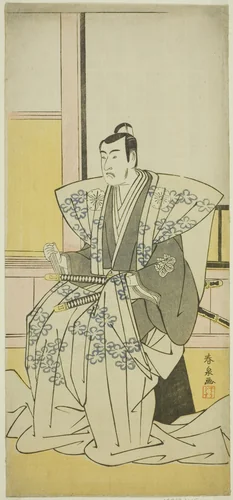
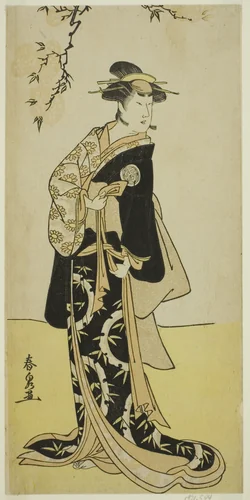
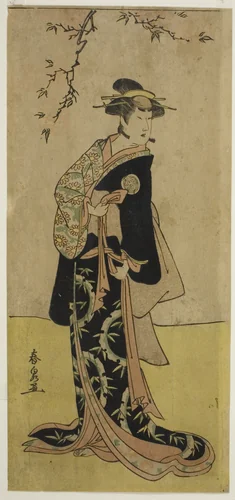
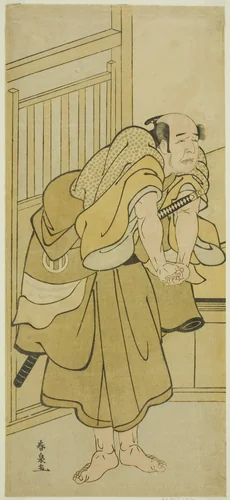
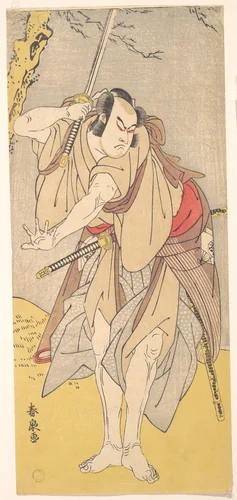
His active period as a print designer spanned roughly sixteen years, from 1805 to 1821, producing works that meticulously documented the Kabuki stage. Shunsen excelled at capturing actors in famous roles, such as his depictions of the celebrated Ōtani Hiroji III or the actor Onoe Matsusuke I as Ashikaga Takauji in the 1786 performance of Kumoi no Hana Yoshino no Wakamusha. His works from this era are recognized for their technical precision and remain highly valued, featuring today as museum-quality pieces within major collections such as the Metropolitan Museum of Art and the Art Institute of Chicago.
The final official transition of his career occurred in 1820 when he formally succeeded the first Shunkō, becoming Katsukawa Shunkō II and inheriting one of the most respected names in the school’s history. Intriguingly, despite this achievement within the print world, Shunsen ceased designing Katsukawa Shunsen prints altogether in the late 1820s. He chose instead to focus entirely on the delicate art of painting ceramics, providing a surprising postscript to a career otherwise dedicated to theatrical woodblock imagery. He died around 1830. Today, many of these influential designs are available as high-quality prints through public domain initiatives, ensuring continued access to his legacy.
Source: Wikipedia · CC BY-SA 4.0