Katsukawa Shuncho
Katsukawa Shunchō was a distinguished designer of ukiyo-e woodblock prints, active during the highly productive late Edo period, specifically from about 1783 to about 1795. Though his documented career span was relatively brief, his contributions to the Katsukawa school cemented his reputation among the foremost artists focusing on theatrical portraiture and urban elegance in the years just prior to the rise of Utamaro.
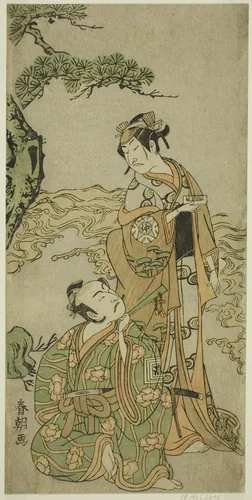
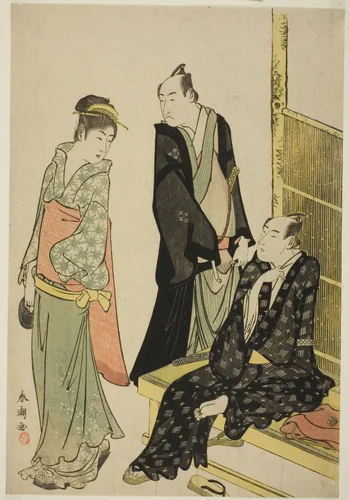
Working primarily in the refined medium of the multi-color print, Shunchō demonstrated exceptional facility across several key genres. He designed powerful yakusha-e (actor portraits), capturing the rigid intensity required for the Kabuki stage. His works in this area, such as the dramatic portrayal found in The Actors Nakamura Nakazo I as Matsukaze, display the meticulous costuming detail and dramatic focus characteristic of the Katsukawa tradition.
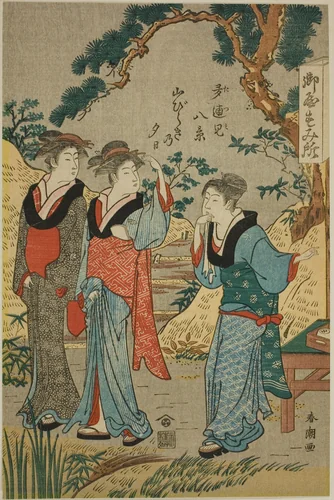
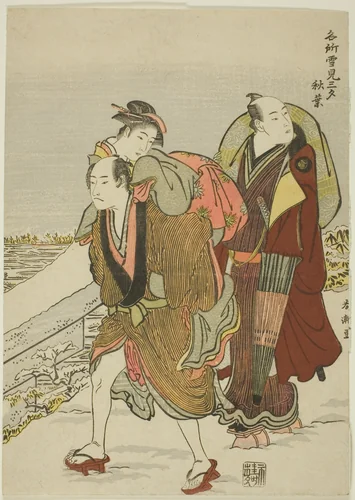
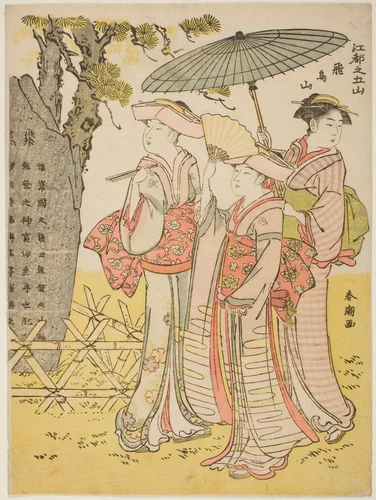
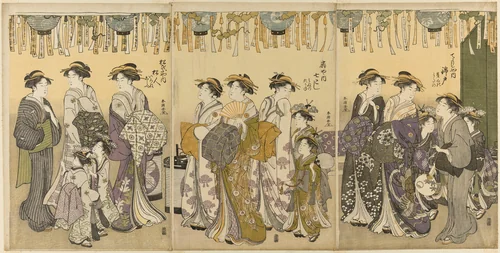
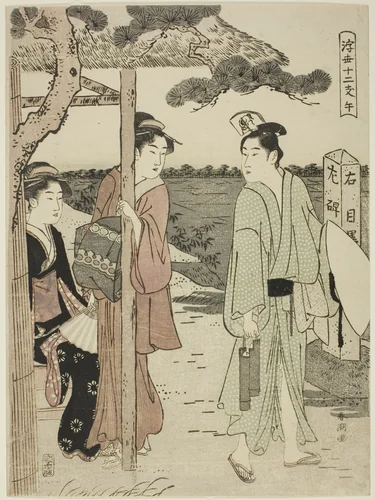
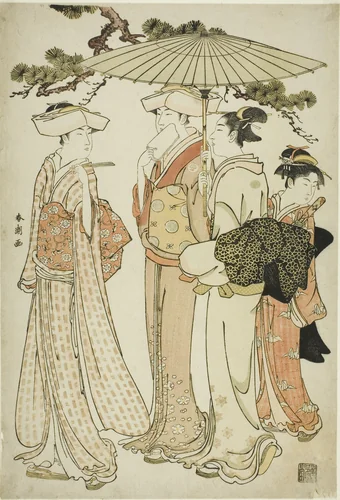
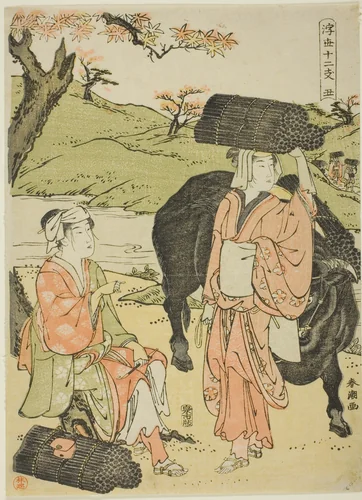
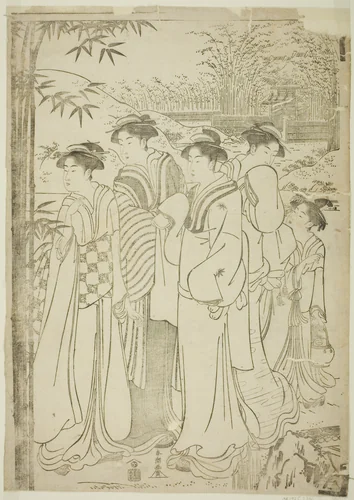
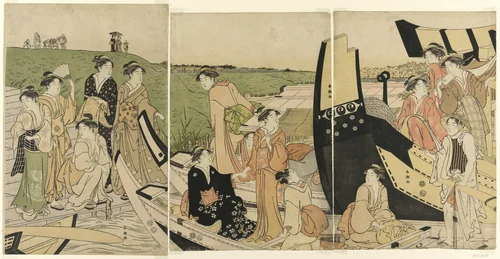
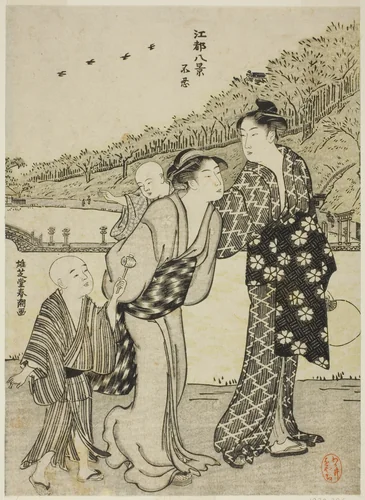
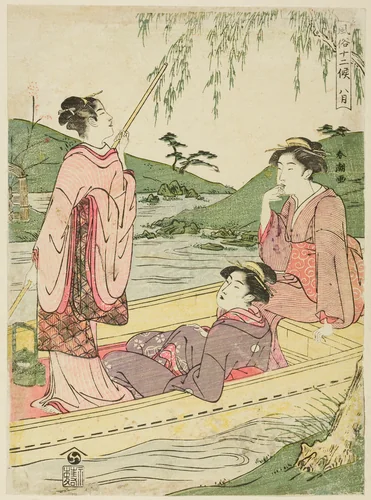
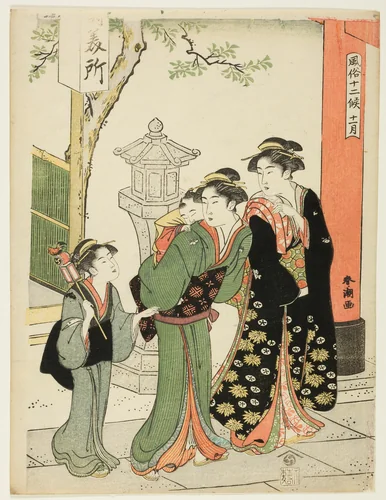
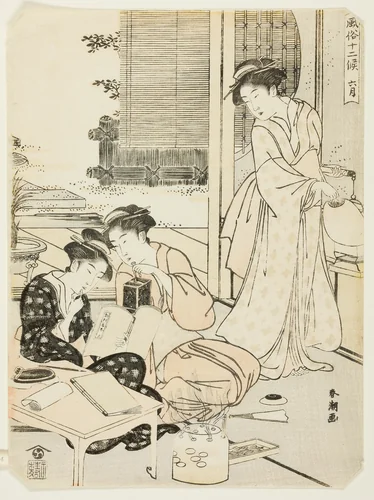
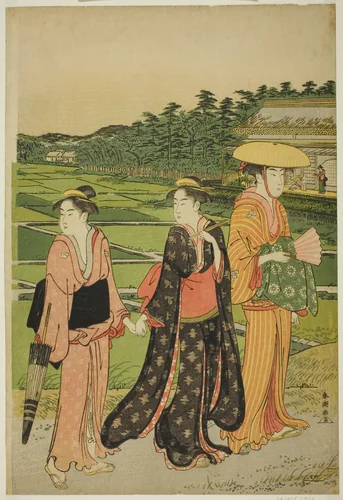
Simultaneously, Shunchō excelled in producing elegant bijin-ga (pictures of beautiful women) and evocative scene prints focused on famous Edo locales. He often grouped these topographical works into coherent series, such as "Five Hills of Edo," which included compositions like Asuka Hill, or seasonal vignettes like Akiba, from the "Three Evenings at Spots Famous for Snow Viewing." His output reveals a consistent mastery of graceful linearity and the sophisticated, often subdued, color palettes favored in the Kansei era. A curious detail is how often Shunchō placed his figures slightly off-center, lending a subtle dynamism to even the most static, idealized poses. His depiction of social life, exemplified by works like Couresan Admiring Chrysanthemums, consistently portrays his subjects with reserved dignity and high aesthetic refinement.
Today, Shunchō's original prints are preserved in major international repositories, including the esteemed collection of the Art Institute of Chicago. While the relatively small corpus of authenticated Katsukawa Shuncho prints means that surviving originals are prized by collectors, many of these museum-quality designs have entered the public domain. This ensures that high-quality prints and downloadable artwork remain widely available for art historical study and public appreciation.
Source: Wikipedia · CC BY-SA 4.0