Karl Friedrich Schinkel
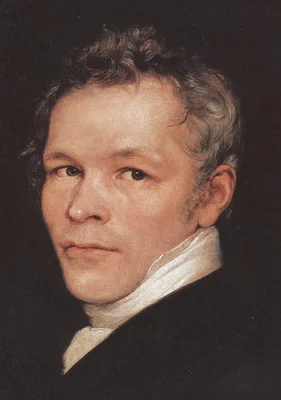
Karl Friedrich Schinkel (1781-1841) stands as the singular nineteenth-century Prussian genius whose multidisciplinary vision fundamentally reshaped the cityscape of Berlin and defined the aesthetic trajectory of German culture. Schinkel was a polymath who seamlessly transitioned between the demanding roles of architect, city planner, painter, and designer of furniture and stage sets. His influence extended far beyond Prussian borders, establishing him as a decisive leader in both the International Neoclassical movement and the concurrent Gothic Revival, defining principles that dictated architectural approach for the subsequent century.
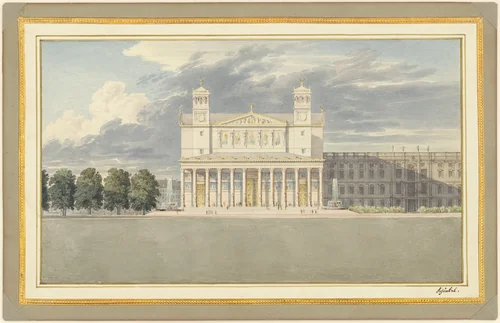
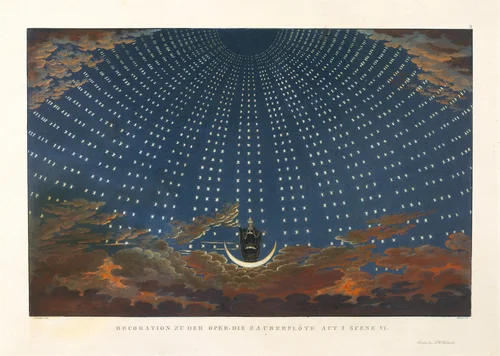
Schinkel’s most enduring architectural achievements are concentrated in and around Berlin, where his designs profoundly molded the urban landscape. His Altes Museum (Old Museum) remains one of Europe’s most important classical structures, an international prototype for the national art museum reflecting a new, egalitarian commitment to public access to culture. Equally revolutionary, the Bauakademie (School of Architecture), with its exposed brick and functionalist clarity, is justly considered an intellectual forerunner of modern architecture. It is often overlooked that this titan of permanent structure also produced highly temporary stage sets, demonstrating a restless imagination equally suited to monumental stone and ephemeral theatrical illusion.
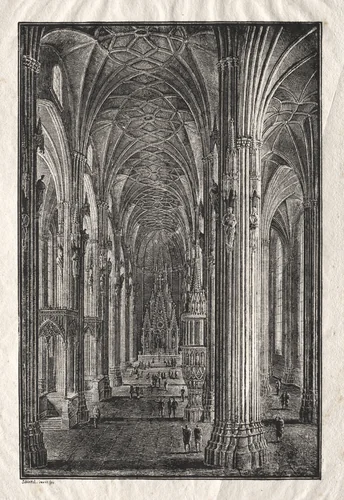
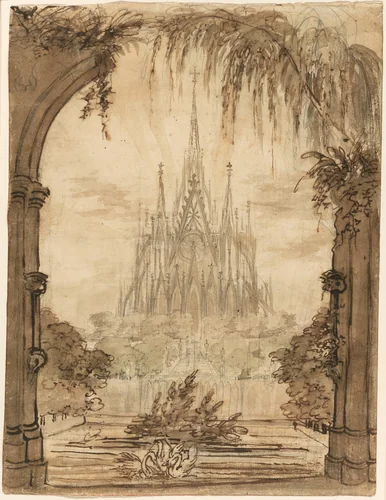
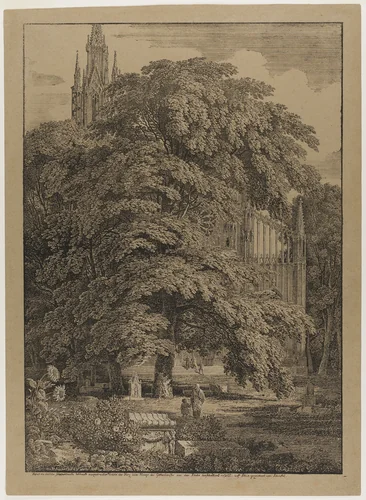
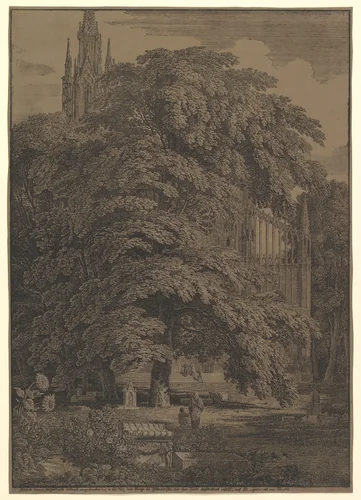
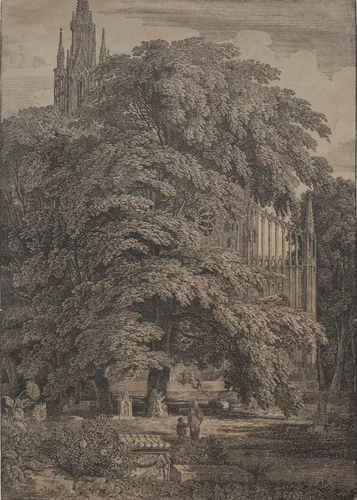
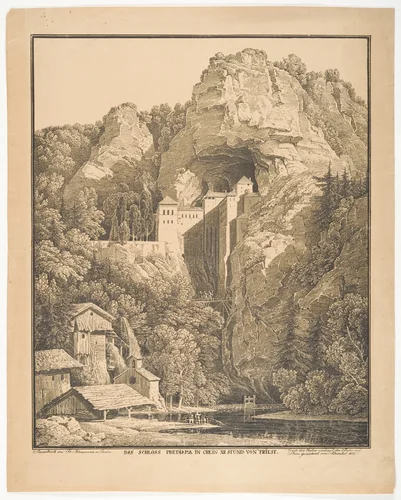
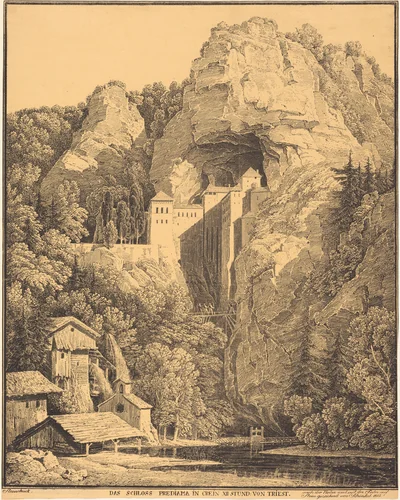
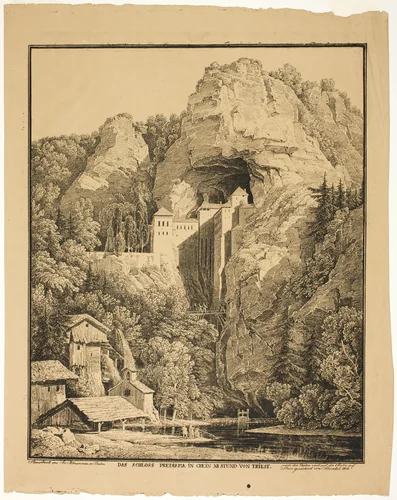
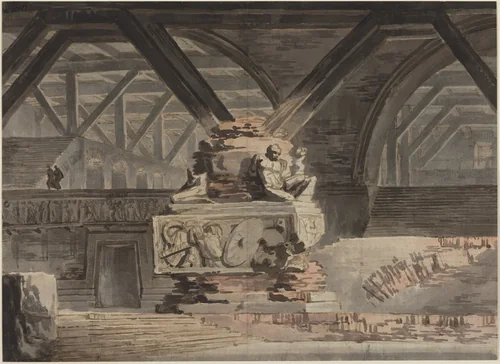
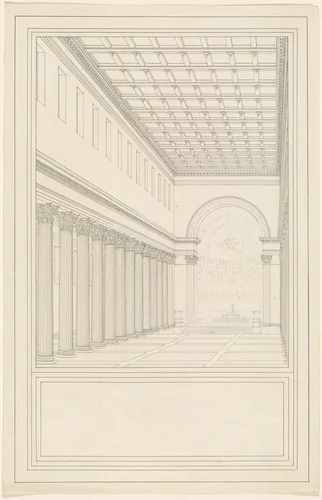
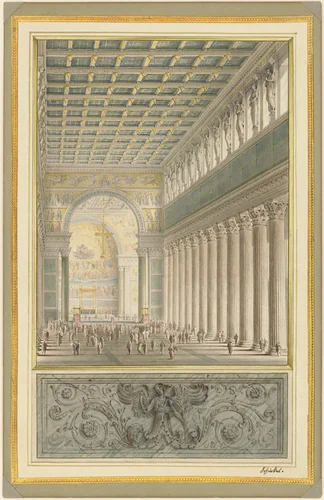
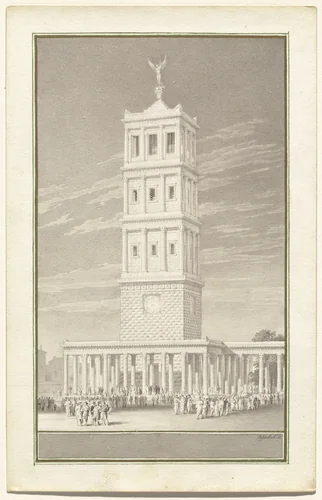
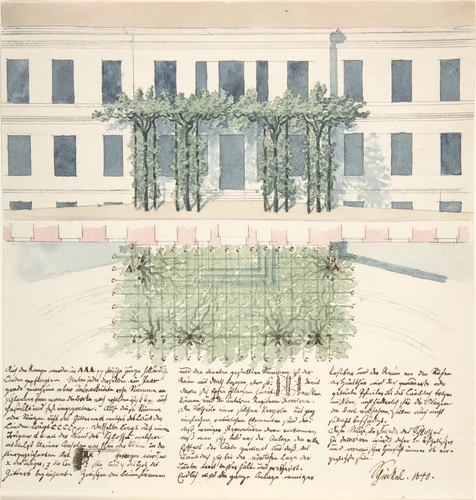
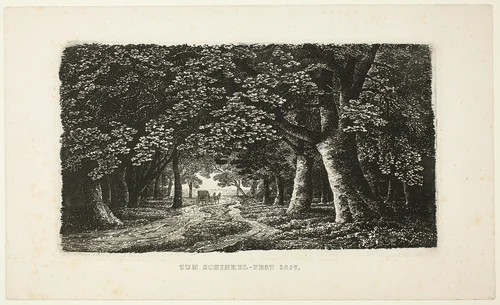
While celebrated primarily for his physical structures, Schinkel’s surviving drawings and prints offer critical insight into his Romantic sensibilities and theoretical approach to architecture. Works such as Gothic Church among Oaks or the striking Interior of St. Stephen's Cathedral in Vienna articulate an atmosphere of poetic melancholy, often utilizing the dramatic tension between nature and historic structure. This side of his output reveals the deep influence of travel and an idealized vision of architectural history.
The scope and ambition of his output have ensured his permanent status in major international collections, including the Metropolitan Museum of Art and the National Gallery of Art. Today, collectors can view a selection of Karl Friedrich Schinkel prints and original works, with many of his key graphical works available as downloadable artwork. This democratization of access ensures that his comprehensive dual legacy, encompassing both vast, definitive buildings and intimate, visionary sketches, remains widely accessible in the public domain.
Source: Wikipedia · CC BY-SA 4.0