Karl Caspar
Karl Caspar was a German painter and graphic artist whose known activity centers almost exclusively around the volatile artistic landscape of Munich immediately following the First World War. Though biographical records confirm a longer life and career based primarily in the Bavarian capital, Caspar’s documented contribution to art history is concentrated into a remarkably intense period between 1917 and 1919, characterized by a focused engagement with graphic media and influential artistic journals.
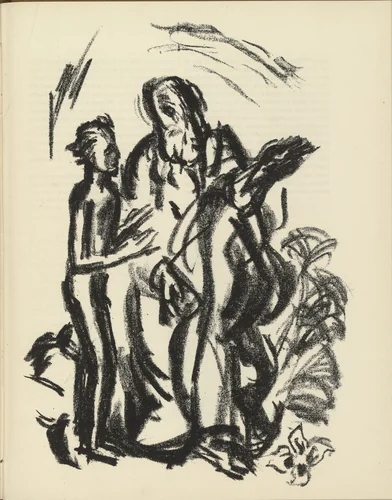
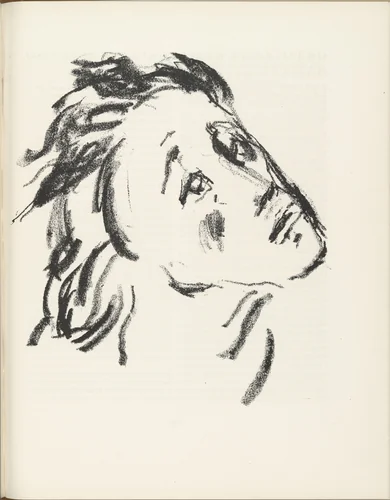
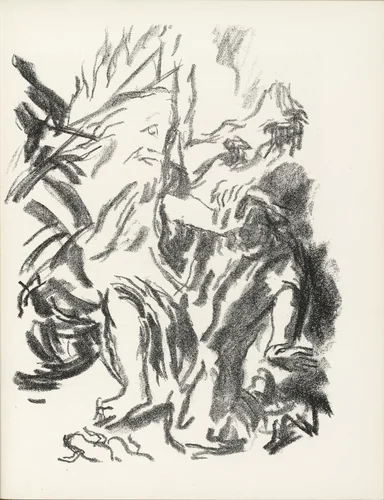
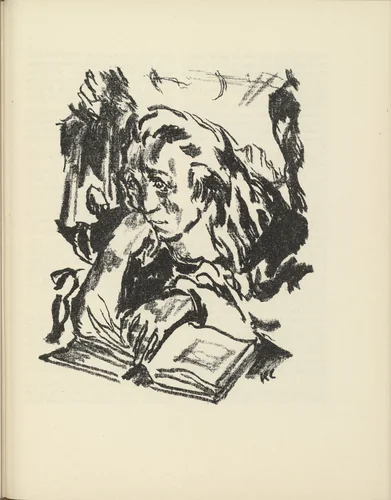
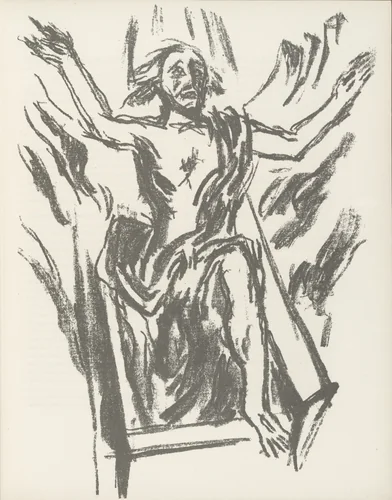
This brief but significant concentration of output established Caspar as a contributor to the post-war German graphic scene. His work appeared repeatedly in major literary and art publications, particularly the Münchner Blätter für Dichtung und Graphik, where his illustrations often accompanied texts exploring themes of spirituality and existential angst that defined the era. Pieces such as The Burning Thornbush (1919) and the striking Head of Disciple (Jünger-Kopf) (1919) display a rigorous, often monumental graphic style imbued with the heavy spiritualism favored by late Expressionist circles.
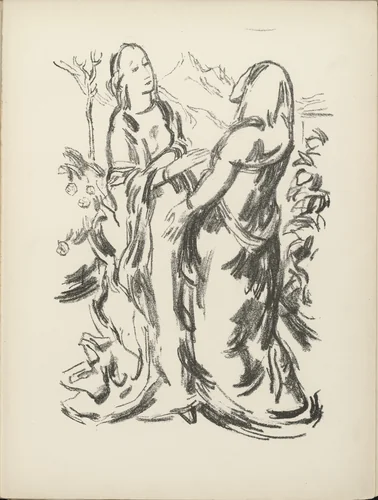
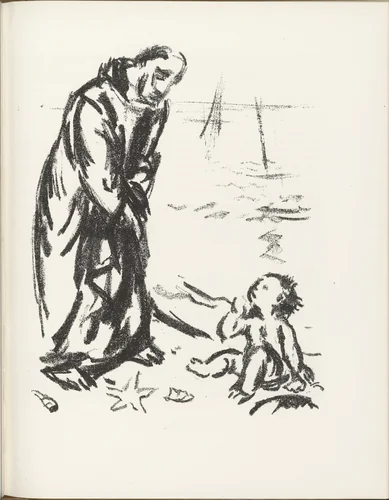
Caspar’s reputation rests on his capacity to translate deep religious and mythological narratives into stark visual forms. This sensitivity is evident not only in his periodical work, but also through his inclusion in the important anthology Deutsche Graphiker der Gegenwart (German Printmakers of Our Time), where his powerful print The Visitation (Heimuchung) was reproduced. The artist’s ability to secure publication in such high-quality print venues during a period of extreme economic and cultural disruption underscores the recognition he achieved among his contemporaries.
It is perhaps the greatest curiosity of Caspar’s graphic career that his intensive run of publications across six known periodicals and one major book ended almost as swiftly as it began after 1919. This rapid withdrawal from the public eye makes the existing collection of Karl Caspar prints a concise and compelling archive of Germany’s post-war graphic sensibilities. Today, reflecting their museum-quality importance, Caspar’s works are held in major institutional collections, including the Museum of Modern Art, ensuring the continued accessibility of this focused body of work for scholars seeking downloadable artwork from the period.
Source: Wikipedia · CC BY-SA 4.0