Karl Blechen
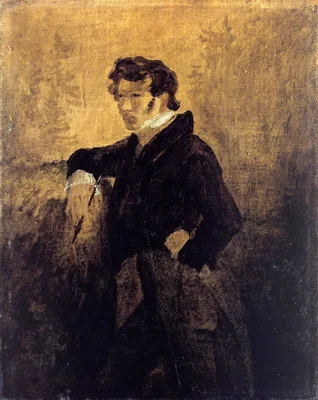
Carl Eduard Ferdinand Blechen (1798-1840) stands as one of the most compelling German landscape painters of the early 19th century. A respected academic, he served as a professor at the prestigious Academy of Arts in Berlin, influencing the following generation of German visual culture through both his teaching and his intensely observed works. His art provides a complex bridge between the highly formalized traditions of neoclassical aesthetics and the emergent focus on subjective, emotional experience characteristic of Romanticism.
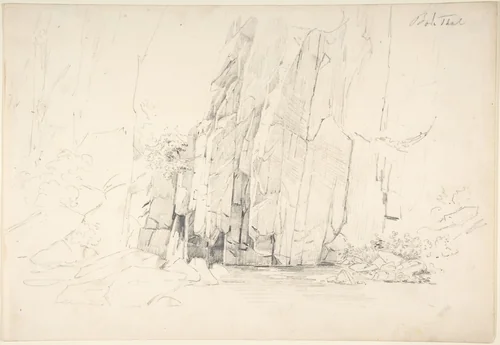
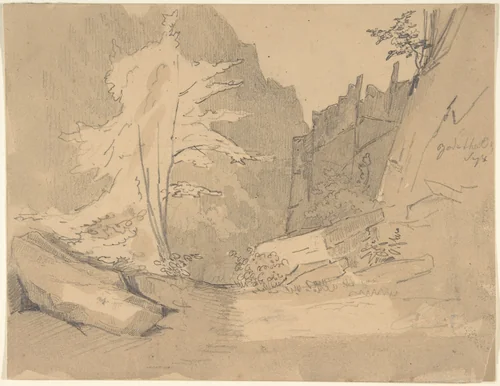
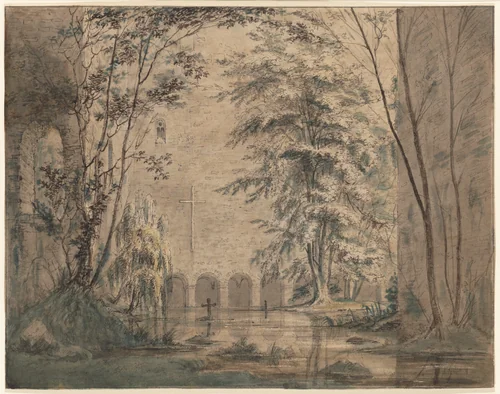
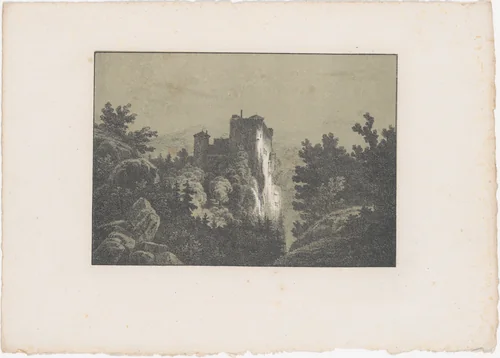
Blechen’s distinctive artistic vocabulary centered on capturing the raw, sometimes overwhelming, power of nature, often filtering traditional subjects through a strikingly modern lens. While his style explicitly upheld the Romantic ideal of natural beauty, his compositions frequently incorporate elements of decay, melancholy, or high drama. This is evident in pieces such as the stark Inundated Ruins of a Monastery or the haunting study Ruins of a Castle. He was particularly drawn to specific topographical challenges; his detailed field studies, like Rocks in the Bode Valley and its companion piece, The Bode Valley with Rocks and Trees, reveal an intense commitment to direct observation. These studies are fascinating technical documents, often utilized for their high-quality prints today, sometimes containing meticulous landscape notes documented both on the front and verso of the sheet.
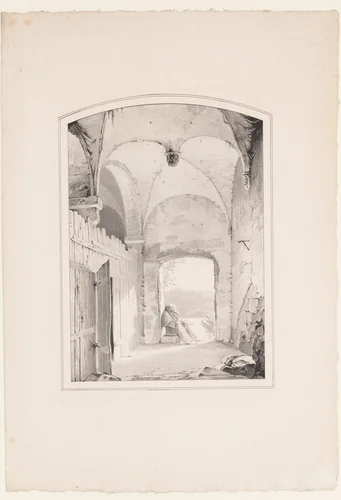
Unlike some of his contemporaries who favored mythological or classical grand narratives, Blechen’s genius lay in elevating localized, specific German geography. Whether documenting natural formations or exploring architectural demise, his visual statements are rarely loud, but they are consistently penetrating, evident even in the quiet contemplation of the print Pilgrim at the Gate (Einsiedler an der Pforte). It is this combination of academic rigor and expressive depth that maintains the strong demand for Karl Blechen paintings and prints.
Fortunately, much of his seminal corpus, including his detailed drawings and preparatory studies, is now in the public domain. This broad accessibility allows researchers and collectors worldwide to appreciate the nuances of Karl Blechen prints, which are frequently rendered as museum-quality, high-quality prints suitable for academic study. His legacy demonstrates that sometimes, the most revolutionary visual statements come not from inventing entirely new structures, but from perfectly capturing the existing world, albeit one filtered through a highly sophisticated, singular eye.
Source: Wikipedia · CC BY-SA 4.0