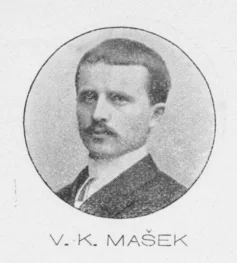
Karel Vitezslav Masek
Karel Vítězslav Mašek (1865-1927) occupied a vital, multi-faceted position in the flowering of Czech arts around the turn of the twentieth century. Active primarily between 1880 and 1900, his career was distinguished by a rare polymathy: he was simultaneously a respected painter, a practicing architect, a prolific illustrator, and an influential art professor. This breadth of expertise allowed Mašek to influence multiple facets of Czech artistic life during a period defined by rising national consciousness and the international proliferation of decorative aesthetics.
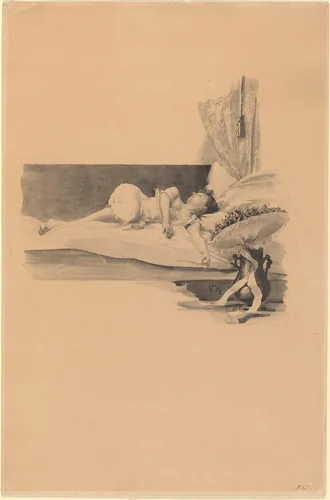
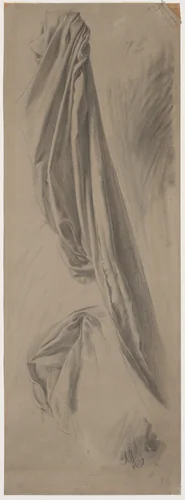
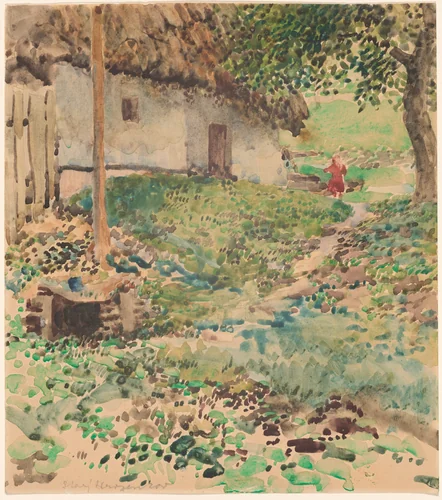
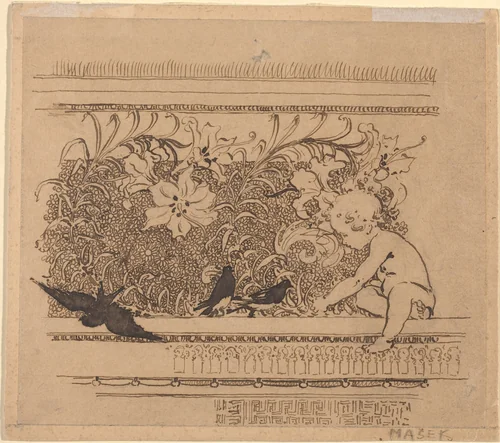
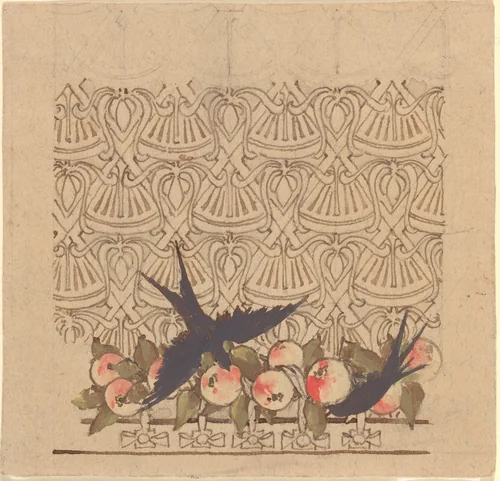
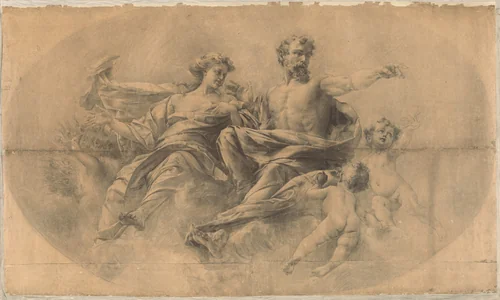
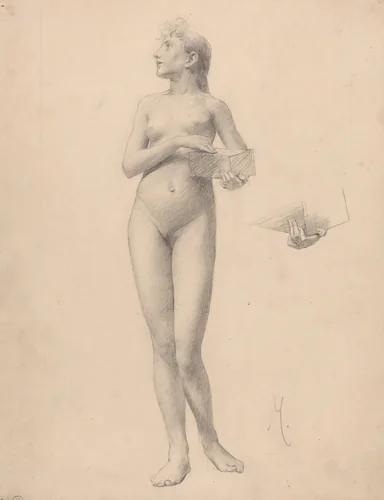
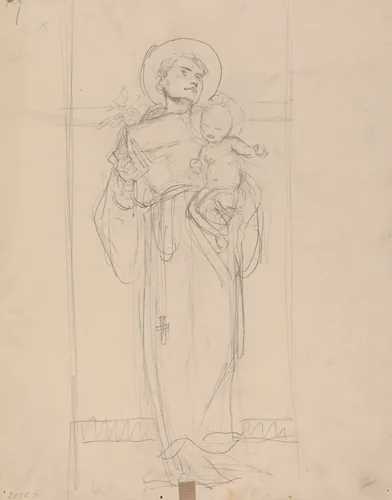
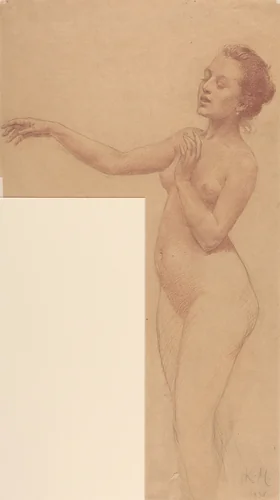
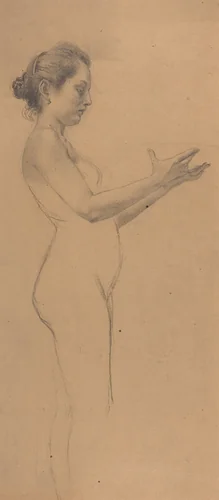
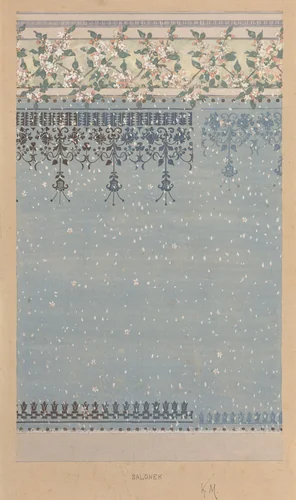
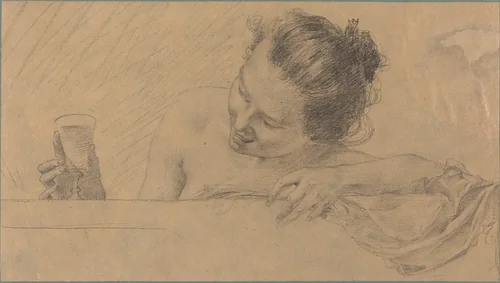
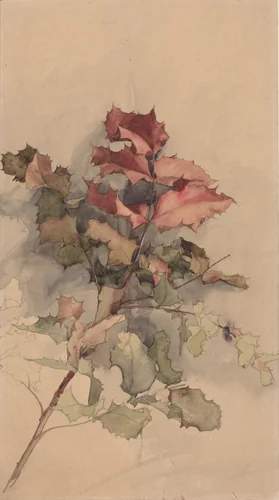
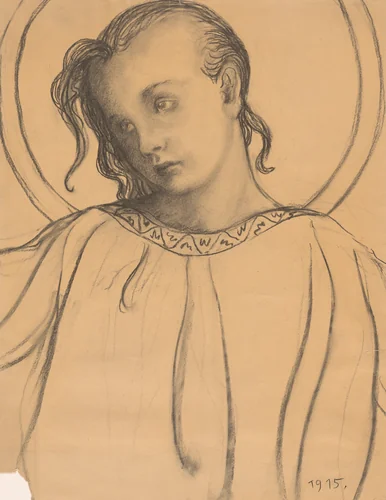
Mašek’s surviving artistic output, preserved in major collections such as the National Gallery of Art, demonstrates a meticulous academic training, evident in precision drawings like the technical study Drapery Study. His illustration work, exemplified by the detailed figure study Illustration for "Jestrab Kontra Hrdlicka, XXII" (Girl asleep on a bed), shows a mastery of line and light necessary for high-quality print reproduction. While grounded in traditional figuration, Mašek was not confined by it; he actively engaged with the nascent decorative arts movement. His sketches, such as Ornamental Design with Birds and Lily, reveal a subtle inclination towards the flowing lines and natural motifs characteristic of the era’s progressive design.
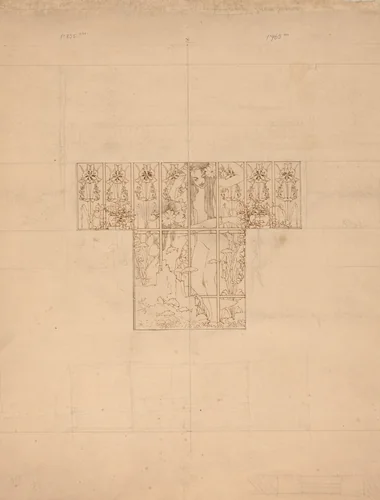
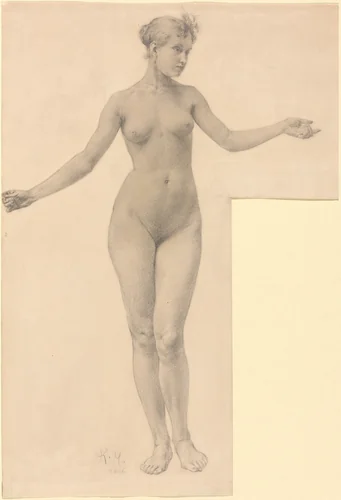
Perhaps the most intriguing demonstration of Mašek's functional versatility is the drawing Nude and Fish with Flowers (Study for etched bathroom window). This singular object connects the classical subject of the nude with the practical requirements of domestic architecture and specialized glass design. It suggests that Mašek was fully prepared to incorporate refined artistic sensibilities into the most private and functional spaces of the contemporary bourgeois home, a common ambition for artists contributing to the Secessionist ideal.
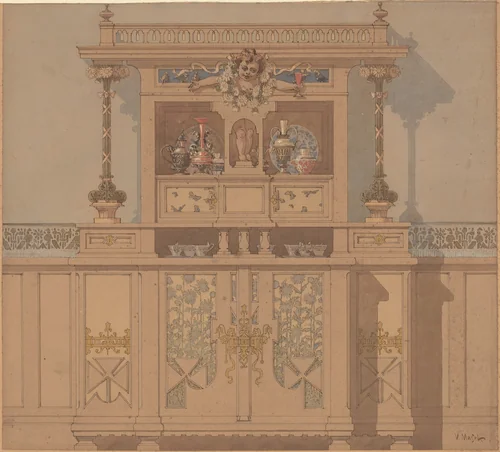
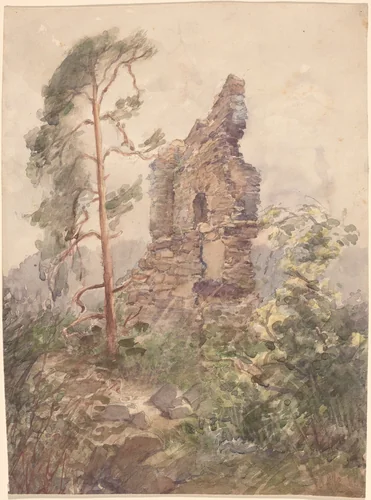
As an educator, Mašek played a crucial role in shaping the next generation of Czech designers and painters, ensuring the continuity of rigorous draughtsmanship alongside progressive modern theory. While the full extent of his architectural projects requires further examination, his contributions to illustration and painting remain accessible. Many of his works, now residing in the public domain, ensure that Karel Vitezslav Masek prints and drawings continue to inform studies of late 19th-century Central European aesthetics.
Source: Wikipedia · CC BY-SA 4.0