Karel van Mander
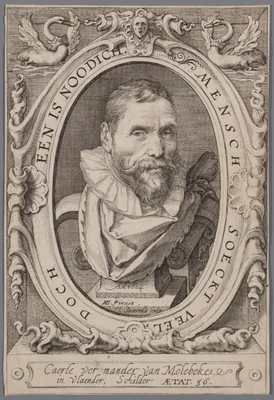
Karel van Mander (1548-1606) holds a singular place in the history of Northern European art, functioning simultaneously as a creative practitioner and as the region’s essential biographical chronicler. Born in Flanders, Van Mander migrated to the Dutch Republic in the latter part of his career, establishing himself as a painter, playwright, and art theoretician. While highly respected by his contemporaries for his visual output, his enduring significance rests upon Het Schilder-boeck (The Book of Painters, 1604), a foundational work that provided the Northern Renaissance with its critical and historical lexicon.
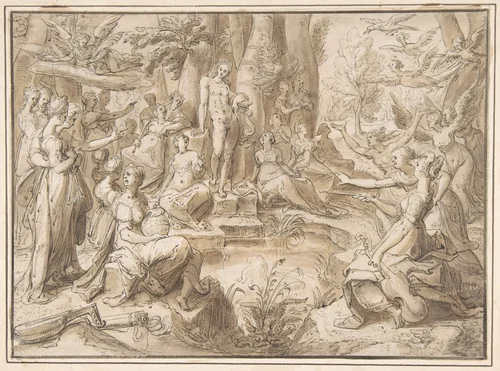
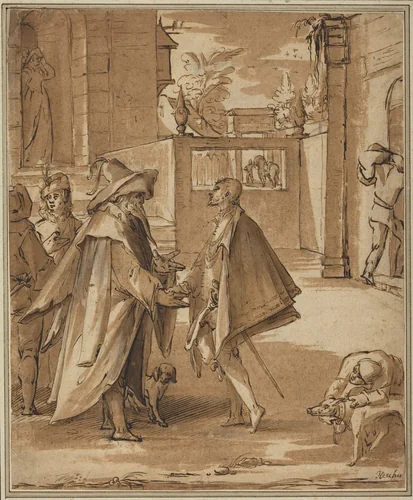
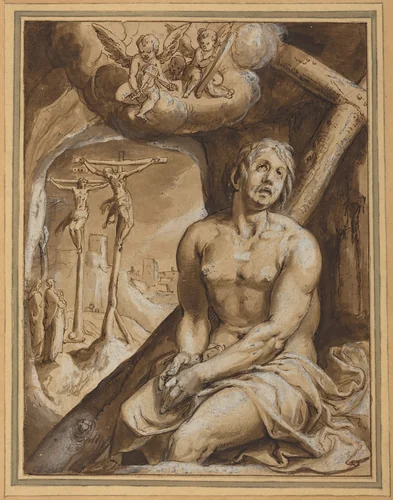
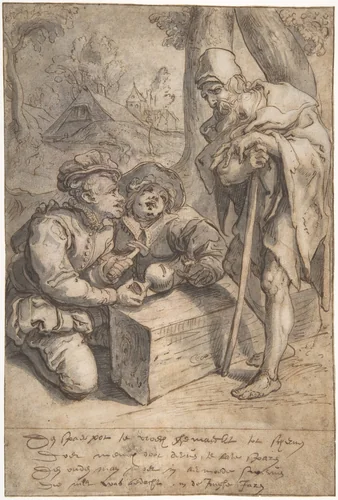
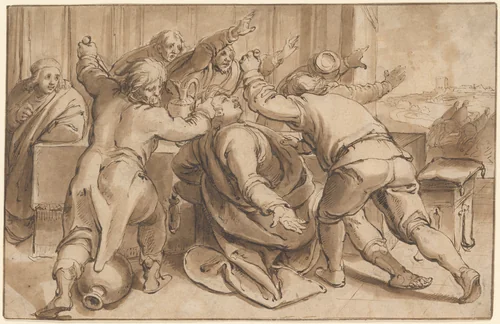
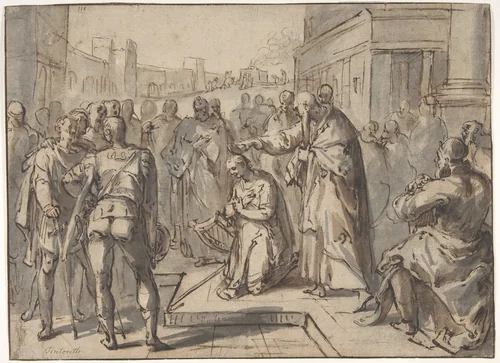
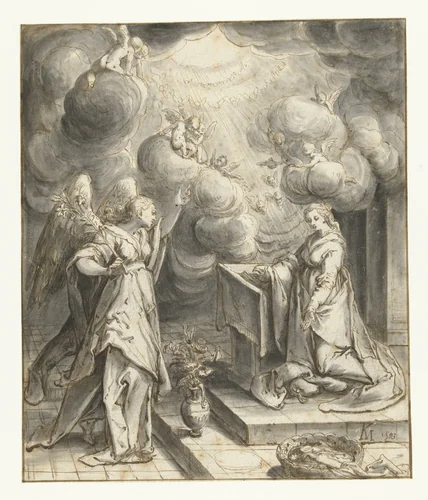
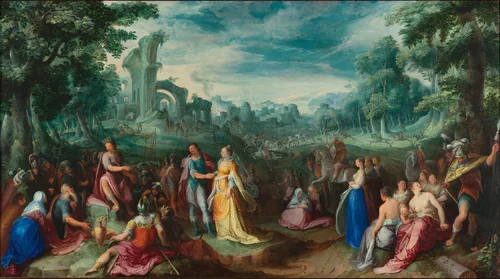
Van Mander’s visual production, represented today in prominent collections including the Metropolitan Museum of Art and the Rijksmuseum, places him squarely within the complex aesthetic framework of Northern Mannerism. He was instrumental in importing and refining this highly stylized movement in Haarlem, emphasizing intricate compositions, elongated forms, and intense narrative drama. His compositions frequently address weighty biblical or mythological themes, displaying a dedicated pursuit of learned artistry. Key surviving works, such as the drawing The Challenge of the Pierides, from Ovid's Metamorphosis and his studies for scenes like The Departure of the Prodigal Son, demonstrate a skilled hand capable of rendering human emotion and complex architectural settings with precision. A fascinating example of his working method is found in the dual-purpose sheet featuring The Servants of Absalom killing Amnon on one side and a preparatory sketch of a seated woman on the verso.
As a theoretician, Van Mander played a pivotal role in educating subsequent generations of Dutch artists, bridging the gap between historical Flemish traditions and the developing Golden Age aesthetic. His treatise on painting was vital to establishing the pedagogical structure of the Haarlem art community. It is a subtle irony that the artist who did so much to record and promote the careers of others secured his own global fame not only through his surviving Karel van Mander paintings but primarily through his critical pen. Today, his historical works are frequently categorized within the public domain, making his pivotal drawings and studies available for scholarship and allowing access to high-quality prints of his transitional compositions.
Source: Wikipedia · CC BY-SA 4.0