Karel van Mallery
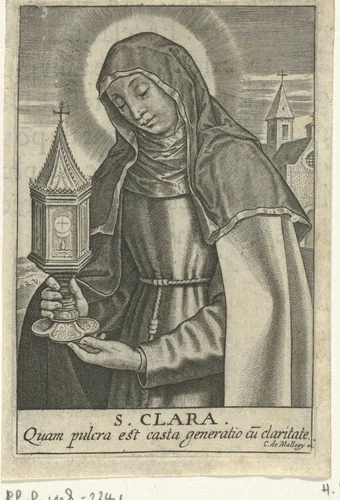
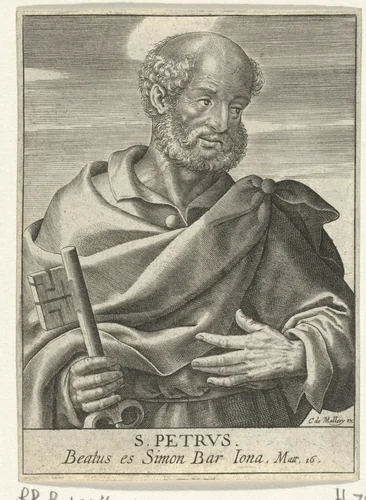
Karel van Mallery, a Flemish engraver active primarily between 1571 and 1635, was a significant figure in the circulation of late sixteenth and early seventeenth-century European iconography. His technical fluency in reproductive engraving positioned him centrally within the contemporary visual economy, translating major compositions into widely distributable print formats. While historical records place his birth around 1571, his documented artistic activities span the period from 1571 to 1595, solidifying his stature during a crucial transitional era for printmaking in the Low Countries.
Van Mallery's career was geographically bifocal, rooted in the competitive, commercial environment of Antwerp while also extending into the patronage networks of Paris. This mobility afforded him a broad base for his commissions, which concentrated overwhelmingly on two genres: devotional religious subjects, aligning with the visual demands of the Counter-Reformation, and authoritative portraiture.
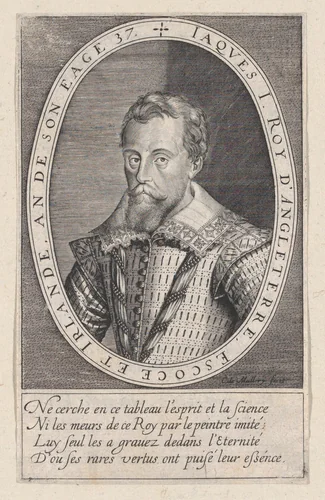
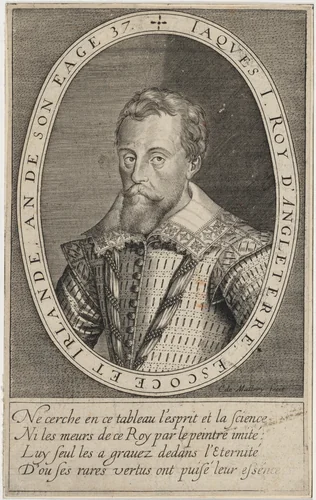
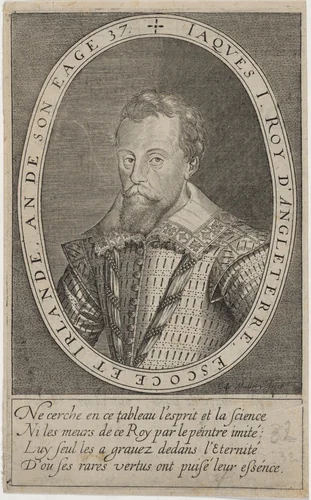
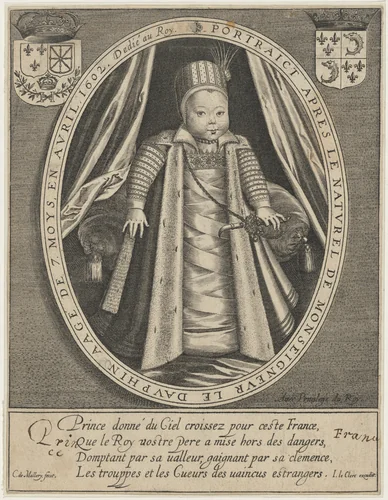
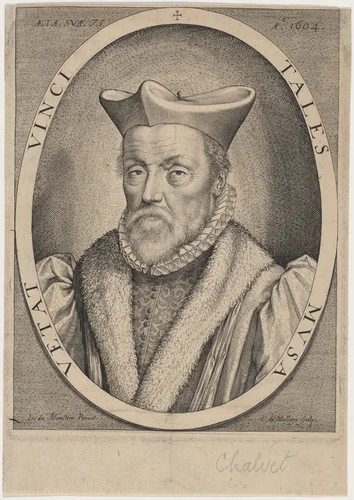
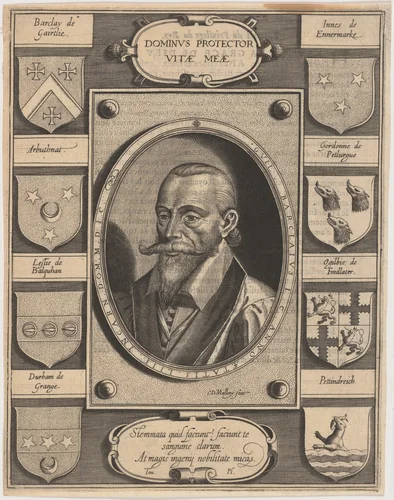
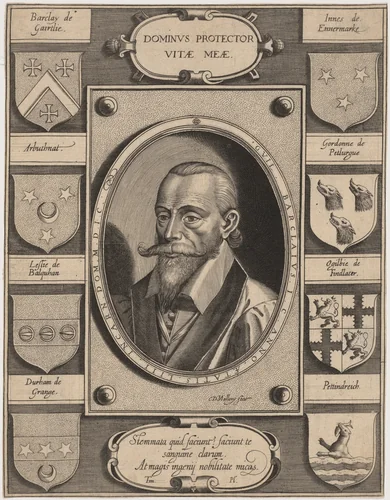
The most enduring aspect of his output is his work in official portraiture, a genre requiring both technical accuracy and political sensitivity. Van Mallery documented some of the era's most powerful monarchs, executing likenesses of King James I of England and King Louis XIII of France. However, his practice was not solely focused on royal spectacle; his portfolio includes detailed engravings of lesser-known but historically relevant intellectual figures, such as the jurist M. de Chalvel and the Scottish scholar William Barclay. This dual engagement with both powerful ruling elites and the rising intellectual class suggests a nuanced understanding of the burgeoning print market’s requirements for both high-status representation and academic dissemination.
His skill ensured that his works were preserved by institutions seeking high-quality prints and historical records. Today, examples of Karel van Mallery prints are held in prestigious international collections, including the National Gallery of Art, the Metropolitan Museum of Art, and the Rijksmuseum. Through the longevity of the original copper plates and the subsequent impressions they produced, much of his original work has entered the public domain, making these museum-quality historical documents accessible to scholars worldwide. Van Mallery’s contribution remains vital for tracing the visual dissemination of religious and political identity during the early modern period.
Source: Wikipedia · CC BY-SA 4.0
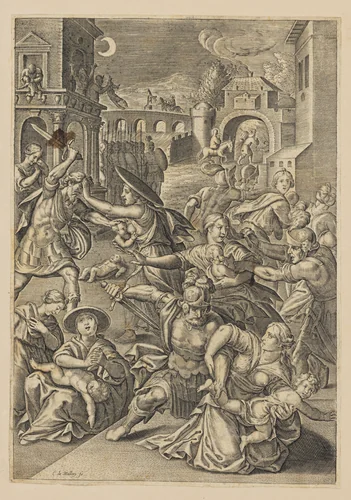
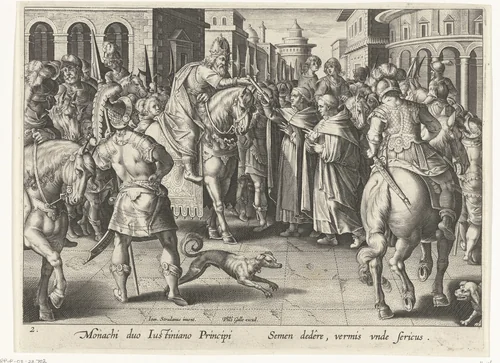
![Emperor Justinian Receiving the First Imported Silkworm Eggs from Nestorian Monks, Plate 2 from "The Introduction of the Silkworm" [Vermis Sericus] by Karel van Mallery, print, 1595](https://img.artbee.org/ed4fb2eb-5b5c-4257-b0fc-4e03593f07cc/small.webp)
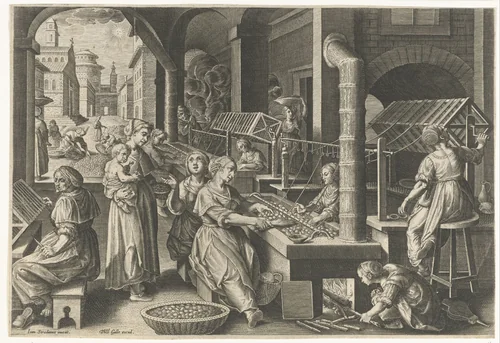
![The Gathering of Mulberry Leaves and the Feeding of the Silkworms, Plate 5 from "The Introduction of the Silkworm" [Vermis Sericus] by Karel van Mallery, print, 1595](https://img.artbee.org/beec6358-a495-4c29-857f-9f0ebef4016a/small.webp)
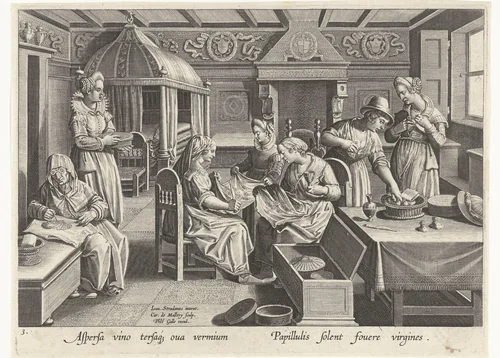
![The Incubation of the Silkworm Eggs, Plate 3 from "The Introduction of the Silkworm" [Vermis Sericus] by Karel van Mallery, print, 1595](https://img.artbee.org/2b56319c-8842-447c-8e51-ec7d8ccd56a9/small.webp)
![The Reeling of Silk, Plate 6 from "The Introduction of the Silkworm" [Vermis Sericus] by Karel van Mallery, print, 1595](https://img.artbee.org/9357ef8c-92d4-4ef2-b6c8-a2232d9983cc/small.webp)
![The Silkworm Eggs Spread Out On Shelves, Plate 4 from "The Introduction of the Silkworm" [Vermis Sericus] by Karel van Mallery, print, 1595](https://img.artbee.org/5db6105e-d43a-45ea-9094-3b76841cac29/small.webp)
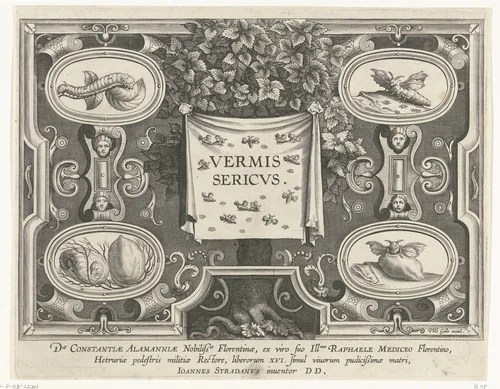
![Title Plate from "The Introduction of the Silkworm" [Vermis Sericus] by Karel van Mallery, print, 1595](https://img.artbee.org/3b50b08d-be51-4a37-bff7-63a7df25de96/small.webp)