Kano School
The Kanō School stands as arguably the most famous and certainly the most institutionally dominant style in the history of Japanese painting. Maintaining unparalleled influence from the late 15th century until the arrival of the Meiji period in 1868, the school shaped the aesthetic of official court and shogunate art across nearly four centuries. Functioning less as a single movement and more as a sophisticated, professional entity, the Kanō establishment relied on a central family lineage that produced a continual succession of major artists, supported by a structured workshop system. This system trained countless unrelated artists, some of whom eventually married into the family to secure their professional standing.
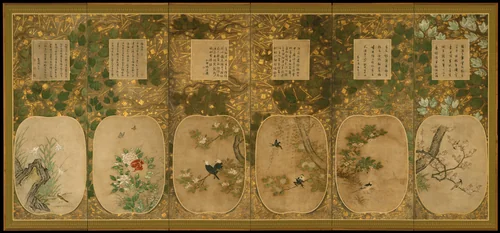
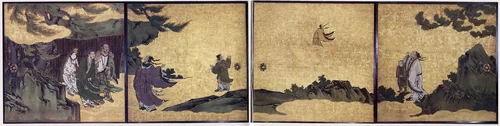
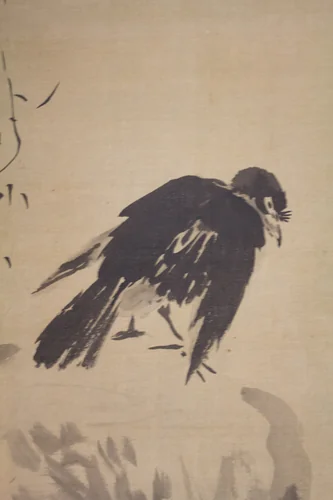
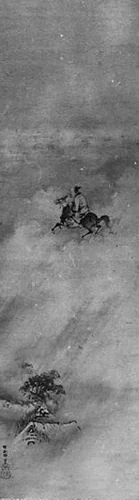
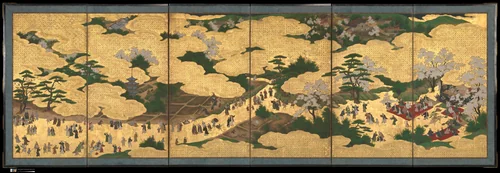
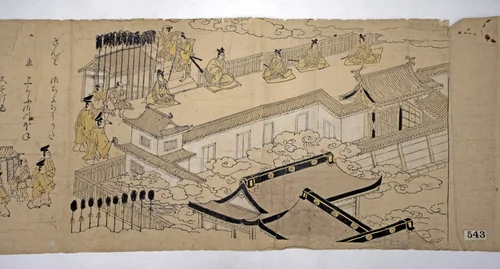
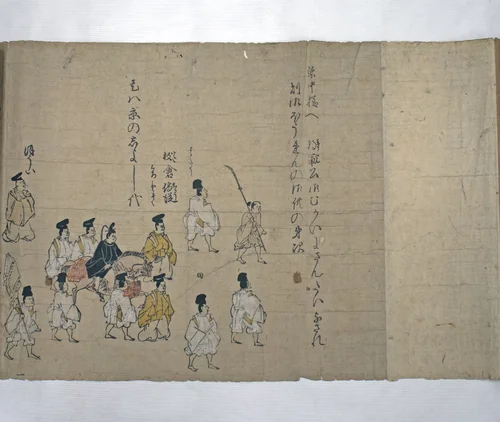
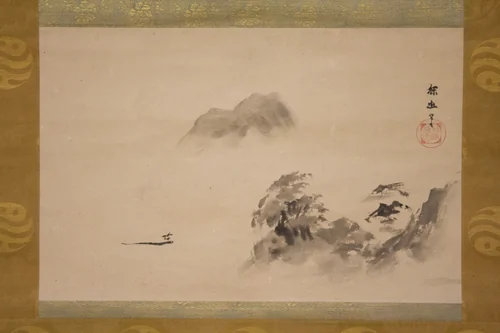
The school’s artistic output was exceptionally comprehensive, encompassing the grand, monumental scale required for screens and sliding doors in palaces and temples, alongside intimate hanging scrolls depicting poetry, spiritual figures, and natural subjects. Stylistically, the Kanō masters demonstrated remarkable breadth. They excelled in powerful monochromatic ink painting, often exemplified by dynamic studies like Blackbird on Wave-Swept Rock, and adapted this technique for Zen themes, such as in the dignified depiction of The Daoist Immortal Liezi. Simultaneously, they produced richly colored narrative compositions, including Rain God Riding in Clouds on a Horse, and highly detailed genre works like Amusements at Higashiyama in Kyoto. Complex decorative pieces, such as Birds and Flowers of the Twelve Months with Chinese Calligraphy, further illustrate the school's mastery over diverse painting traditions and formats.
The school’s longevity rested fundamentally on the unique structure of the family business. As the historian Robert Treat Paine once noted of the lineage, finding “another family which in direct blood line produced so many men of genius... would be hard to find.” This sustained output of high-quality talent, managing artistic production over generations, is perhaps the school's most profound institutional achievement.
Today, thanks to extensive collections housed globally, many significant Kano School paintings and prints are available for scholarly study and public appreciation. Scholars and enthusiasts interested in detailed analysis can often find museum-quality reproductions available as royalty-free downloadable artwork, ensuring this monumental artistic legacy remains broadly accessible.
Source: Wikipedia · CC BY-SA 4.0