Kajita Hanko
Kajita Hanko (1870-1917) was a distinguished Japanese painter whose career spanned the critical Meiji and Taishō periods, eras defined by rapid cultural synthesis and transformation in the arts. Born July 23, 1870, Hanko played a significant role in bridging traditional artistic conventions, such as Nihonga, with the burgeoning demand for modern illustration and graphic art. While his formal training emphasized classical Japanese techniques, his enduring legacy rests significantly on his prolific output of high-quality prints and magazine frontispieces, particularly in the later part of his career, which concluded around 1906.
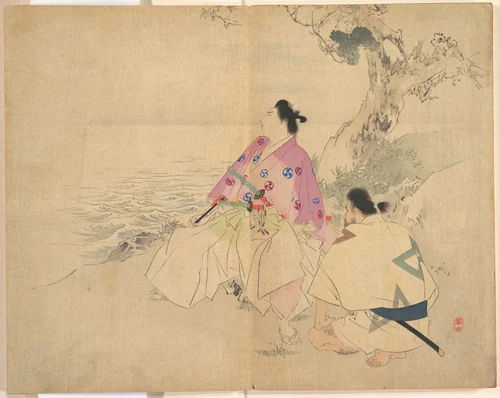
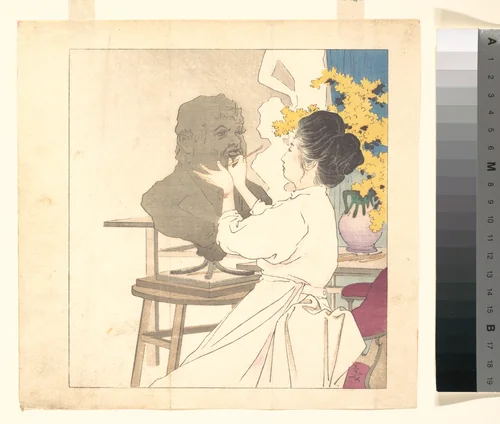
During this transformative time, the visual arts served a vital function in shaping public perception of contemporary literary and political subjects. Hanko was highly adept at translating complex narratives into compelling visual forms. His illustrations frequently appeared in influential literary journals, granting him wide exposure to a sophisticated readership. The necessity to satisfy both artistic convention and the demands of mass market consumption showcases a subtle, yet significant, pragmatic streak in his artistic approach, which elevated him beyond a simple academic painter.
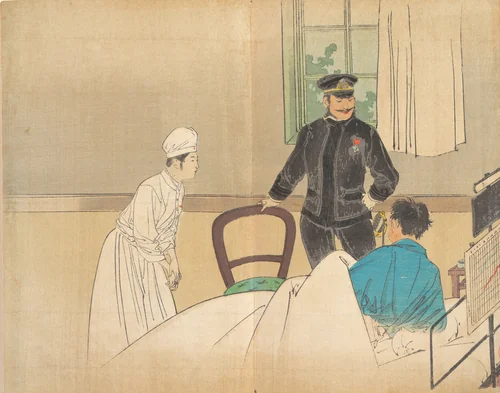
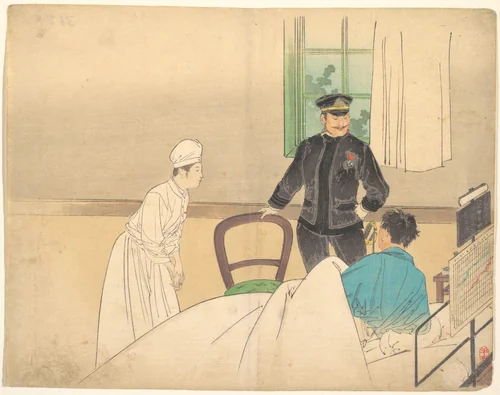
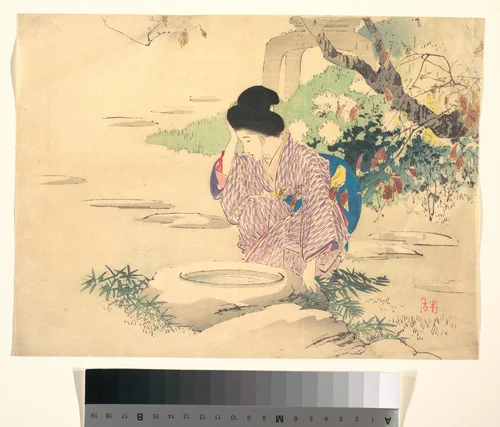
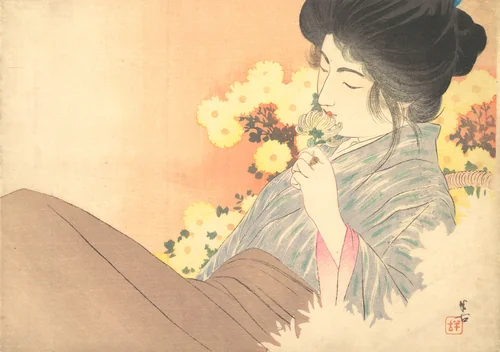
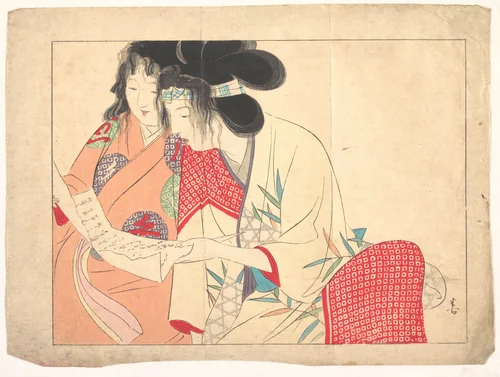
A key example of his illustrative work is The Torpedo Officer (Suirai shikan), a dramatic frontispiece illustration published in the literary magazine Bungei kurabu. Such works demonstrate a precise composition and technical skill, often depicting contemporary figures or scenes with the atmospheric intensity typical of the genre. His significant contribution to graphic arts is recognized in global institutions; several works, including these impactful Kajita Hanko prints, are held in important public collections such as the Metropolitan Museum of Art.
The accessibility of his artistry has dramatically expanded in the digital age. Today, many of the artist's works reside within the public domain, allowing institutions and enthusiasts worldwide to access downloadable artwork. This facilitates the reproduction of museum-quality examples, ensuring that Hanko’s subtle but powerful interpretations of turn-of-the-century Japan remain available for study and enjoyment, long after his death in 1917.
Source: Wikipedia · CC BY-SA 4.0