Justus van Egmont
Justus van Egmont (1601-1674) occupies a critical juncture in 17th-century European art, serving as an instrumental figure connecting the monumental scale of the Flemish Baroque with the nascent institutionalism of French painting. Born Joost van Egmont, his formative training in Antwerp provided him with an unparalleled artistic foundation. He initially studied under Gaspar van den Hoecke before working directly within the ateliers of two of Flanders’ greatest masters: Anthony van Dyck, and subsequently, Peter Paul Rubens. This pedigree, combining the psychological elegance of Van Dyck’s portraiture with the robust dynamism of Rubens’s historical compositions, equipped Van Egmont for an international career.
In 1628, Van Egmont relocated to Paris, a move that proved career-defining. His technical prowess quickly earned him patronage among the highest echelons of French society, leading to the prestigious appointment as court painter for the House of Orléans. However, his influence extended far beyond commissioned portraiture. Van Egmont demonstrated profound institutional ambition, culminating in his co-founding of the Académie royale de peinture et de sculpture in 1648. This act established him not simply as a talented practitioner, but as a shaper of pedagogical standards and official artistic taste, profoundly influencing the trajectory of French art for generations.
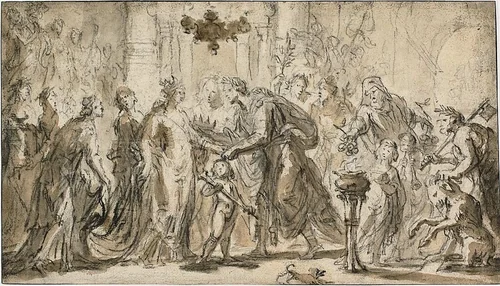
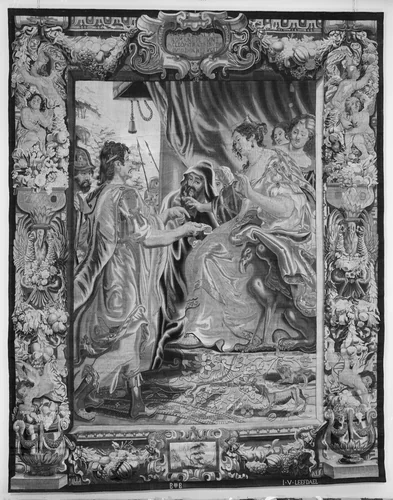
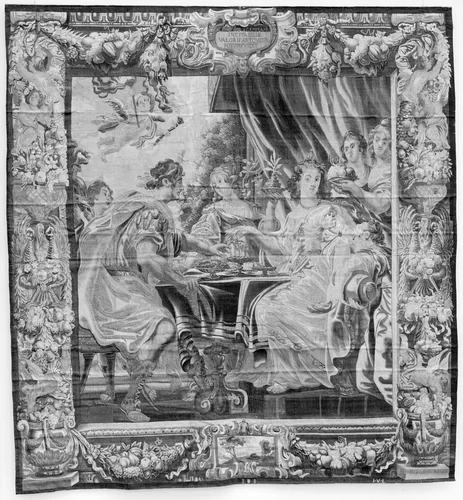
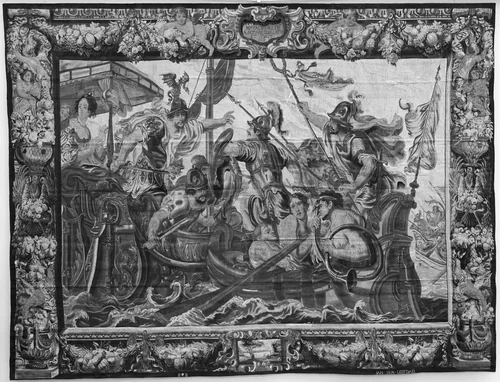
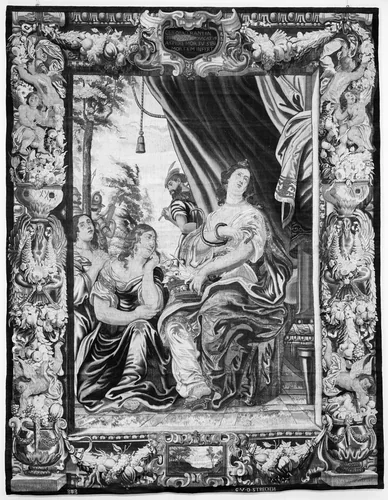
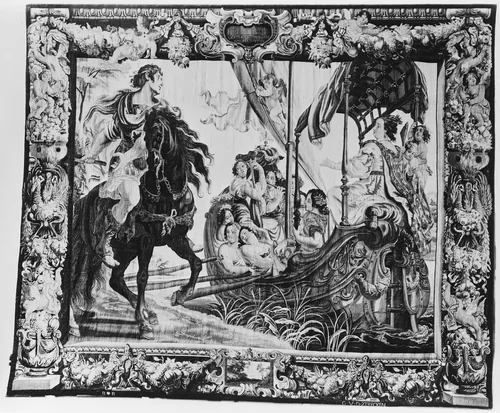
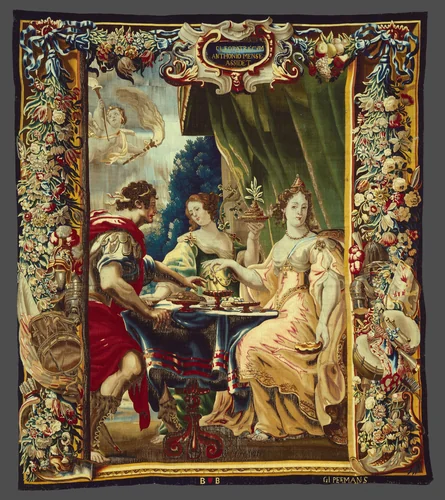
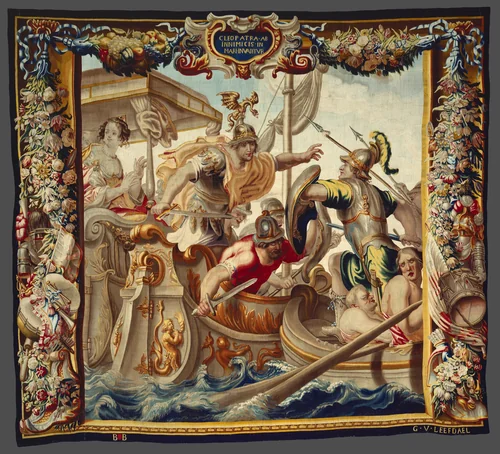
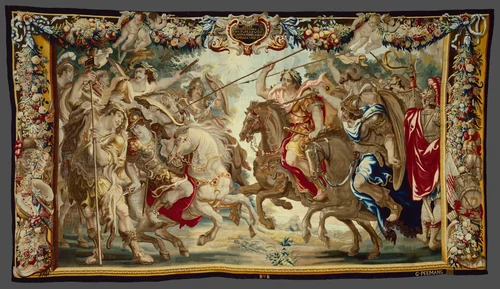
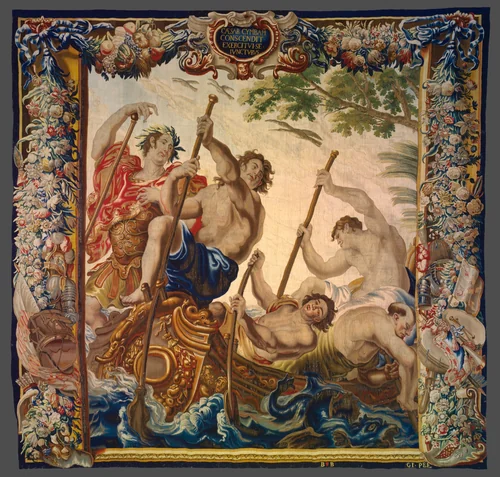
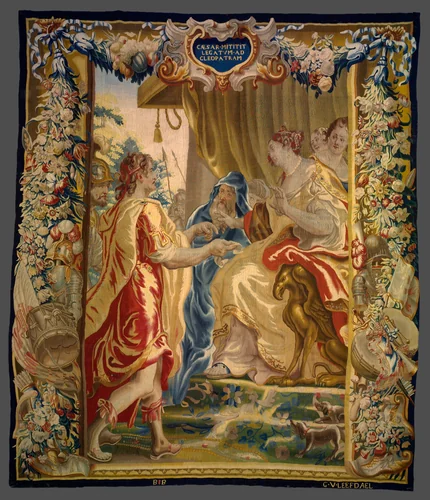
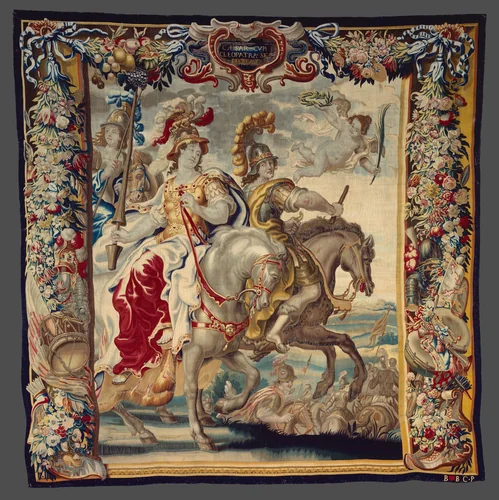
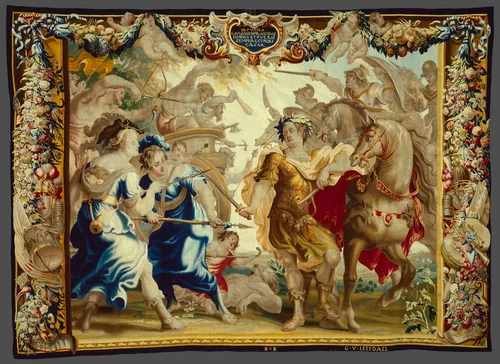
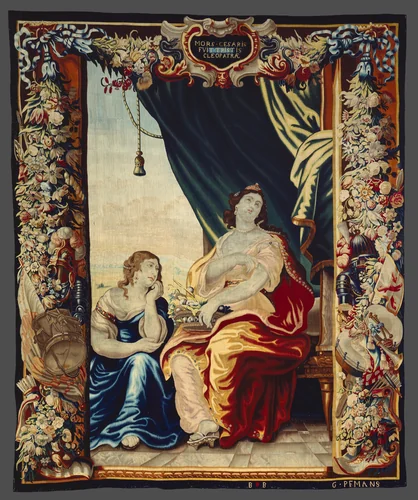
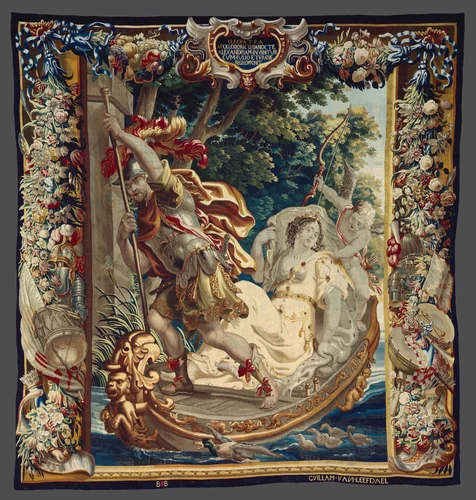
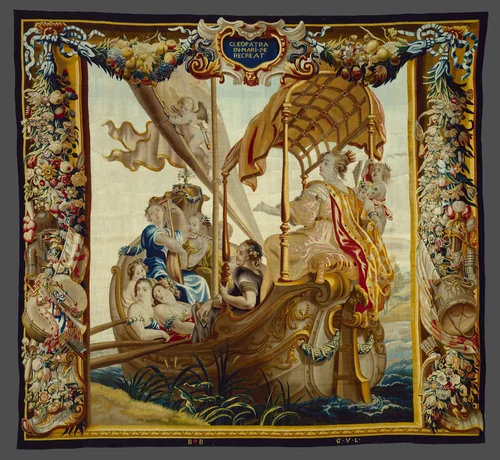
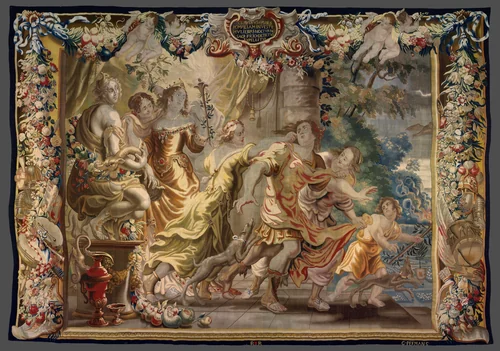
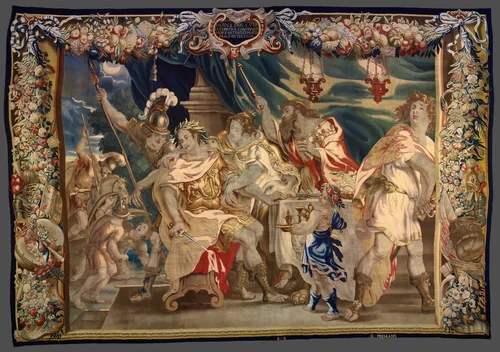
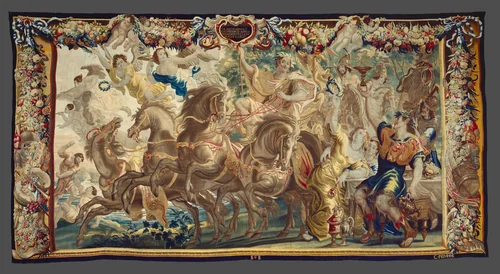
Though justly famous for the portraits that captured the dignity and status of his high-profile patrons, Van Egmont dedicated considerable energy to history painting and the applied arts. He is credited with designing five different tapestry series, monumental textile works requiring sophisticated narrative planning and composition. It is intriguing that an artist trained under the masters of rapid, flesh-and-blood oil painting devoted such serious attention to the rigid demands of translating grand historical drama into woven formats. His designs, such as The Marriage of Zenobia and Odenatus and the sophisticated cycle depicting The Story of Antony and Cleopatra—including panels like Cleopatra Dissolving the Pearl and The Battle of Actium—reveal his skill in managing complex, multi-figure compositions.
Van Egmont later returned to the Low Countries, where he worked prolifically across Antwerp and Brussels. His legacy is maintained today in major international institutions, affirming the museum-quality standard of his output. Examples of Justus van Egmont paintings and tapestry cartoons are held in collections globally. Fortunately, certain works are now in the public domain, offering enthusiasts the opportunity to access high-quality prints and downloadable artwork reflecting his refined 17th-century aesthetic.
Source: Wikipedia · CC BY-SA 4.0