Jürgen Ovens
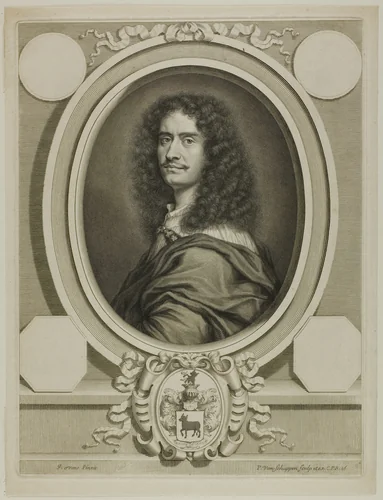
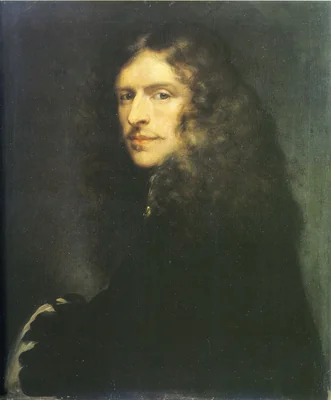
Jürgen Ovens (c. 1623–1678), the celebrated portraitist and influential art-dealer from North Frisia, occupied a vital transitional space in 17th-century European painting. Known variously as Georg or Jurriaen Ovens during his sojourn in the Netherlands, his early career is often associated with the foremost master of the Dutch Golden Age. While definitive documentation remains elusive, the early biographer Arnold Houbraken identifies Ovens as a pupil of Rembrandt, a connection that often manifests in the deep chiaroscuro and psychological intensity present in many of his museum-quality works.
Ovens demonstrated remarkable longevity and success as a court painter, dedicating over thirty years of service to the Dukes of Holstein-Gottorp. His tenure with the ducal court extended beyond creation; he also served as an active art dealer, leveraging his extensive connections and travel to enrich the ducal collections. This dual role underscores the complex economic realities facing successful artists of the period, who often needed to be astute merchants as well as gifted creators.
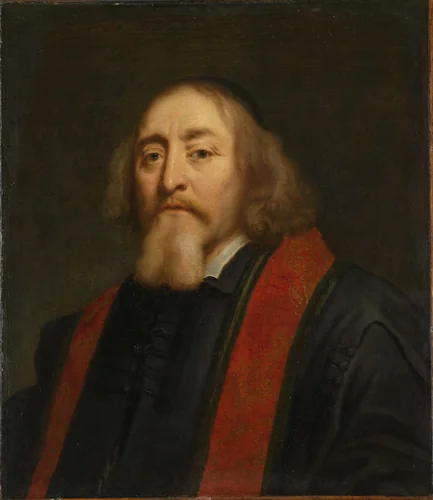
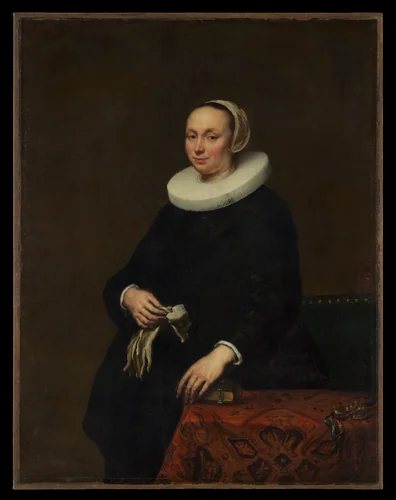
Ovens’s public commissions secured his reputation outside of courtly circles. His most significant achievement for the Dutch Republic is the grand painting executed for the City Hall of Amsterdam (now the Royal Palace), cementing his status in the public eye alongside contemporary Dutch masters. His oeuvre remains strongest in portraiture, capturing figures across the social and intellectual spectrum, from the humanist Portrait of Jan Amos Comenius to more challenging subjects like the alchemist and notorious quack physician, Joseph-François Borri. The latter piece captures a particularly interesting moment of biographical tension, portraying Borri just before the physician’s fortunes completely collapsed.
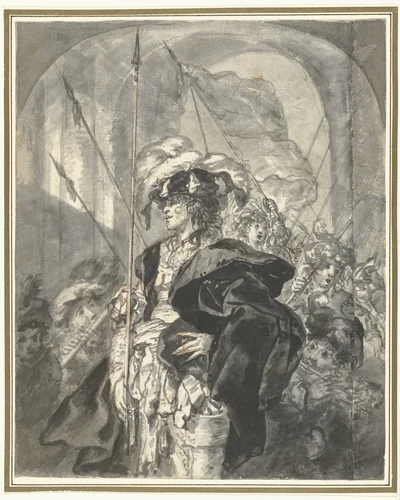
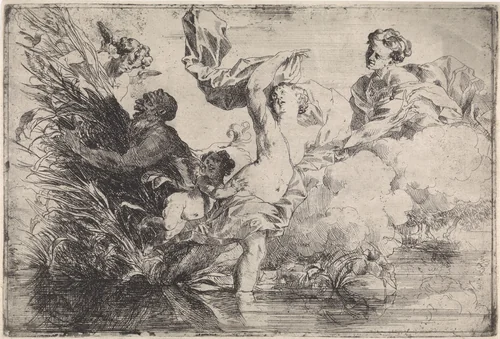
The artistic output of Ovens includes not only celebrated canvases, but also accomplished drawings and high-quality prints, examples of which include the mythological Pan die een nimf achtervolgt and the complex figure study, Feestelijk uitgedoste figuur omringd door jongens. Though his name is perhaps less universally recognized than that of his alleged teacher, the institutional footprint of Jürgen Ovens paintings is substantial. His works are held in major international collections, including the Rijksmuseum, the Metropolitan Museum of Art, and the Art Institute of Chicago. Today, many of these influential works are increasingly available as downloadable artwork, ensuring that the legacy of this sophisticated North Frisian master continues to be studied globally.
Source: Wikipedia · CC BY-SA 4.0