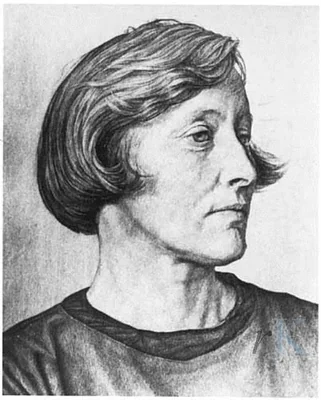
Julie de Graag
Anna Julia “Julie” de Graag (1877-1924) was a critical, if sometimes overlooked, figure in the early 20th-century Dutch tradition of graphic arts. Born in Gorinchem on 18 July 1877, De Graag cultivated a multi-disciplinary practice encompassing watercolour, painting, and etching before focusing primarily on printmaking, a medium in which she achieved remarkable precision. Her active period spanned the final decades before her death in The Hague in 1924, leaving behind a concise but rigorously executed body of work.
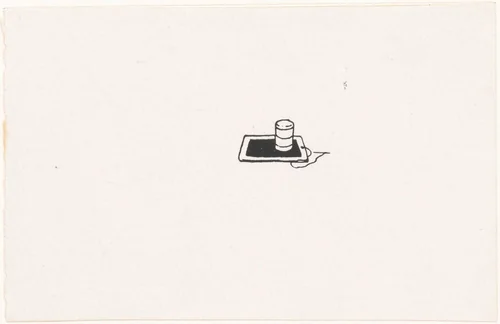
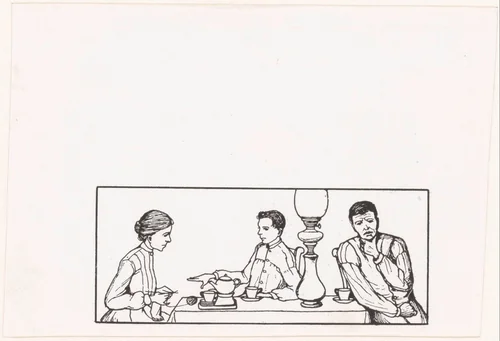
De Graag’s aesthetic is characterized by a disciplined use of line, favoring clarity and structural integrity over decorative flourish. Her prints often display an almost ascetic refusal of unnecessary detail, lending the subjects a timeless, almost monumental quality, regardless of their mundane origins. Still life and interiors provided fertile ground for this approach, as seen in the composition Schrijflei met koker (Slate with Tube). However, she was equally adept at capturing subtle social dynamics, demonstrated through pieces like Twee mannen en een vrouw aan een tafel, a focused study of interaction and posture.
While specializing in printmaking, De Graag maintained personal control over every step of the creative process. It is a subtle observation of her working method that she not only drew the original sketches but insisted on personally managing the etching, printing, and paper selection, ensuring her high-quality prints met her exacting standards. This commitment to physical mastery of the medium elevates her output beyond mere reproduction.
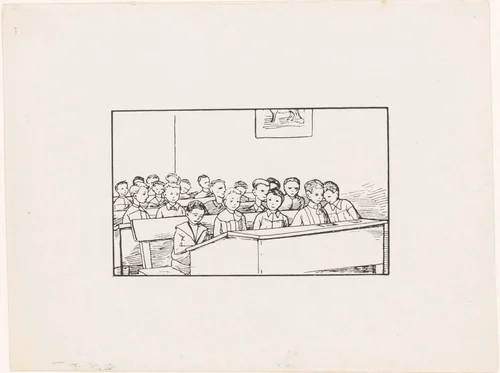
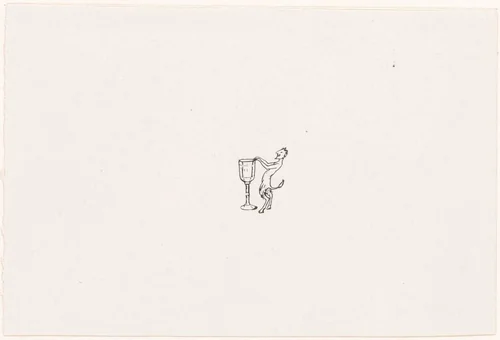
The substantial representation of her work in major Dutch repositories, including the renowned Rijksmuseum, confirms her museum-quality standing. Although the documented catalog totals around fifteen prints, this collection showcases a variety of technical and thematic explorations, from the quiet intensity of Jongens in schoolbanken in een klas (Boys at Desks in a Classroom) to the more allegorical curiosity, Sater bij een wijnglas (Satyr near a Wineglass).
Due to the historical context of her production, much of De Graag's material is now within the public domain. This accessibility allows researchers and enthusiasts to obtain downloadable artwork and use royalty-free images of her compelling work, securing her legacy beyond the walls of institutional collections.
Source: Wikipedia · CC BY-SA 4.0