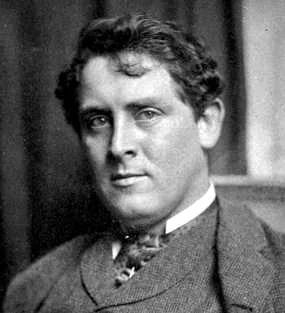
Julian Alden Weir
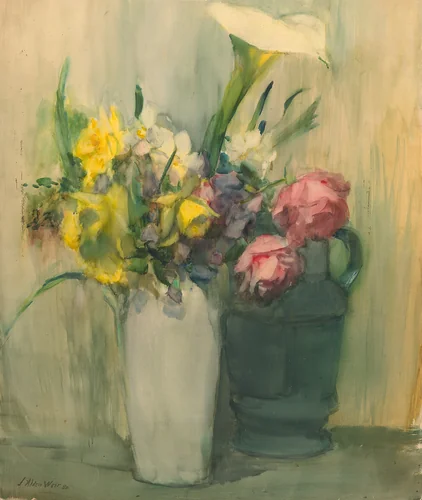
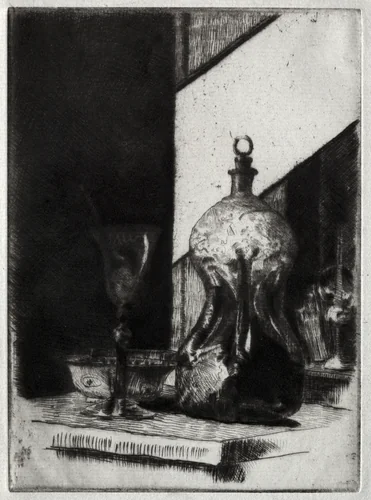
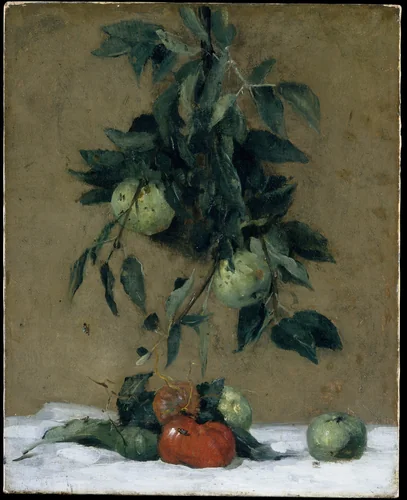
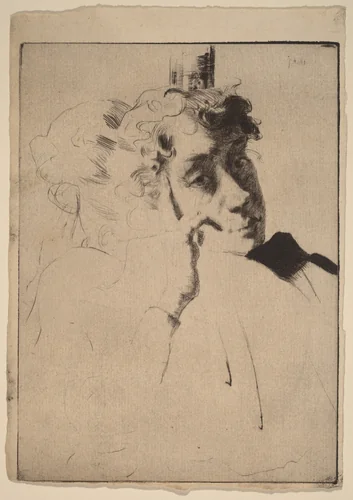
Julian Alden Weir (1852-1919) stands as a pivotal figure in the development of American Impressionism, bridging sophisticated European innovation with a distinctly regional, New England sensibility. He was a central participant in the burgeoning art scene along the coastline of Connecticut, notably as a member of the influential Cos Cob Art Colony near Greenwich. Weir was deeply engaged with capturing the ephemeral qualities of light and atmosphere in a modern manner, yet his extensive body of work, spanning oil paintings and complex etchings, often maintained a grounding in figuration and structure that subtly differentiated him from his more purely optical contemporaries.
Weir’s historical significance is cemented by his role as a founding member of "The Ten," often referred to as the Ten American Painters. Established in 1898, this loosely allied cohort represented a formal protest against the perceived constraints and conservative exhibition practices of major professional art organizations, such as the National Academy of Design. The group sought to create exhibition venues that guaranteed aesthetic freedom and offered a more focused, stylistically unified presentation of modernist painting. This breakaway move was not simply dissent; it was a carefully curated, entrepreneurial effort to control the narrative surrounding American art’s progression at the turn of the century.
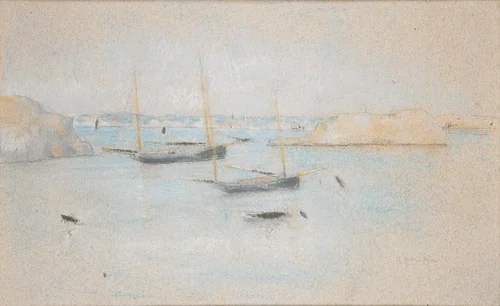
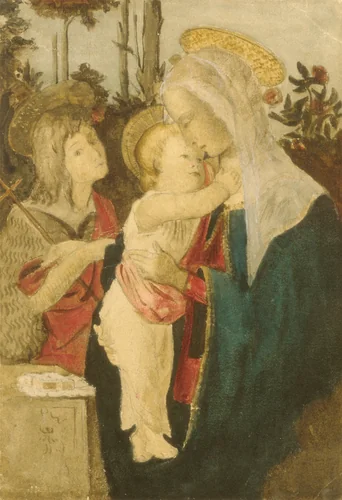
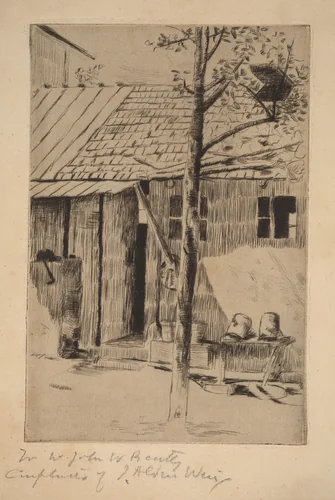
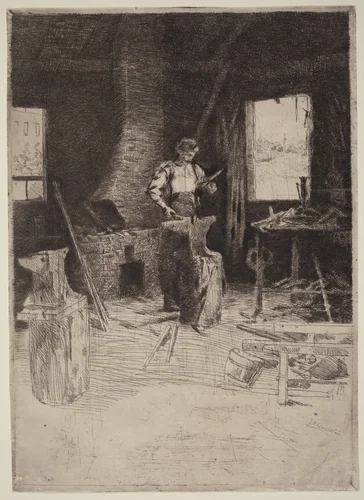
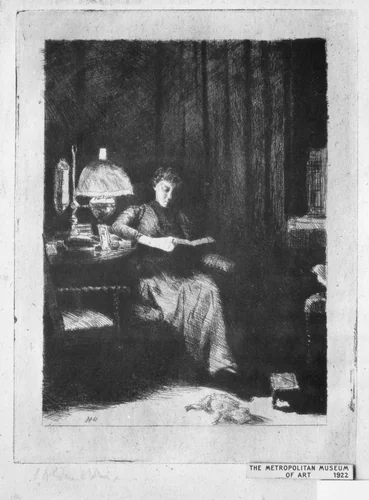
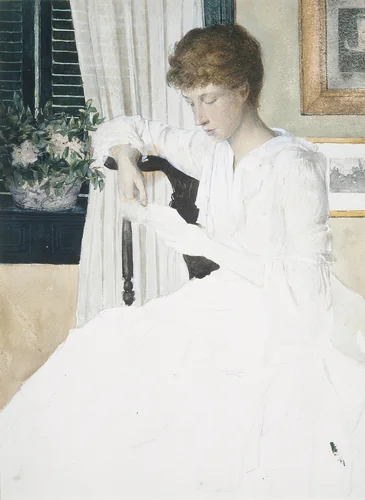
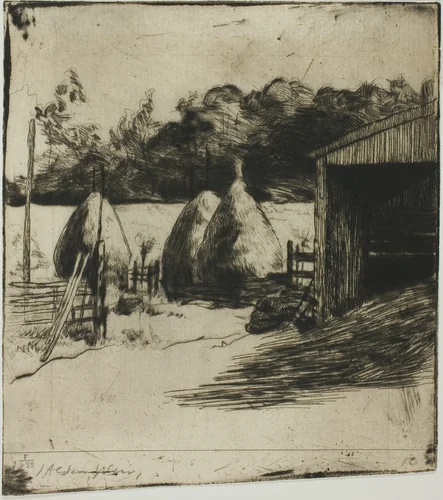
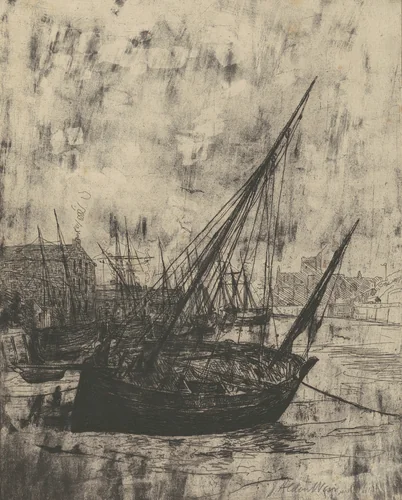
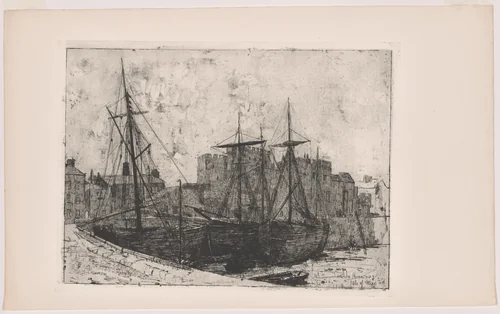
While Weir is primarily remembered for his luminous Julian Alden Weir paintings, his output included a compelling body of graphic work, demonstrated by pieces such as Boats and the illustrative The Blacksmith's Shop. It is perhaps one of the more charming ironies of his career that the artist who actively championed American Impressionism also found time to execute detailed academic studies like Copy after Botticelli, demonstrating a persistent, if sometimes reluctant, respect for the old masters he sought to evolve beyond.
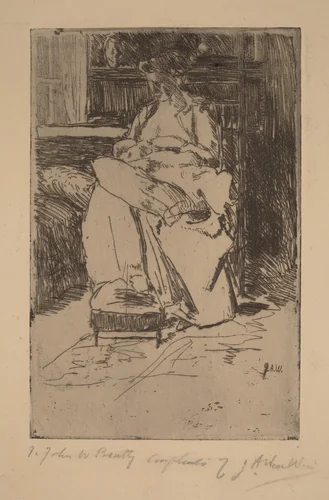
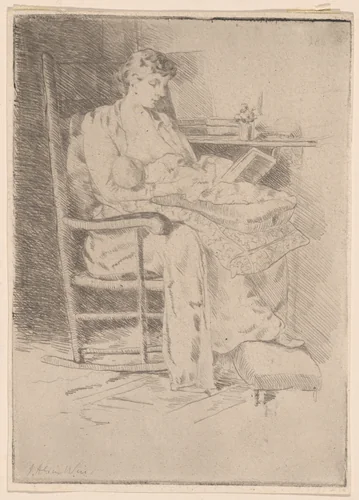
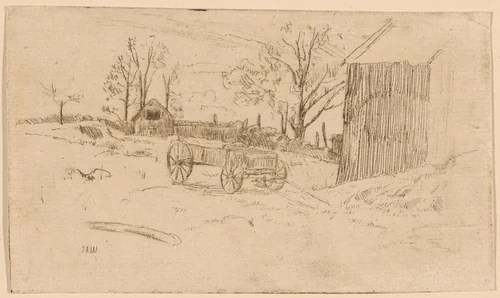
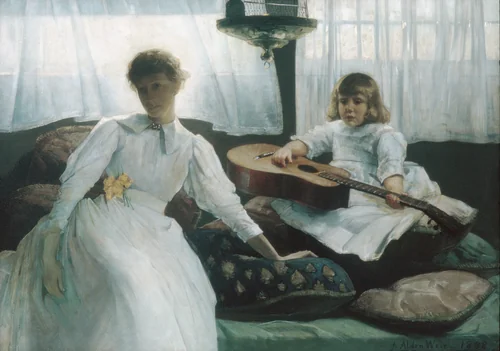
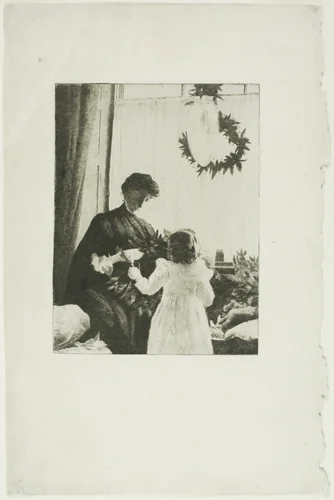
Weir’s versatility is confirmed by his explorations, ranging from the intimate domestic scene Mother and Child to structured architectural studies like Dooryard, Buckets and Tree. Major institutions, including the Metropolitan Museum of Art, the Art Institute of Chicago, and the Cleveland Museum of Art, hold crucial examples of these works, assuring their continued status as museum-quality artifacts. Today, his collected output, including numerous high-quality prints and sketches, remains a vital resource for understanding the transatlantic conversation between European aesthetic principles and their eventual naturalization into American contexts. Many of his Julian Alden Weir prints are now available as downloadable artwork, securing his legacy for broad public access.
Source: Wikipedia · CC BY-SA 4.0