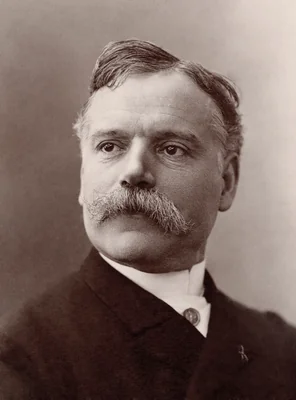
Jules Chéret
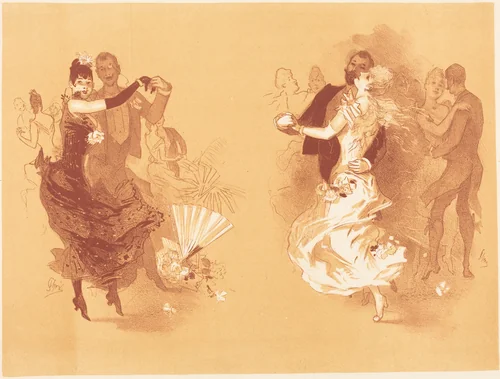
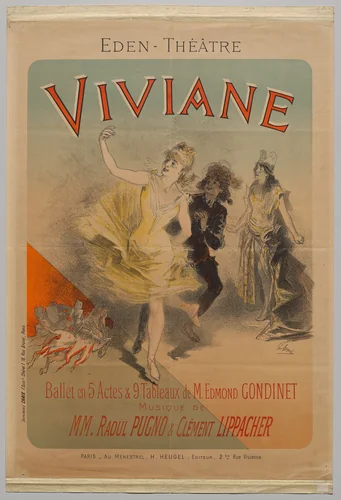
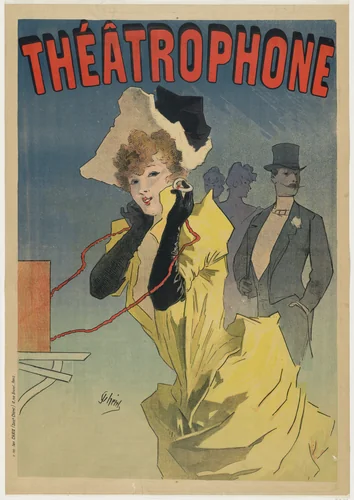
Jules Chéret (Active: 1836-1891) was a pivotal figure in fin-de-siècle French visual culture, renowned as a painter and lithographer. Often called the father of the modern poster, Chéret’s innovations fundamentally transformed the function and aesthetics of commercial art, transitioning the street advertisement from crude notice to dynamic visual communication. His body of work, comprising numerous designs including the lively Waltz of the Blonde and Waltz of the Brunette and the evocative Viviane, established the visual lexicon of the Belle Époque.
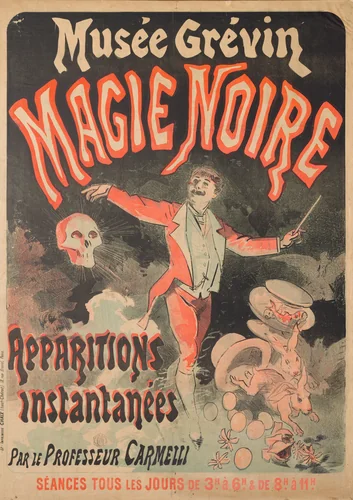
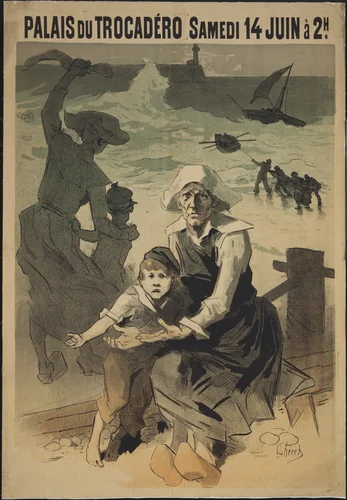
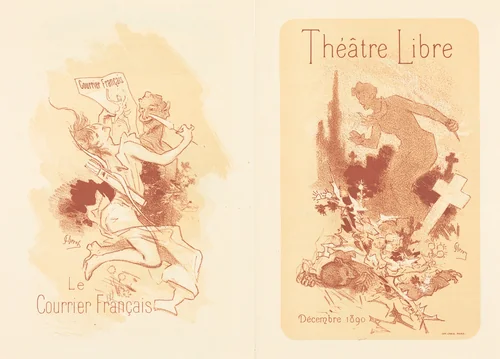
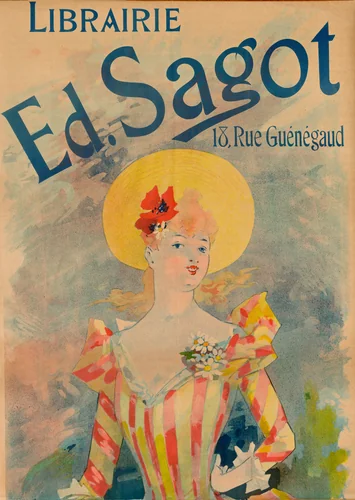
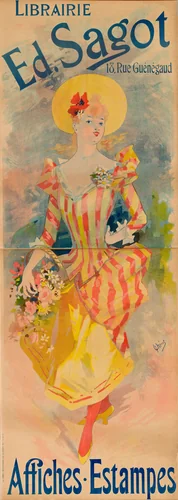
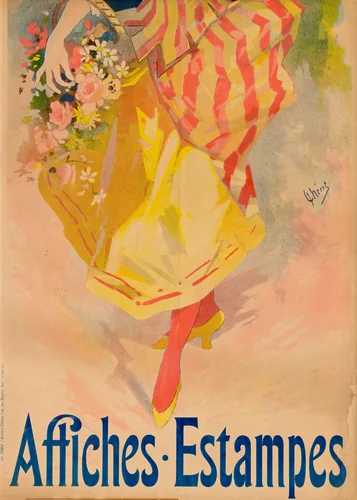
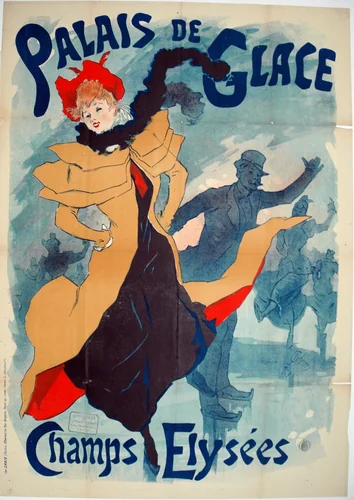
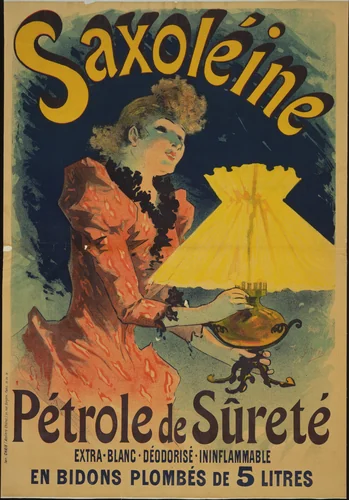
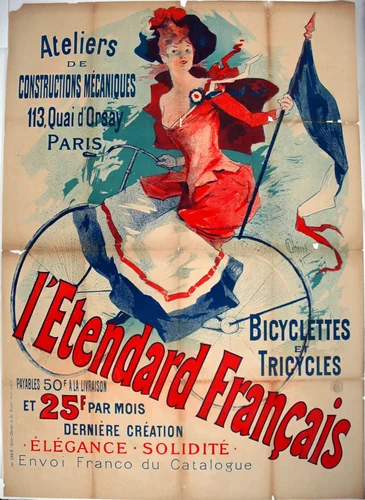
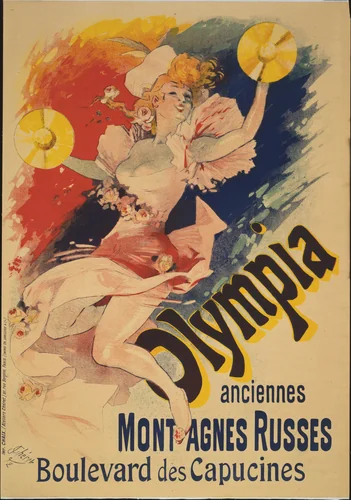
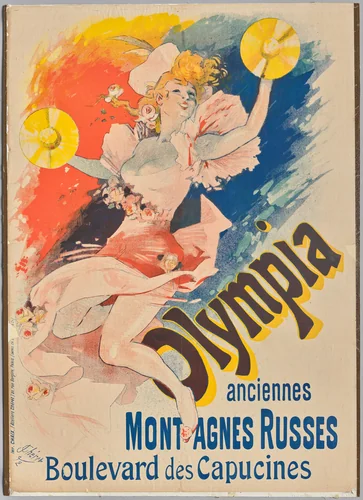
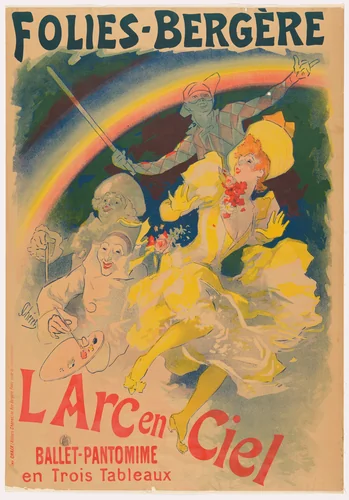
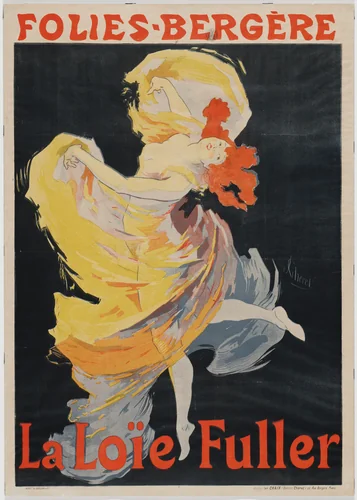
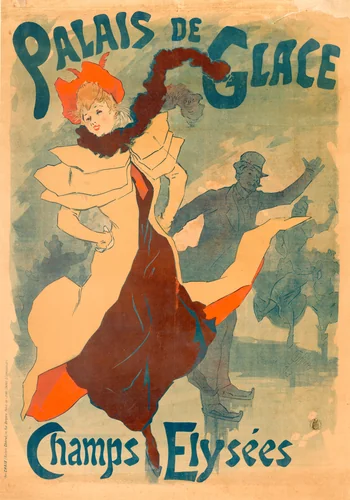
Chéret achieved this status by pioneering a specific three-color lithography process that allowed for vibrant, large-scale reproductions at a reduced cost. Before his intervention, posters were typically monochromatic and static. Chéret introduced the use of pure, bright primary colors, layering them to achieve a dazzling luminescence that captured the frenetic energy of Parisian nightlife. This technique, combined with a fluid, painterly line derived from Rococo influences, defined his signature style.
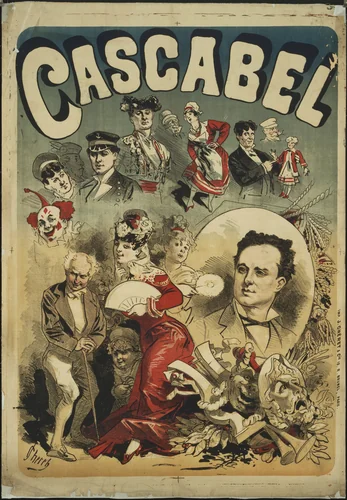
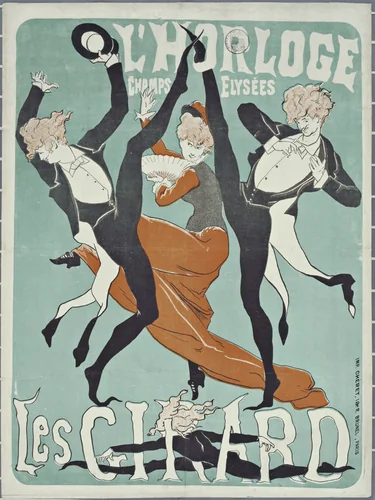
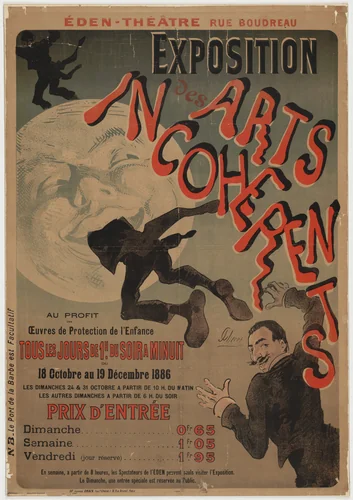
His most recognizable creations feature the "Chérette," a liberated, joyous female figure often depicted dancing or reclining. These figures, stripped of corsets and radiating joie de vivre, embodied the new freedoms afforded to women in the late 19th century and served as immediate, effective attention-grabbers for products and entertainments like the Cascabel circus performance or the controversial Exposition des Arts Incoherents. It is perhaps slightly ironic that an artist whose genius lay in transforming ephemeral street posters into high art also became the primary visual agent for consumer culture.
Today, collections such as the Cleveland Museum of Art, the Art Institute of Chicago, and the Museum of Modern Art hold significant examples of his output, confirming their status as museum-quality artifacts rather than mere advertisements. The enduring appeal and graphic sophistication of Jules Chéret prints ensure their continued relevance for collectors and scholars. Many of his key works are now in the public domain, making high-quality prints widely available, furthering his legacy as the artist who perfected the art of catching the public eye.
Source: Wikipedia · CC BY-SA 4.0