Jules Breton
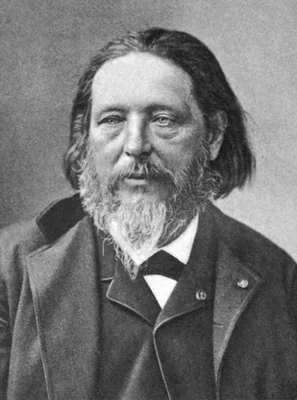
Jules Adolphe Aimé Louis Breton (1827-1906) was a foundational figure among 19th-century French naturalist painters, establishing a highly influential bridge between classical technique and contemporary subject matter. Active primarily in the decades between 1860 and 1884, Breton forged a distinctive style that focused squarely on the activities and environment of the French countryside. His rigorous absorption of traditional academic methods, particularly regarding composition and finish, allowed him to imbue his rural scenes with an inherent dignity, positioning him as a primary transmitter of an idealized, often idyllic, vision of agricultural existence.
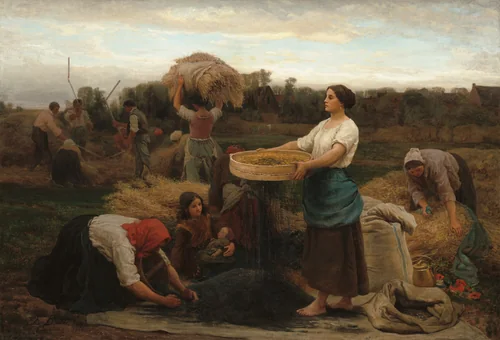
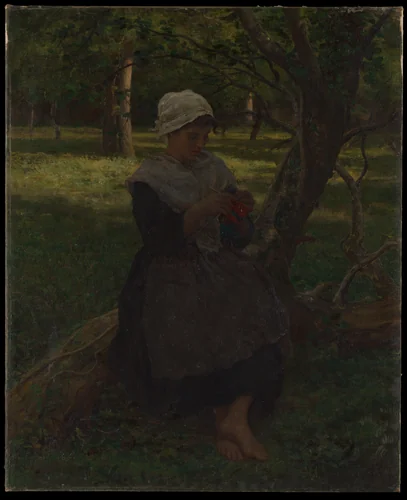
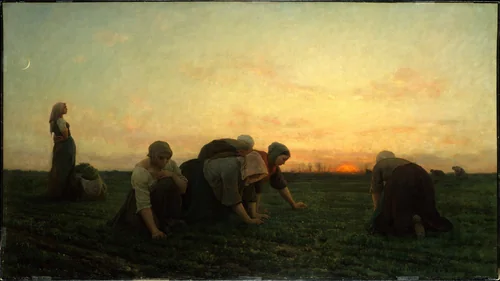
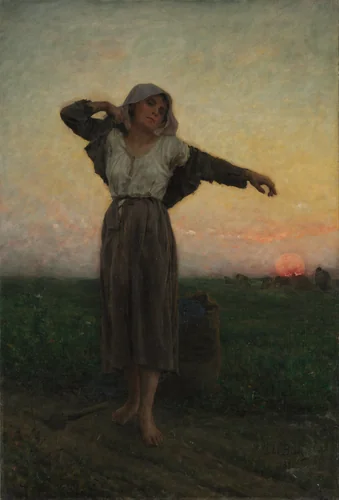
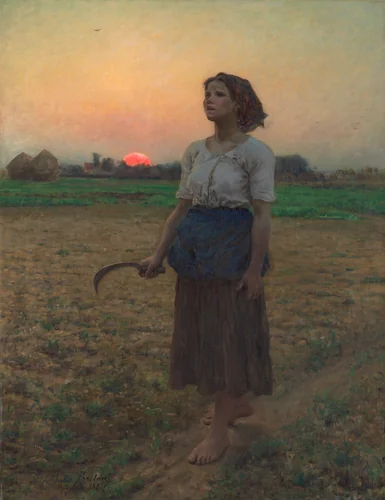
Breton’s innovation lay in his capacity to elevate the peasant subject without resorting to the stark, confrontational Realism practiced by some of his contemporaries. Works such as The Colza (Harvesting Rapeseed) and The Weeders exemplify this synthesis, showing figures engaged in arduous labor but rendered with a sculptural grace reminiscent of classical antiquity. This carefully managed balance between hardship and nobility allowed his canvases to resonate broadly, achieving immense critical and commercial success both in France and, notably, in the American art market. His compositions, whether focusing on sweeping vistas or intimate moments like A Peasant Girl Knitting, demonstrate a profound dedication to capturing local atmosphere and the cyclical rhythm of life on the land.
The enduring appeal of Breton’s carefully constructed narratives ensures that examples of Jules Breton paintings remain central to major institutional collections. Works formerly active in the artist's studio now reside permanently in the Metropolitan Museum of Art and the National Gallery of Art, assuring their continued museum-quality visibility. One subtle observation often made about Breton is that despite his focus on demanding labor, his figures rarely appear truly exhausted, projecting instead a quiet, moral fortitude that speaks to the romanticism inherent in his naturalist approach.
Though his popularity faced temporary challenges with the rise of Impressionism, Breton’s achievement in establishing a sensitive, poetic visual record of rural France remains intact. His detailed, evocative depictions continue to be celebrated, with many of these historical works now freely accessible as high-quality prints and downloadable artwork through the public domain.
Source: Wikipedia · CC BY-SA 4.0