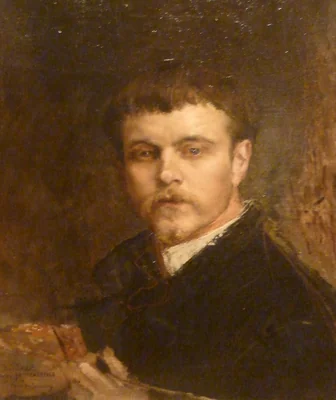
Jules Bastien-Lepage
Jules Bastien-Lepage (1848-1881) occupies a critical, albeit brief, position in the transition of French painting during the late nineteenth century. Serving as the primary and most successful exponent of Naturalism, the artist’s work acted as the essential historical bridge between the rigorous documentation inherent in Realism and the objective pursuit of light that defined early Impressionism. His relatively short, but intensely productive, career established a visual language centered on depicting modern life, particularly rural subjects, with a startling clarity and psychological depth.
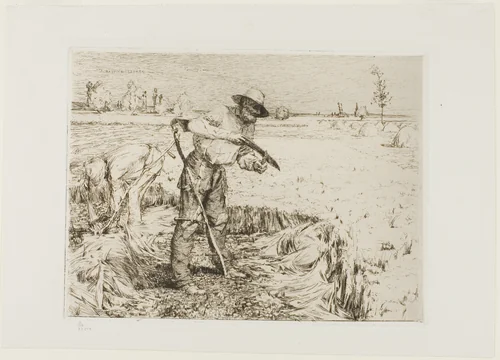
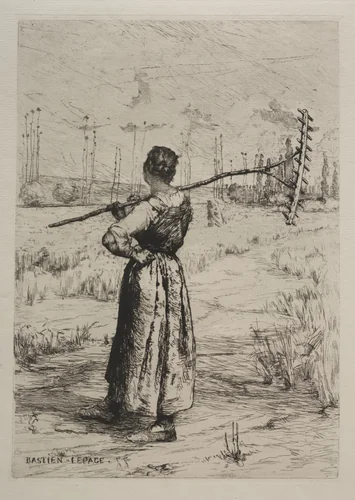
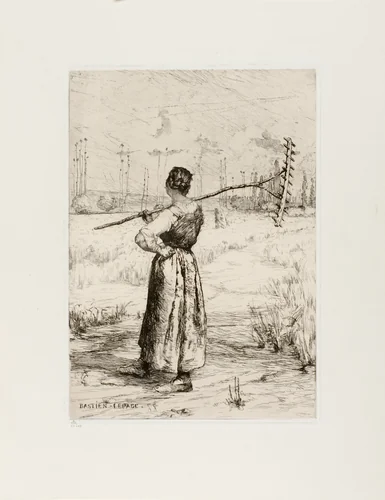
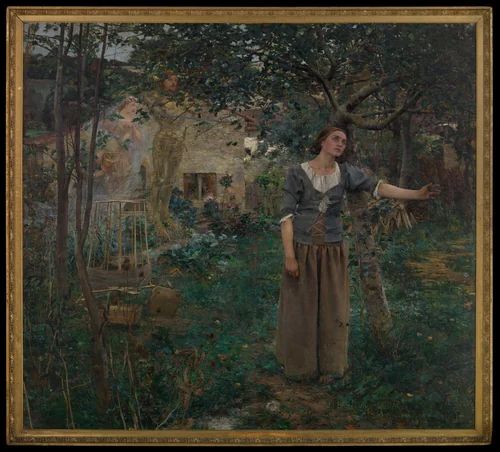
Bastien-Lepage’s innovation lay in adopting the plein air techniques favored by the modernists while retaining a polished, controlled finish associated with academic training. Unlike the fleeting spontaneity of his contemporary Impressionists, Bastien-Lepage grounded his figures in detailed, textured environments. Works like Mower Honing a Scythe and Retour des champs exemplify this dedication, capturing figures of labor at life-size scale, rooted deeply within their immediate physical surroundings. These compositions reflect a focused observation of minute detail, resulting in finished canvases that feel less like studies and more like definitive, highly composed statements on the reality of the subject.
The appeal of this synthesized style was immense, striking a balance between cutting-edge observation and established artistic norms. The critic Émile Zola succinctly characterized this artistic compromise, describing Bastien-Lepage's work as "impressionism corrected, sweetened and adapted to the taste of the crowd."
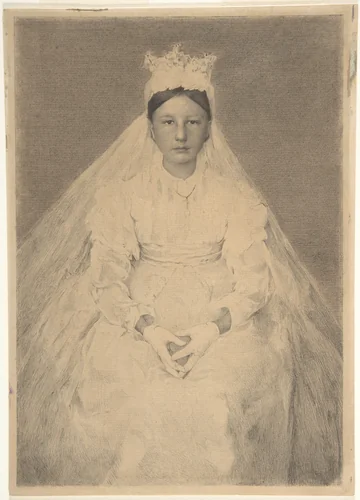
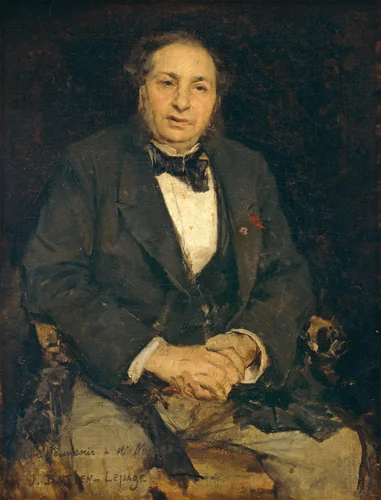
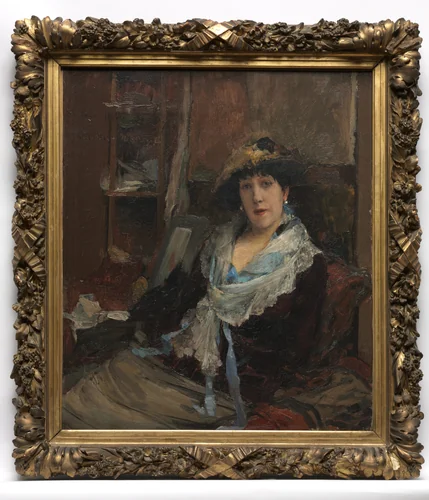
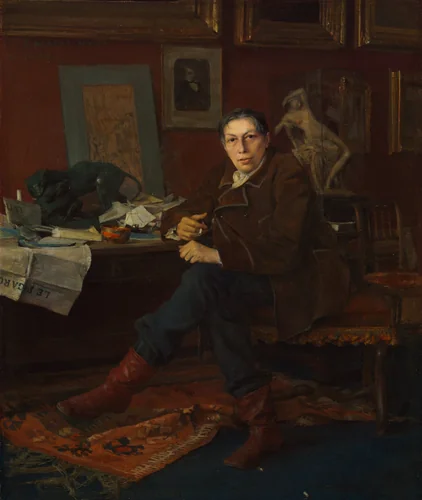
Beyond his celebrated genre scenes, the artist was a remarkably incisive portraitist. His ability to capture the intimate vulnerability of the subject, whether in the focused gaze of The Little Communicant (La Petite Communiante) or the dramatic poise of Marie Samary of the Odéon Theater, confirms his mastery of figurative realism.
Despite his premature death at age thirty-three, Bastien-Lepage’s influence was widespread, cementing Naturalism as an internationally recognized movement. Significant Jules Bastien-Lepage paintings are cornerstones of major public collections, including the Metropolitan Museum of Art and the National Gallery of Art. The enduring quality and compositional strength of his output ensures that many of his key works, now in the public domain, are widely reproduced as high-quality prints and downloadable artwork, offering modern audiences continued access to this influential figure.
Source: Wikipedia · CC BY-SA 4.0