Juan Llorens
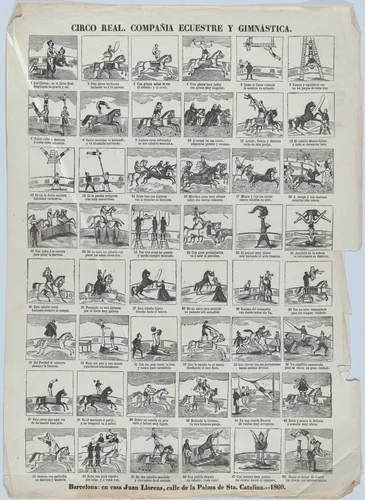
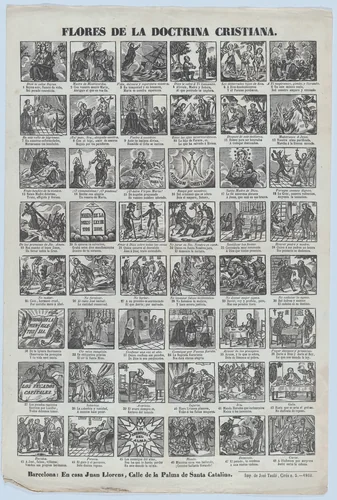
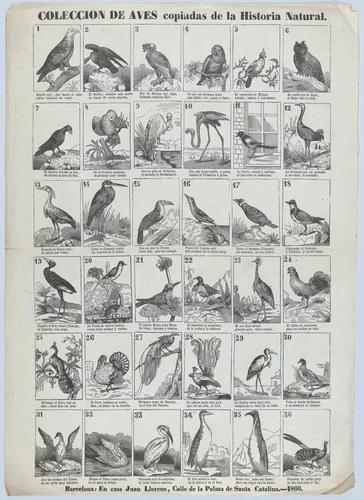
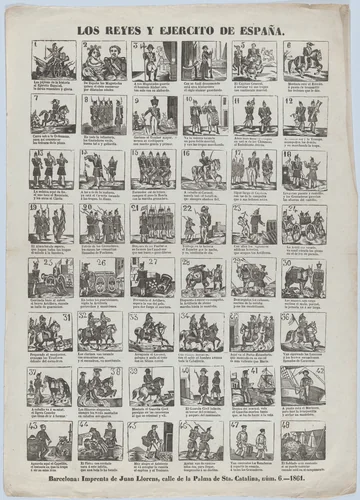
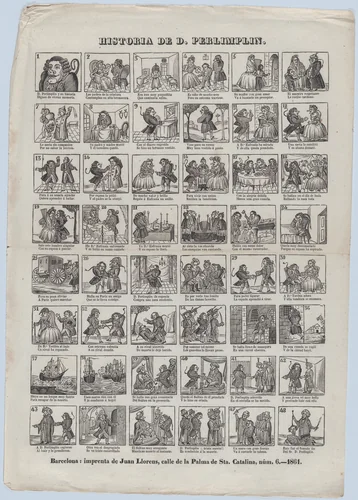
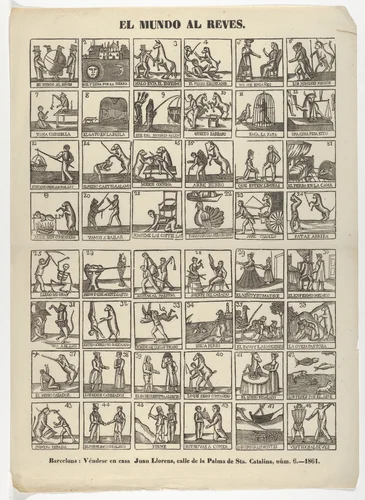
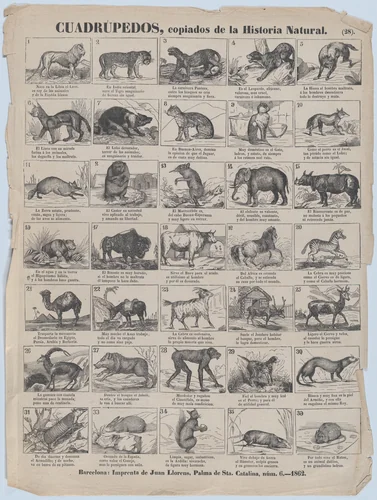
Juan Llorens, active during a crucial decade of printmaking innovation between 1845 and 1855, occupies a distinctive position within the history of 19th-century graphic arts. His surviving oeuvre, consisting of approximately fifteen documented works, demonstrates a specialized focus on applied design related to global performance culture. Unlike contemporaries focused on traditional etching or lithography for high art, Llorens dedicated his efforts to creating meticulously structured working sheets, providing a rare glimpse into the material production of theatrical props.
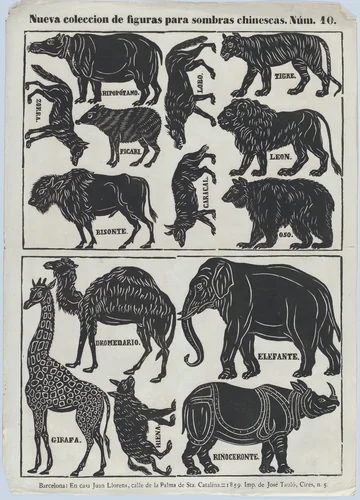
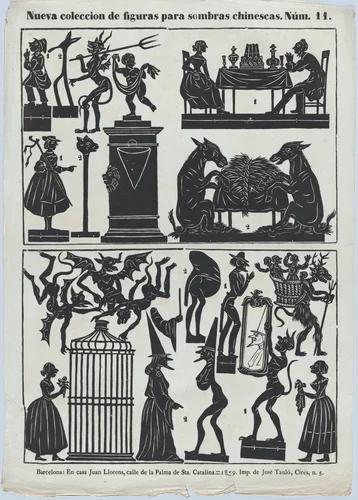
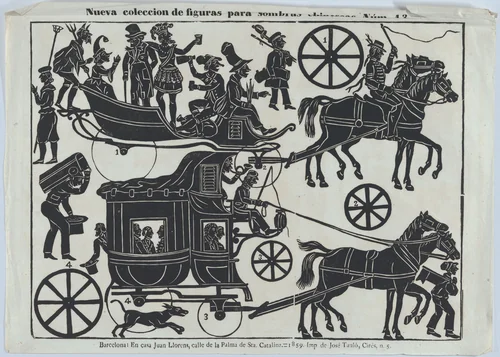
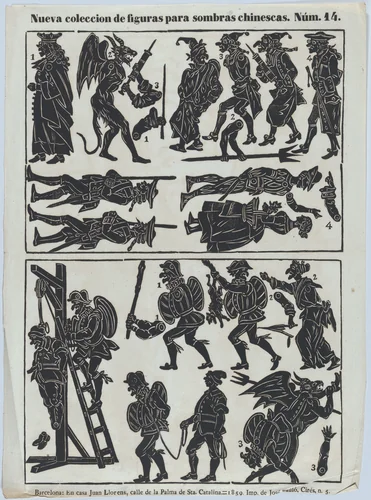
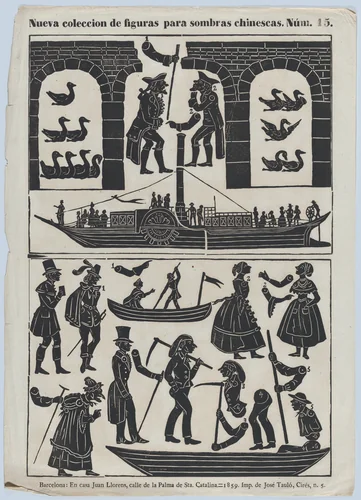
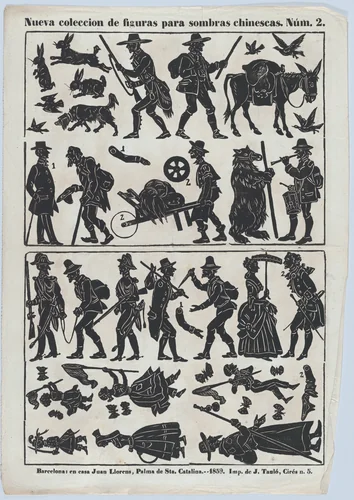
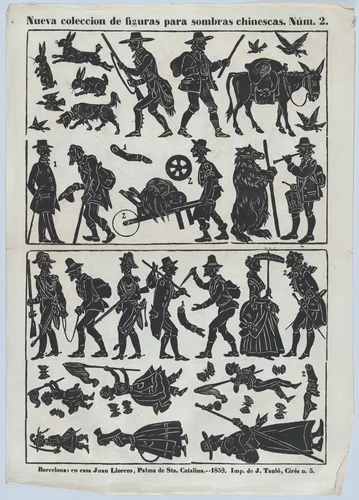
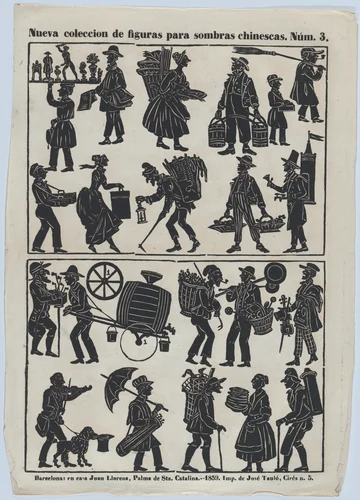
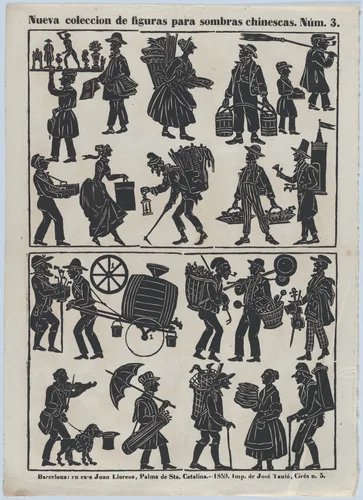
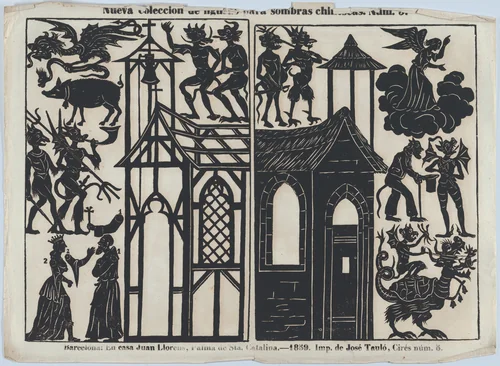
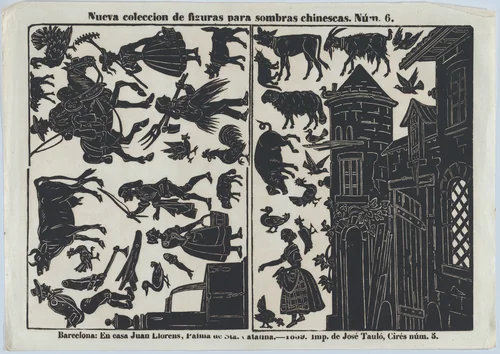
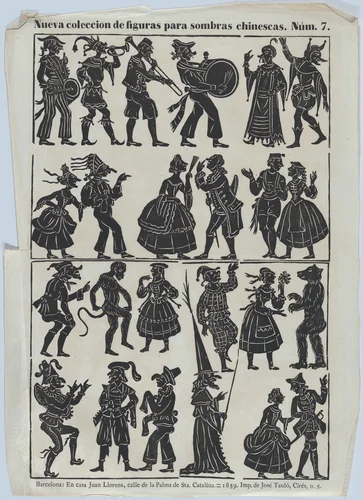
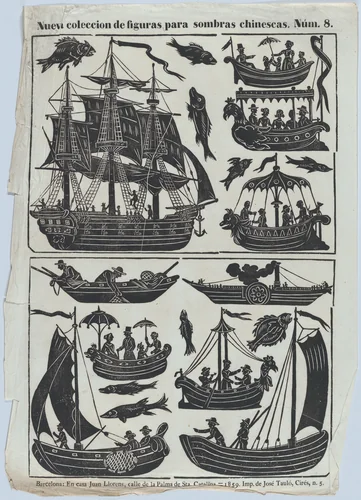
The artist’s primary legacy rests on a series of five sheets of figures for Chinese shadow puppets. These works are not merely illustrations; they functioned as practical diagrams, documenting the intricate forms required for the popular ombromanie spectacles then circulating through European theaters. The precision evident in the line work suggests that the prints served either as patterns for reproduction or as teaching aids for craftsmen specializing in these delicate figures. The repeated appearance of specific titles, such as Sheet 5 of figures for Chinese shadow puppets, in major collections implies that these images were not singular artworks but components of a larger, commercially viable portfolio, reflecting the early influence of industrial standardization on artistic production.
Llorens’s contribution lies less in revolutionary artistic technique and more in his rigorous attention to functionality and detail. His specialized output confirmed that truly museum-quality works could emerge from disciplines traditionally considered ancillary to the fine arts. This focus secured him a place in significant institutions; examples of Juan Llorens prints are held in the permanent collection of the Metropolitan Museum of Art.
Despite the relatively short period of his recorded activity, Llorens left behind a valuable record of cultural exchange and material history. Today, historians and designers benefit from the accessibility of these historical documents. As many of these images now reside in the public domain, this downloadable artwork, originally intended for a niche theatrical market, continues to inform studies in printmaking, performance, and applied graphic design, offering high-quality prints for global research.