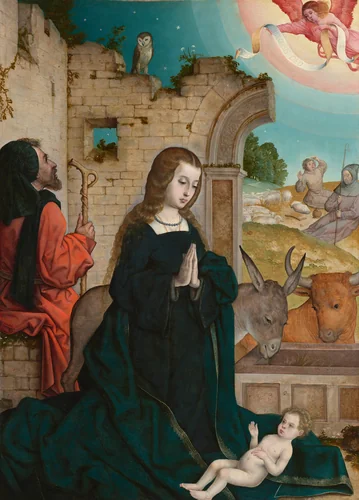
Juan de Flandes
Juan de Flandes, an appellation translating literally to "John from Flanders," stands as one of the most significant, yet historically obscured, painters to bridge the Northern European tradition with the developing artistic environment of early sixteenth-century Spain. Active from approximately 1491, he is definitively documented working in Spain beginning in 1496 and continued his practice there until 1519. Despite his elevated status and production for elite patrons, his actual identity remains subject to scholarly debate. Suggested names include Jan Sallaert, who became a master in Ghent in 1480, or perhaps Jan van der Straat, based on a fragile inscription found on the reverse of one work.
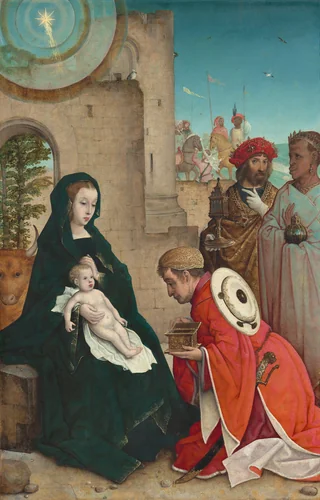
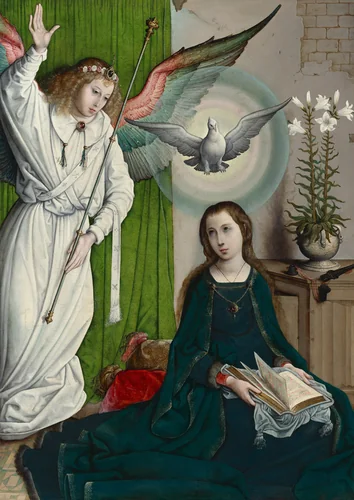
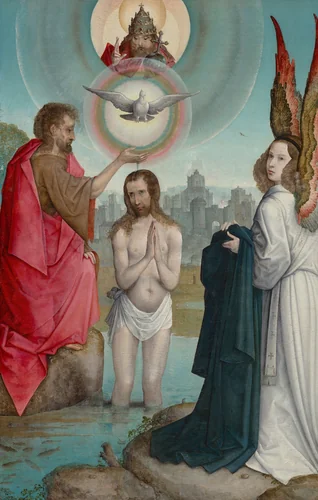
His output is critically defined by the meticulous application of the Early Netherlandish style. Trained in the Flemish tradition, Juan de Flandes brought an acute sense of naturalistic detail, luminous color palettes, and psychological nuance to his commissions, often executed on a small, intensely focused scale. His ability to render complex theological narratives with graphic precision made his work highly sought after at the Spanish court.
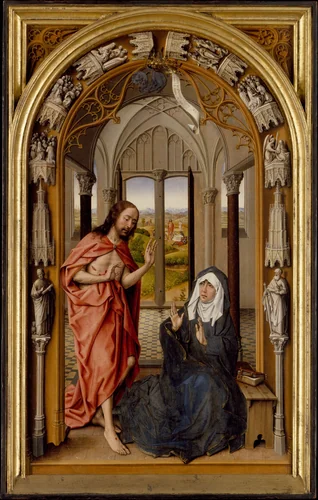
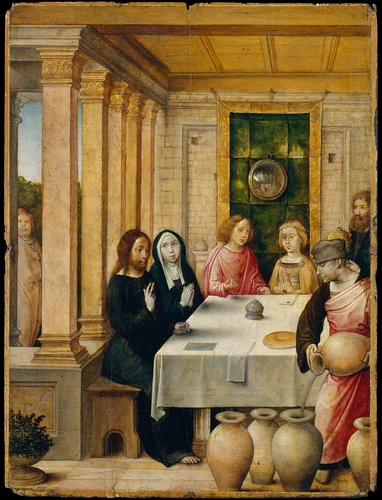
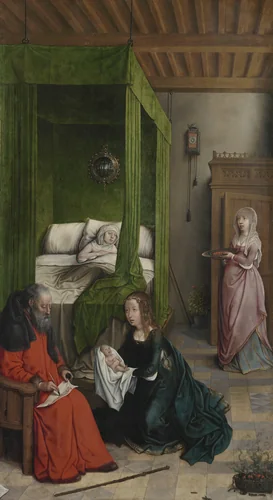
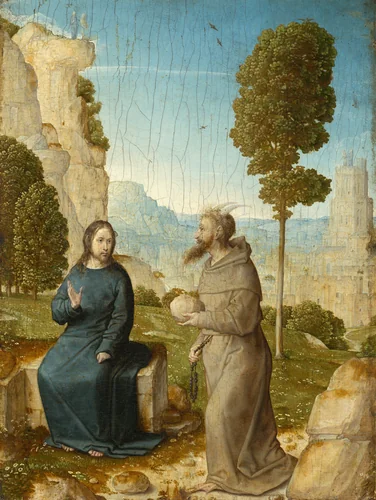
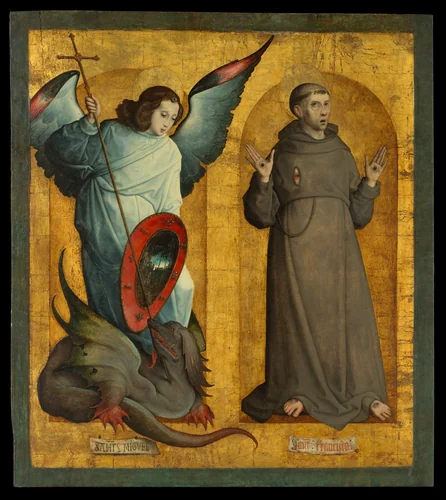
The surviving Juan de Flandes paintings attest to his mastery in narrative composition, including panels such as Christ Appearing to His Mother, and the richly detailed group scene of The Marriage Feast at Cana. While the majority of his works demonstrate high devotional seriousness, such as the poignant The Birth and Naming of John the Baptist and The Temptation of Christ, even his less overtly religious works, like Saints Michael and Francis, maintain an elegant rigor.
The historical significance of Juan de Flandes lies in his successful transportation and preservation of Flemish high realism within the Iberian Peninsula, influencing the subsequent generation of local artists. Though his documented oeuvre is limited, its importance is underscored by its wide dispersal, housed in the collections of institutions like the Metropolitan Museum of Art and the National Gallery of Art. Many of these foundational works, having entered the public domain, are now accessible as high-quality prints and downloadable artwork, ensuring that the legacy of this enigmatic yet powerful master continues to resonate.
Source: Wikipedia · CC BY-SA 4.0