Joseph Wagner
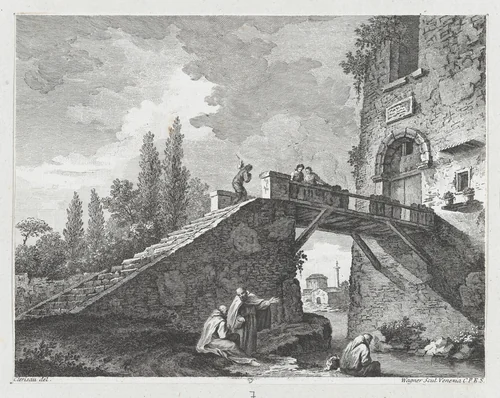
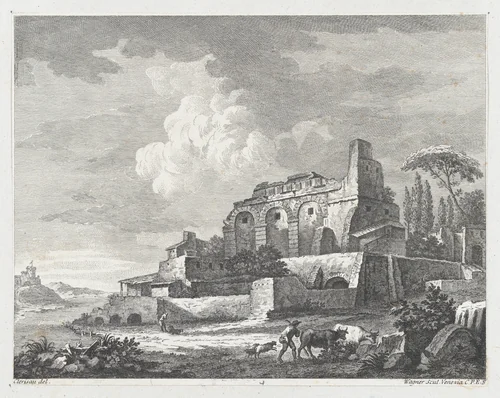
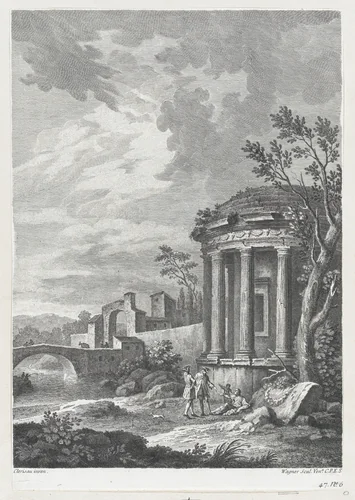
Joseph Wagner (1706-1780) was a pivotal German engraver whose prodigious output played a crucial role in disseminating European visual culture throughout the mid-eighteenth century. Active for nearly seventy years, Wagner’s detailed and exacting technique allowed him to successfully translate complex pictorial narratives into accessible, reproducible copperplate prints. His sustained technical quality has secured his legacy, with examples of his work held in preeminent institutions, including the Metropolitan Museum of Art and the Rijksmuseum, attesting to its enduring museum-quality.
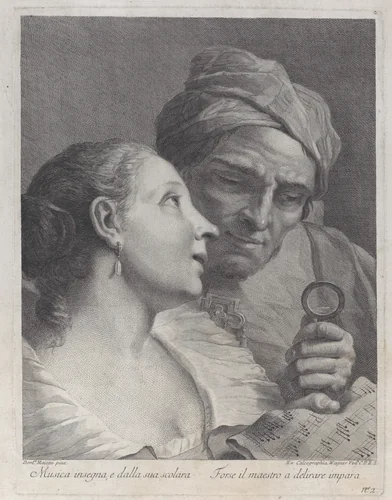
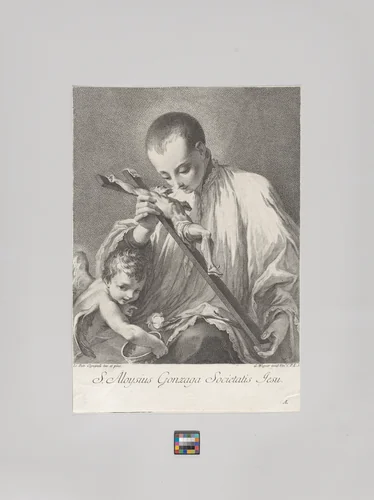
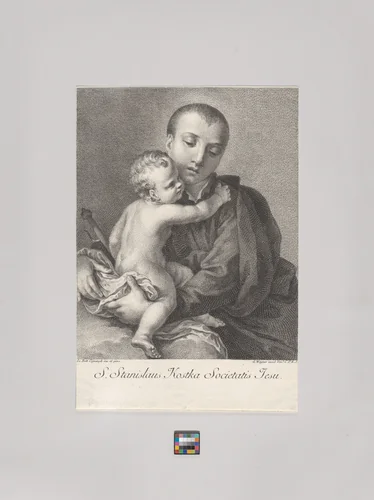
Wagner’s portfolio demonstrated a wide stylistic range, encompassing both serious religious iconography and popular contemporary genre scenes. He was a master of reproduction, often taking celebrated compositions by established painters and re-creating them for the international print market. This practice is apparent in his devotional subjects, such as Saint Stanislaus Kostka holding the Christ child in his arms, and his renderings of didactic genre scenes, including A schoolgirl and her music teacher looking at a sheet of music.
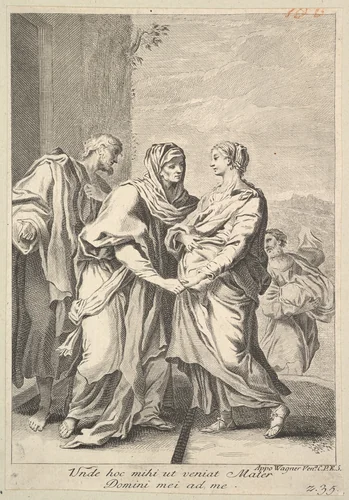
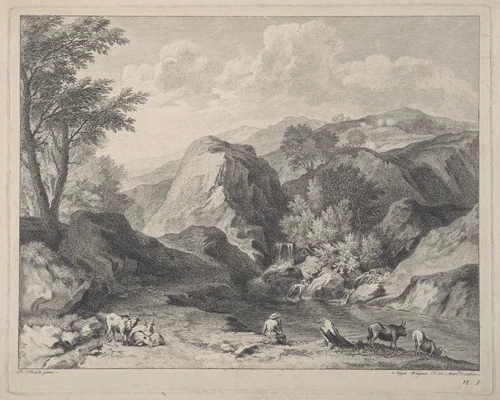
The economic realities of the print trade meant that accuracy and efficiency were paramount. Wagner frequently produced copies of existing works, occasionally reversing the compositions in the transition from painting to engraving, as seen in his version of the Visitation. His skill ensured that even large, highly detailed settings, such as the expansive Mountainous landscape with herdsmen and cows, retained their dramatic impact and spatial depth despite the medium shift.
The sustained duration of his career, spanning from at least 1706 through 1775, suggests an engraver not only technically proficient but keenly aware of market demand, continually producing high-quality prints for broad consumption. Today, these historical Joseph Wagner prints, which were once vital commercial commodities, often reside within the public domain. This shift allows scholars and enthusiasts easy access to downloadable artwork that provides invaluable insight into eighteenth-century aesthetic trends and the technical skill required to maintain excellence over such a lengthy professional life.