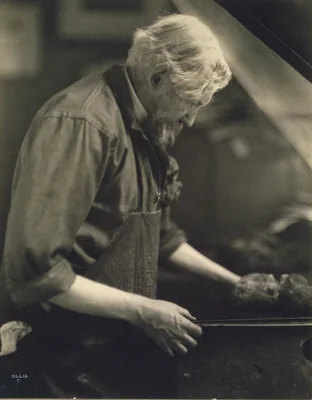
Joseph Pennell
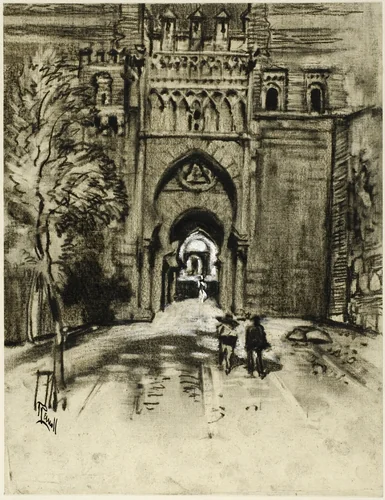
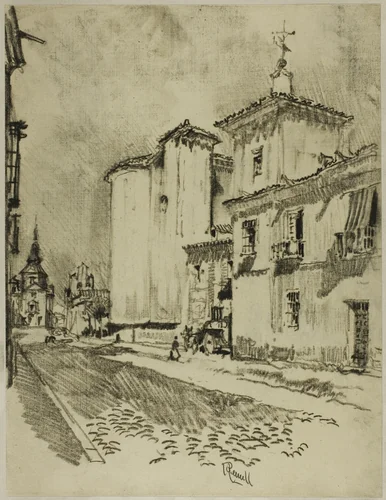
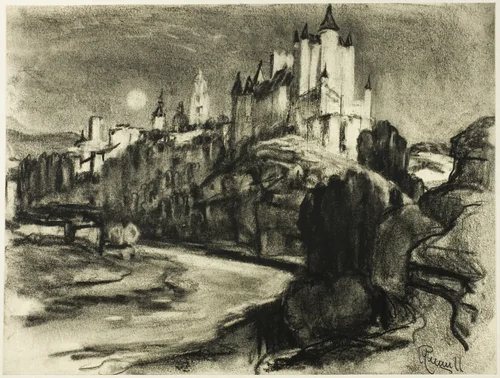
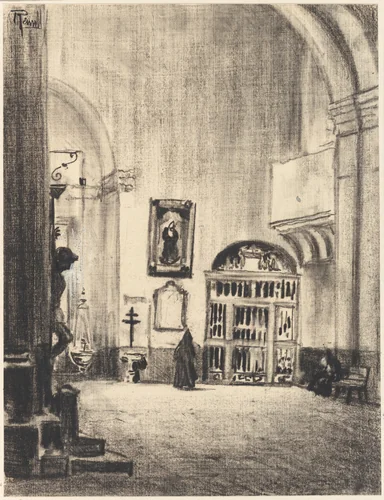
Joseph Pennell (1857-1926) was an American draftsman, etcher, and lithographer whose prolific output cemented his position as one of the preeminent graphic artists documenting the transitional late-Victorian and early-modern eras. Although an American by birth, Pennell spent the majority of his creative life working from European centers, traveling extensively to capture landmarks, industrial expansion, and urban life across the globe. His works are held in major public collections, including the Art Institute of Chicago and the National Gallery of Art.
Pennell’s rigorous technical grounding began in Philadelphia, where he studied under James Lambdin and the influential realist Thomas Eakins. This solid foundation was soon shaped by the aesthetic principles of James McNeill Whistler, whose command of atmosphere and emphasis on elegant line work became a signature element of Pennell’s own developing style. His early career, particularly the years 1880 to 1884, saw him balancing precise topographic documentation, as seen in the portrait print William Wilson Corcoran, with atmospheric architectural studies such as Fonte Nuova, Siena.
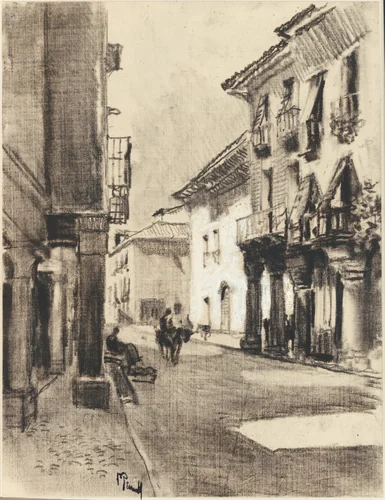
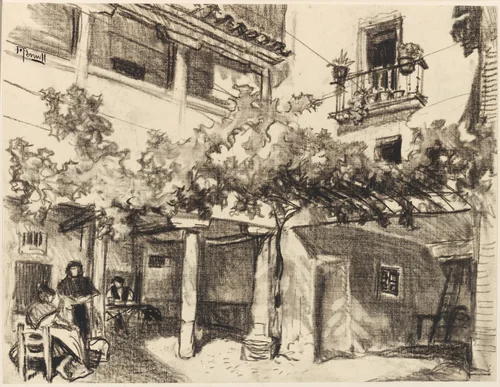
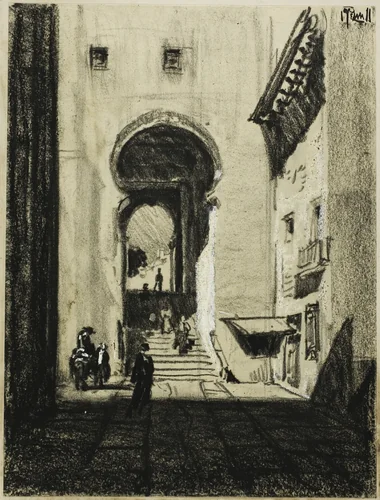
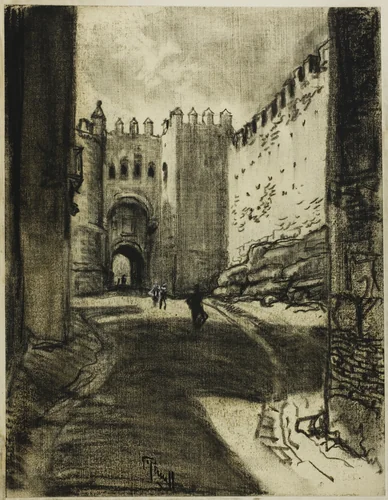
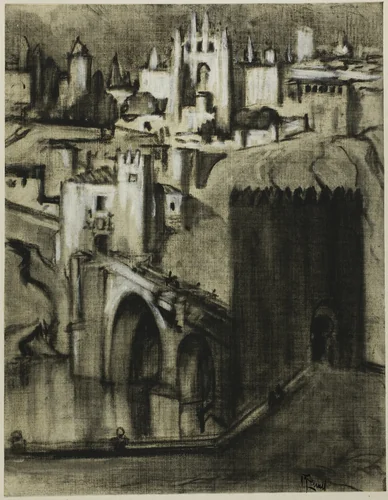
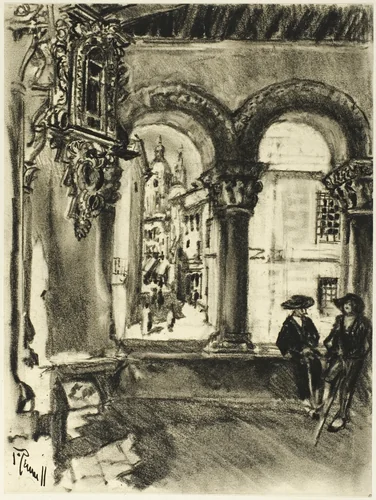
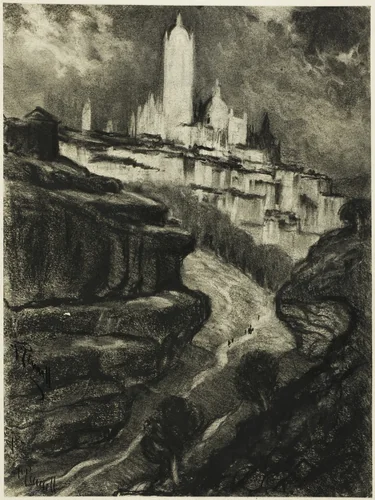
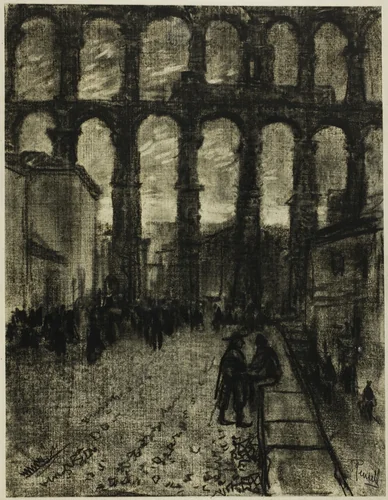
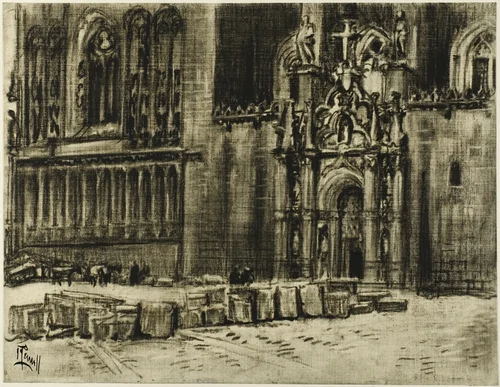
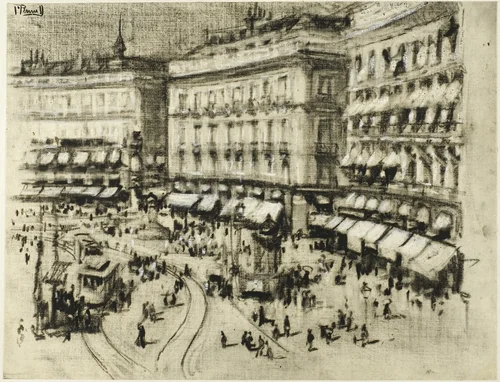
He became renowned for his ability to translate complex urban and industrial scenes into delicate yet structurally sound works on paper. Whether depicting the historic character of Byzantine Palace, Venice or the nascent infrastructure of Pilot Town, La., Pennell approached his subjects with a keen eye for both detail and dramatic composition. Unlike many contemporaries who sought solely bucolic landscapes, Pennell dedicated significant energy to illustrating the scale and visual impact of modern engineering, recognizing the monumental quality inherent in bridges and factories.
Pennell was deeply engaged with the visual culture of publishing, serving as a highly sought-after illustrator for books and magazines. Adding another dimension to his creative persona, he was also an accomplished writer, often authoring the texts he illustrated alongside his wife, the author Elizabeth Robins. This unique duality, shifting effortlessly between technical visualization and literary narration, allowed him to control both the image and the context of his observations. Today, the enduring interest in his work has made many of his Joseph Pennell prints highly accessible; much of his historically significant output now resides in the public domain, allowing for free art prints and museum-quality viewing globally.
Source: Wikipedia · CC BY-SA 4.0