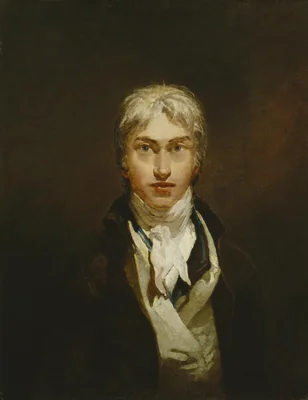
Joseph Mallord William Turner
Joseph Mallord William Turner (1775-1851) is universally recognized as the greatest painter England has produced. A towering figure of the English Romantic movement, he fundamentally redefined the parameters of landscape art, elevating its stature to rival that of traditional history painting.
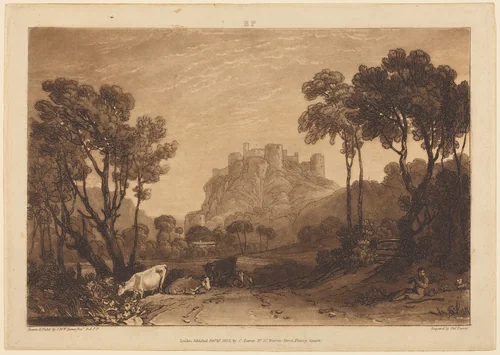
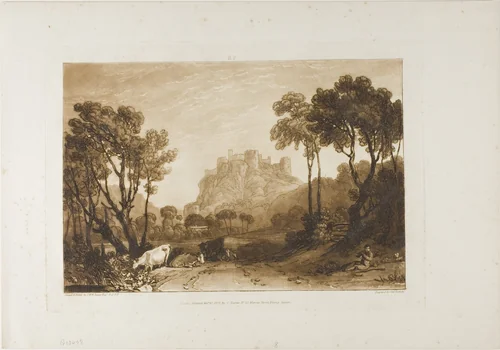
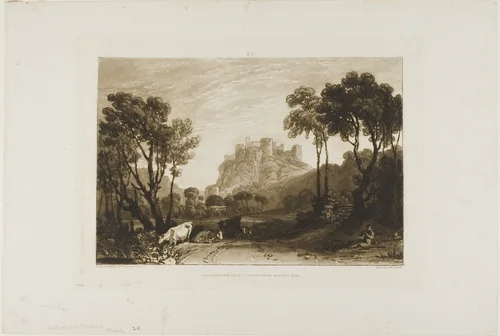
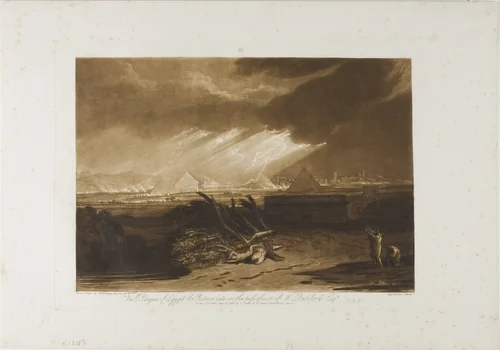
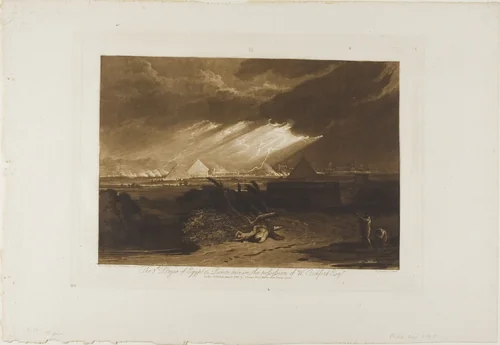
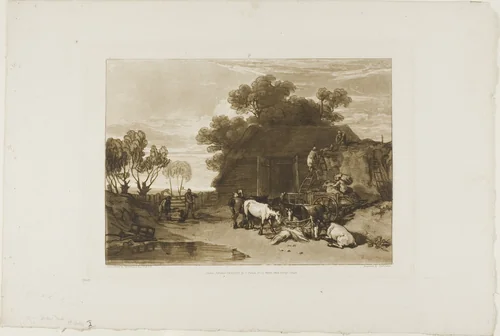
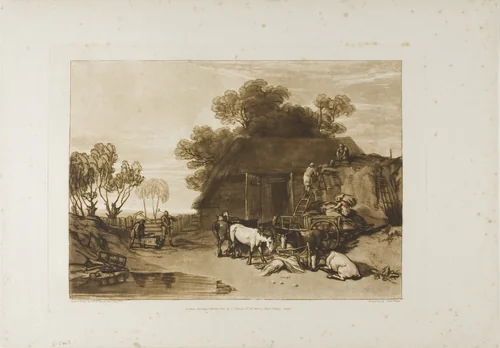
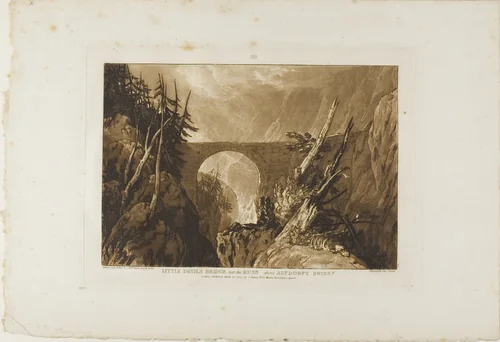
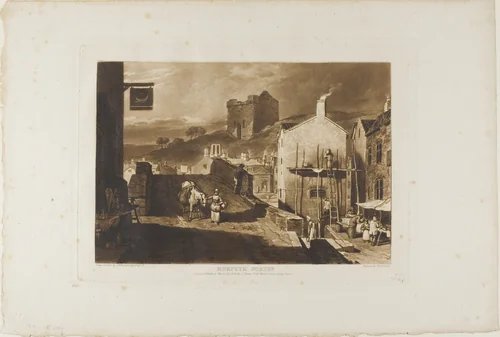
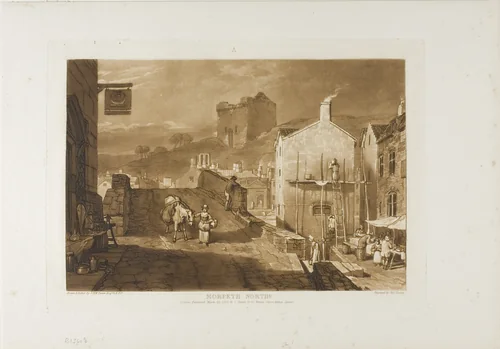
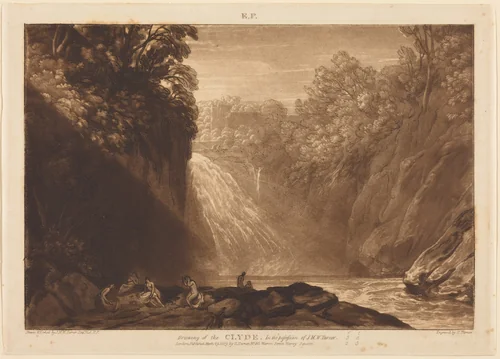
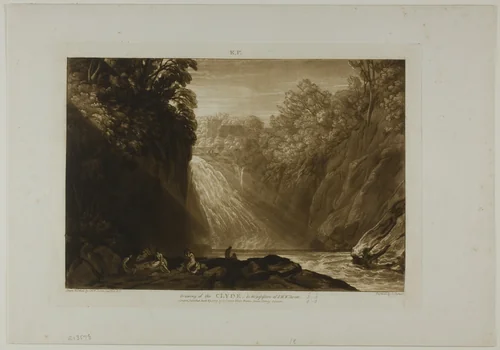
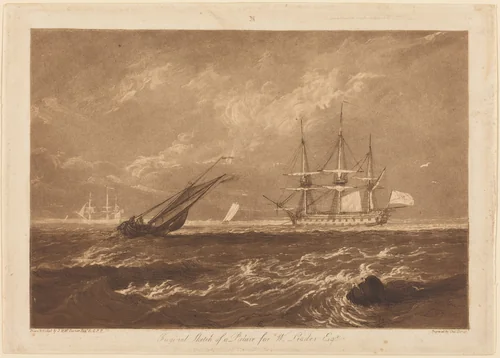
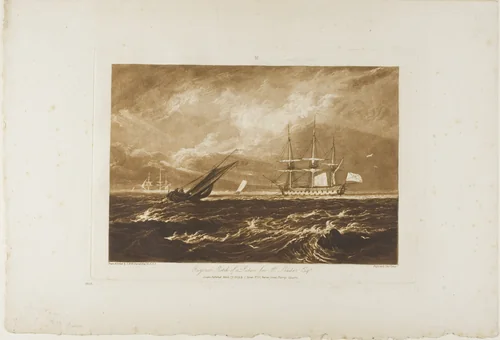
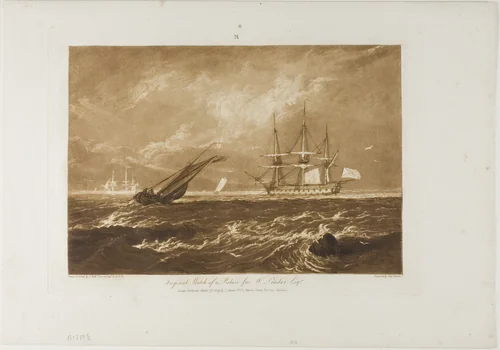
Known simply as William Turner during his lifetime, he built his initial reputation on expressive colouring, dramatic light, and imaginative compositions, frequently focusing on turbulent, often violent marine scenes. The breadth of his technical mastery is evident even in preparatory works like Sketches of Elm and Ash Trees and the detailed study of light in etchings such as Crowhurst, plate 76 from Liber Studiorum.
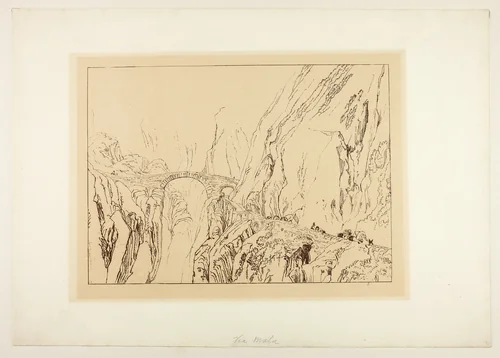
Yet, Turner’s career was defined by constant, ambitious evolution. He purposefully distanced himself from established conventional aesthetics, moving rapidly beyond the constraints of Romanticism. Crucially, he chose to bypass the rigorous observational standards of Realism that defined much of mid-19th-century European art. Instead, his later Joseph Mallord William Turner paintings and watercolours, such as Pont d’Orio in the North of Italy, focused increasingly on the dissociation of light, atmosphere, and colour itself. These radical experiments served as a profound precursor to the Impressionist and Abstract Art movements that arose in the decades following his death. It is often observed, with a slight degree of historical irony, that his most advanced concepts were so far ahead of their time they could only be fully understood by the next generation of painters.
Turner was championed vigorously by the leading English critic John Ruskin from 1840 onward, a critical endorsement that cemented his legacy. He was extraordinarily prolific, leaving behind an astonishing corpus estimated at over 550 oil paintings, 2,000 watercolours, and 30,000 works on paper. This immense output has secured his place in major international collections, including the Art Institute of Chicago and the National Gallery of Art, where his continued influence can be studied. Today, many of his masterful works, including high-quality prints and drawings, have entered the public domain, offering access to downloadable artwork for study and appreciation worldwide.
Source: Wikipedia · CC BY-SA 4.0