Joseph Lemercier
Joseph Lemercier was an artist known for architectural studies and idealized drawings, active around the year 1800. His documented body of work, comprising five drawings preserved in museum collections, establishes him as a practitioner of grand-scale architectural visualization during the transition to the nineteenth century.
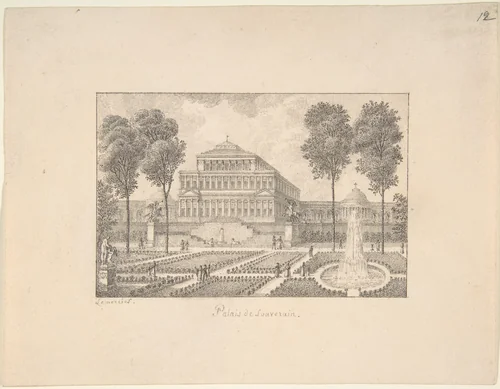
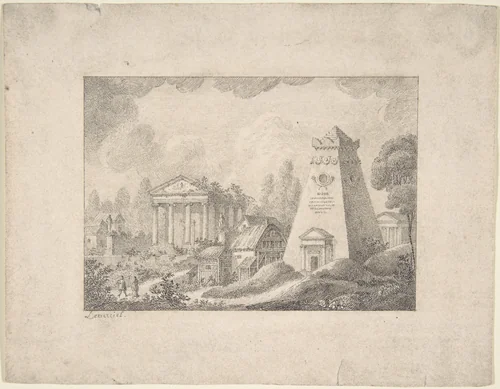
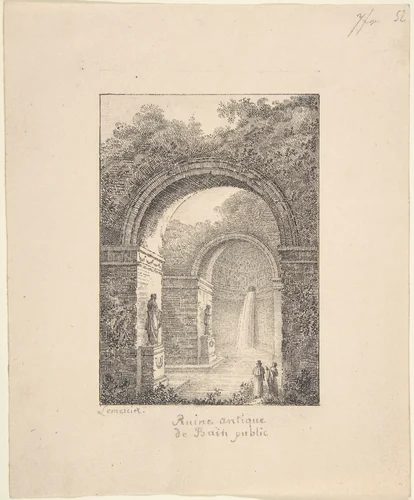
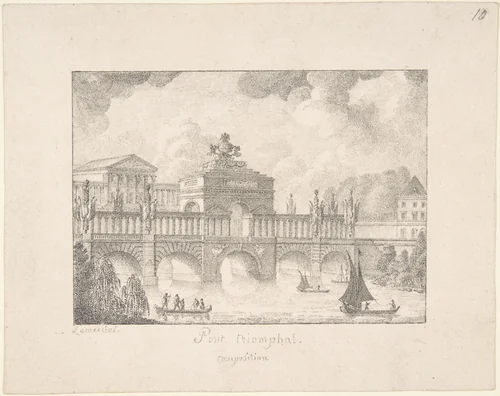
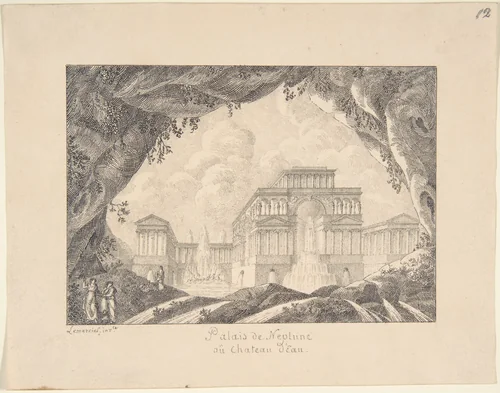
The preserved works highlight Lemercier’s aptitude for draftsmanship, focusing on monumental public and private structures, often imbued with classical or fantastical elements. His documented designs include the detailed engineering study Design for a Triumphal Bridge alongside more imaginative conceptual pieces like Architectural Fantasy and the dramatic The Palace of Neptune (Water Palace). Further examples of his skill in rendering stately environments are documented in A Ruler's Palace and Classical Ruins: A Public Bath.
Joseph Lemercier’s work is represented in significant permanent holdings, notably the Metropolitan Museum of Art. The preservation of these works in collections confirms his relevance to the period’s tradition of design and theoretical architecture. As historical artworks, these museum-quality drawings are often made available as high-quality prints and downloadable artwork for study, providing researchers with insights into early 19th-century aesthetic preferences for grandeur and classicism.