Joseph Keppler
Joseph Ferdinand Keppler (1838-1894) was an Austrian-born American illustrator and caricaturist whose innovative approach fundamentally redefined the visual language of political satire in the United States. While active primarily between 1858 and 1880, his influence stretched well into the modern era, establishing a new paradigm for American political cartooning through its sophisticated use of imagery and emerging printing technology.
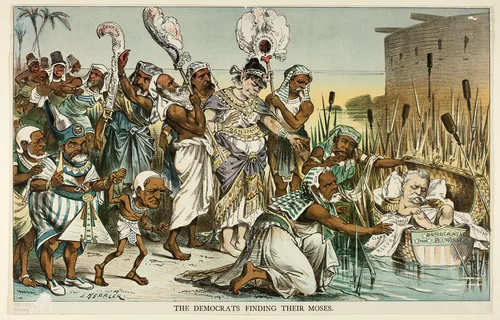
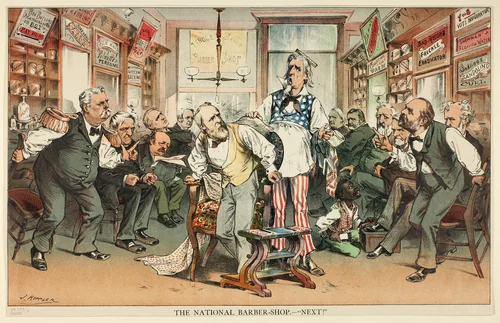
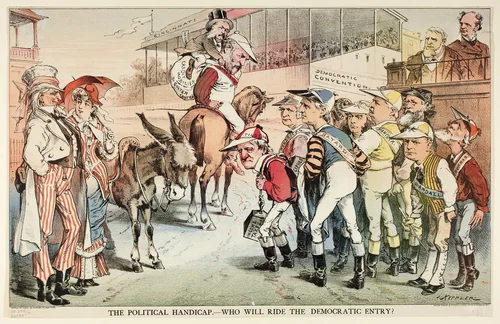
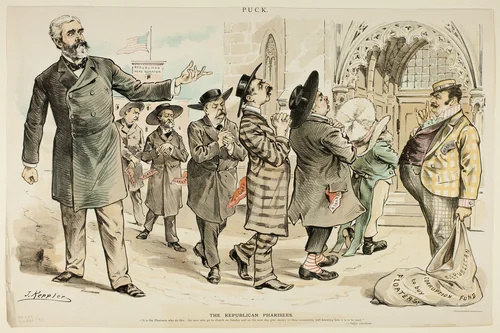
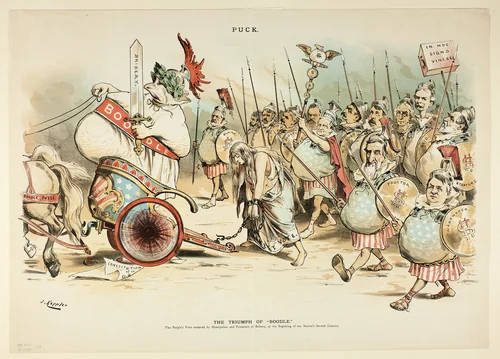
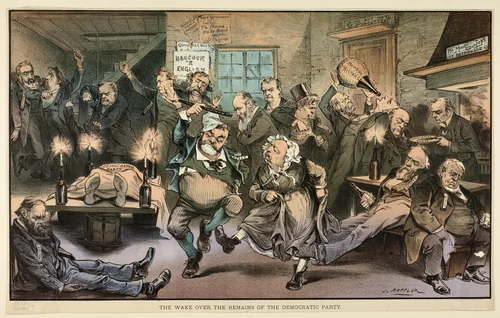
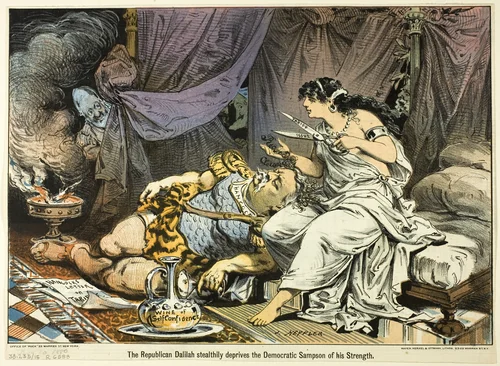
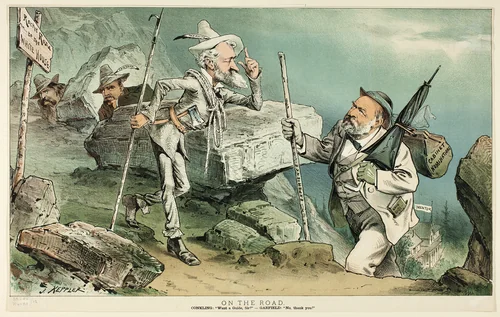
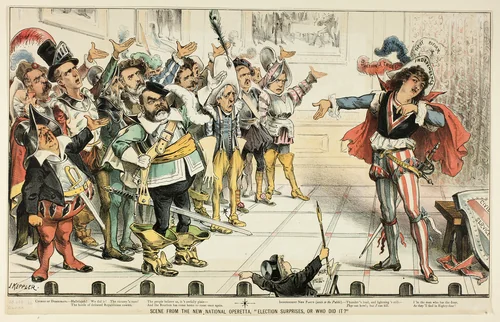
Keppler’s most significant artistic achievement was his integral role in the success of Puck magazine, a publication he co-founded in 1871. His move from Vienna to New York allowed him to apply European graphic traditions—which favored detailed, multi-figure narrative scenes—to the turbulent political stage of the post-Civil War era. Crucially, Keppler mastered the use of chromolithography, turning the front and center pages of Puck into vibrant, full-color canvases. This elevated the political cartoon from a marginal newspaper sketch to a centerpiece of popular print culture, demanding attention through scale, color, and intricate composition.
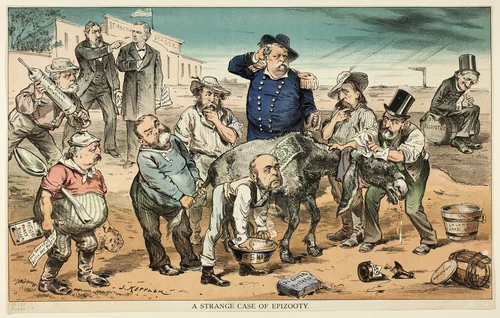
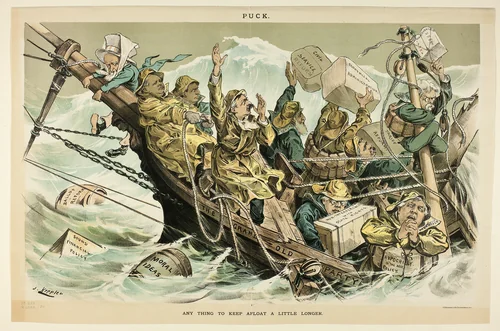
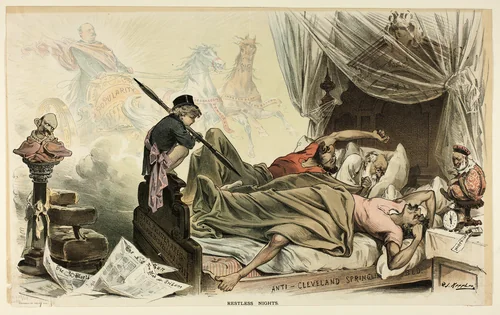
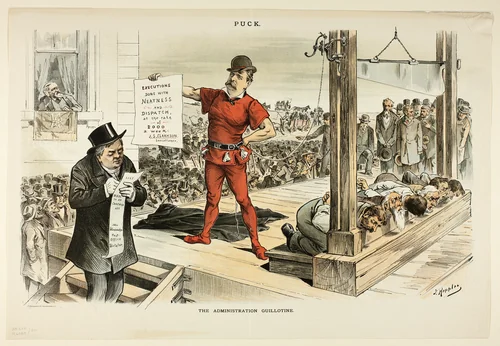
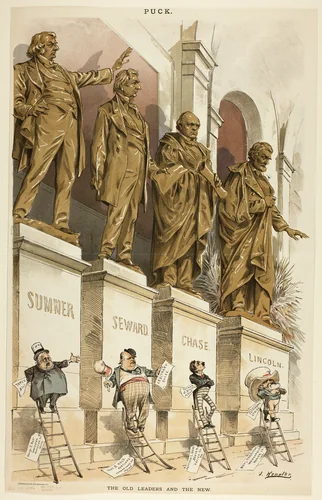
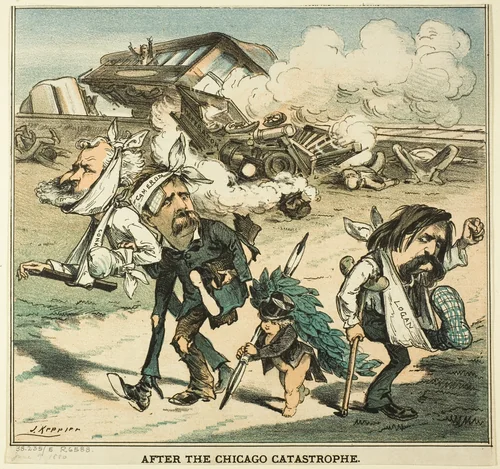
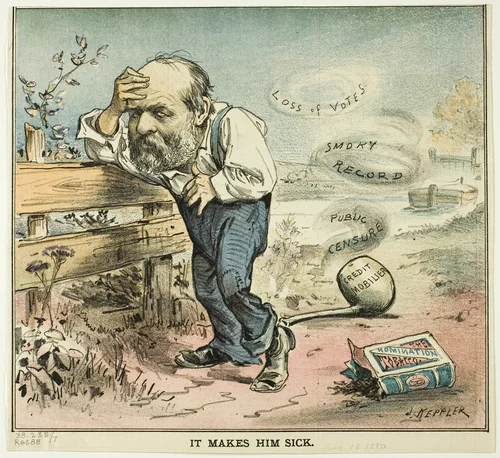
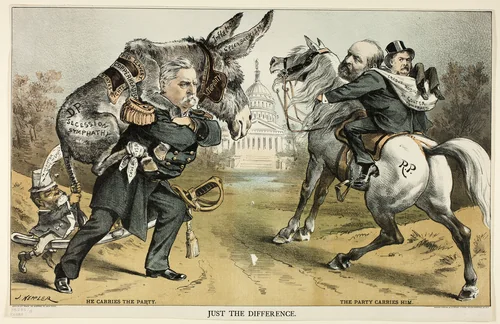
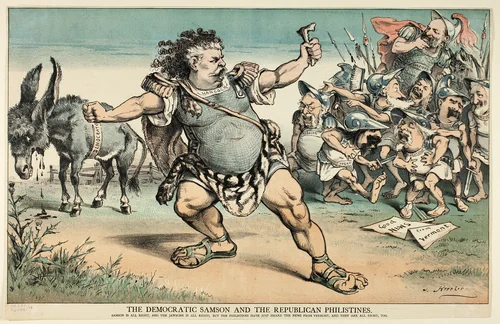
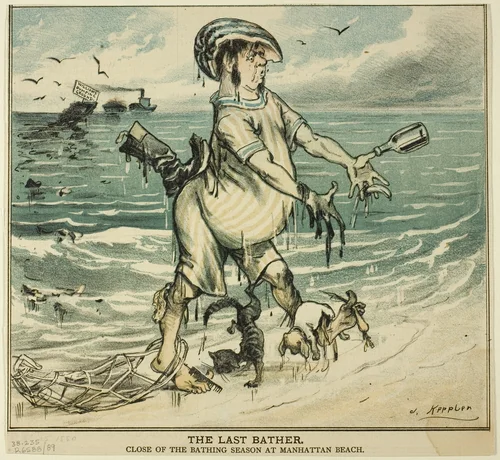
Keppler possessed a rare capacity to translate dense legislative and financial issues into universally readable visual parables. His political graphics often carried a grand, theatrical scope, frequently using architectural settings and classical references to frame the often-petty squabbles of the Gilded Age. This formal sophistication distinguished his output and guaranteed the immediate impact of works such as The Administration Guillotine and A Strange Case of Epizooty, from Puck. His subjects were rarely treated mildly; whether capturing political instability in Restless Nights or financial desperation in Any Thing to Keep Afloat a Little Longer, Keppler rendered his figures with a mix of mischievous wit and devastating accuracy.
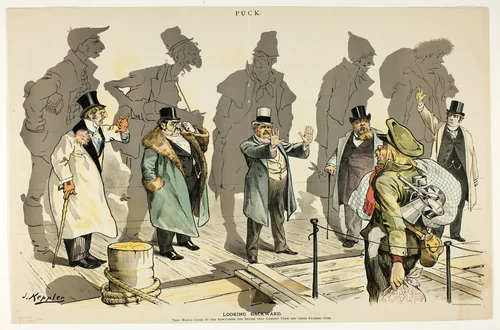
The collection of Keppler’s 15 documented prints provides essential documentation of late nineteenth-century American political life. His work is preserved in major institutional holdings, including the Art Institute of Chicago, serving as a critical resource for media and art historians. Since much of his output, including the widely referenced Looking Backward, is now in the public domain, these foundational Joseph Keppler prints are frequently utilized. They remain popular subjects for study, often circulated as high-quality prints that allow for close examination of his technical innovation and enduring cultural impact.
Source: Wikipedia · CC BY-SA 4.0