Joseph Farington
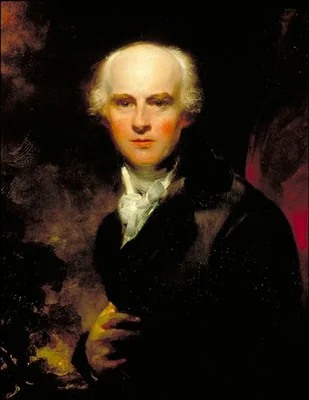
Joseph Farington (1747-1821) occupies a crucial, two-fold position within the history of late 18th and early 19th-century British art, recognized both for his exacting approach to landscape painting and his invaluable, detailed diaries. While the voluminous journals offer perhaps the most intimate and sometimes acidic account of the contemporary London art establishment, Farington’s visual output establishes him as a thoughtful proponent of the shifting topographical and picturesque traditions.
Active between approximately 1786 and 1808, Farington was particularly adept at capturing the structural dynamics and atmospheric conditions of the rugged British Isles and continental Europe. His surviving body of work, often presented through meticulous drawings and washes, exhibits the careful observation that defines the museum-quality of his craft. He moved fluidly between the grand, historical site and the quiet, domestic scene.
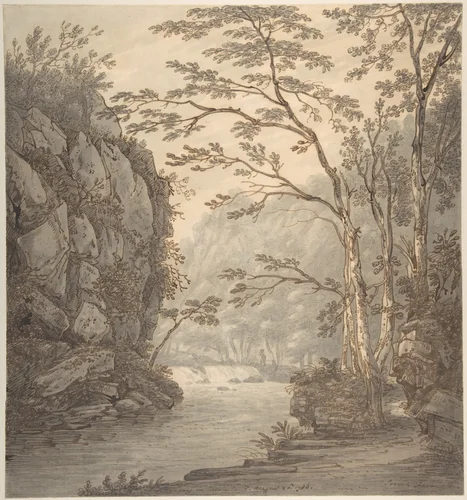
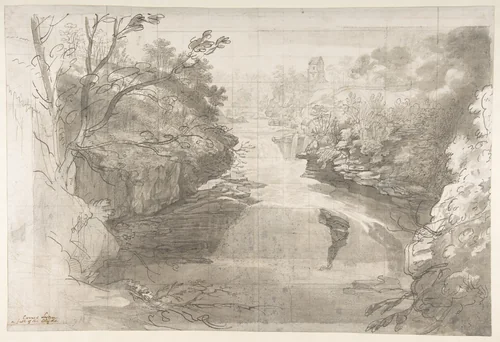
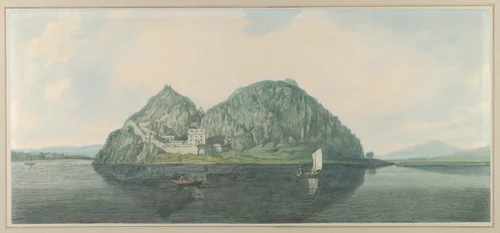
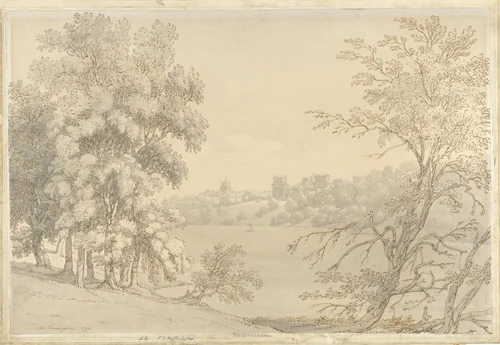
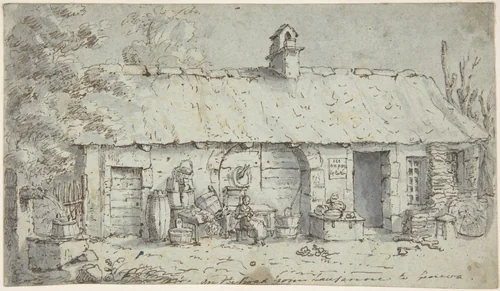
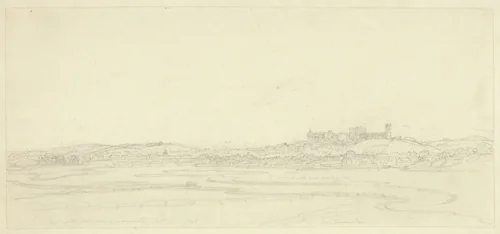
His artistic travels provided the material for compositions like Corra Linn, the Falls of the Clyde and Dumbarton Rock from the South, pieces that demonstrate his sensitivity to the era’s fascination with the Romantic sublime. Conversely, works such as Cottage on the Road from Lausanne to Geneva and the carefully structured Gezicht op Blenheim Palace over het meer Blenheim showcase his command over classical composition and detailed architectural renderings.
Farington’s prominence is confirmed by his inclusion in major international collections, including the Rijksmuseum, the Metropolitan Museum of Art, and the Art Institute of Chicago. It is, perhaps, an enjoyable historical irony that the man who chronicled the detailed political skirmishes of the Royal Academy also applied such diligent focus to the quiet grandeur of scenes like At Nunnery in Cumberland. He was both a keen witness to the art world’s theatrical disputes and a masterful, measured interpreter of the natural world.
Through his commitment to high-quality prints and studies, Farington left behind a visual record that provides essential context for understanding the transition from Enlightenment documentation to early Romanticism. Today, his detailed drawings ensure the ongoing relevance of Joseph Farington prints to the study of 18th-century British draftsmanship.
Source: Wikipedia · CC BY-SA 4.0