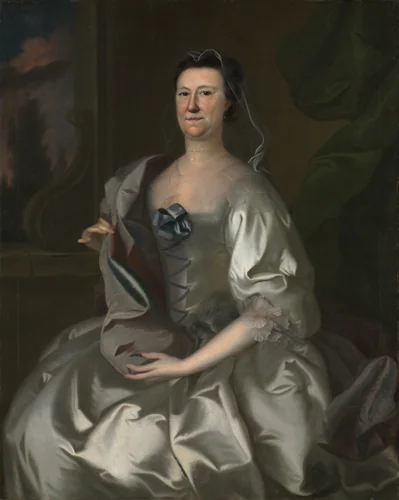
Joseph Blackburn
Joseph Blackburn, an English portrait painter whose documented career spanned a remarkably short yet crucial six years, indelibly shaped the course of visual arts in Colonial America. Active primarily in Boston and Portsmouth between 1754 and 1760, Blackburn served as a vital conduit, introducing the sophisticated aesthetic standards of the European Rococo into the traditionally austere environment of New England society. His arrival marked a critical inflection point, shifting portraiture away from the relatively provincial style of his predecessors toward a fashionable elegance eagerly consumed by the colonies’ rising merchant gentry.
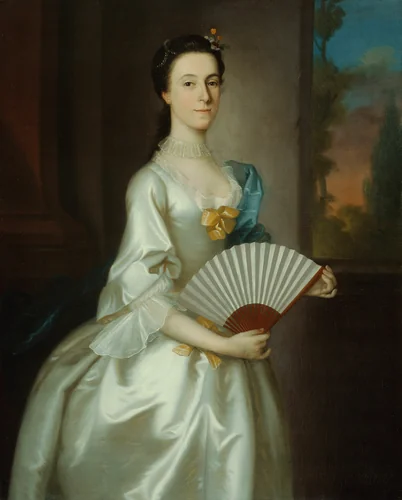
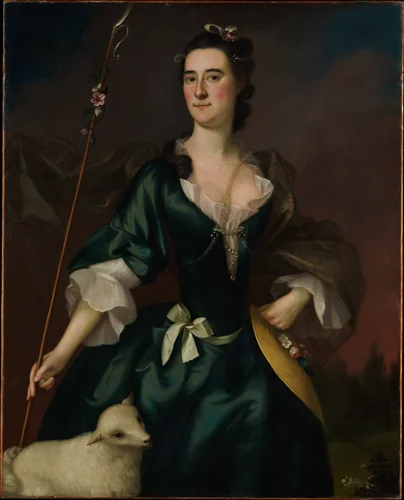
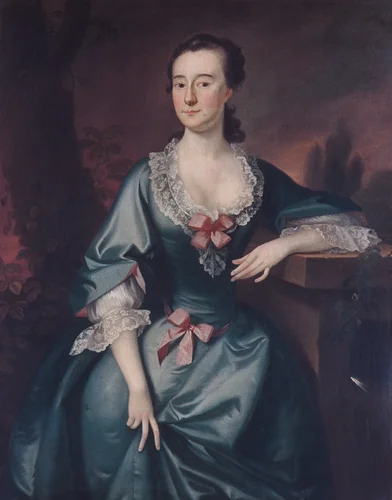
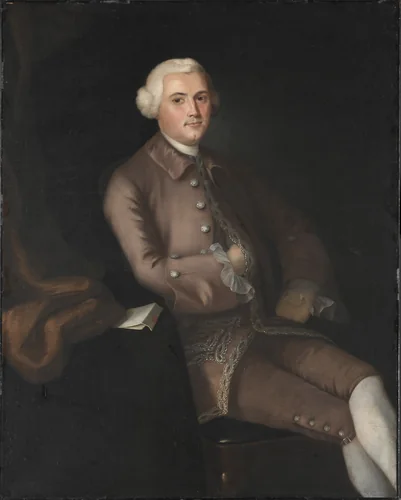
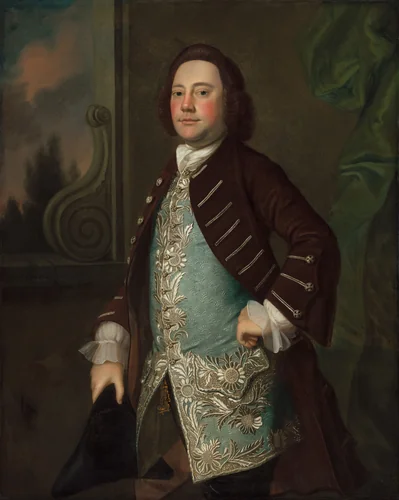
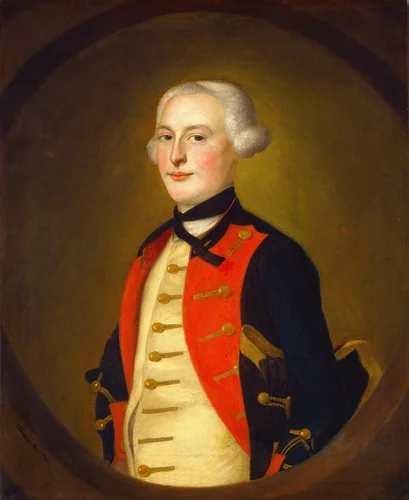
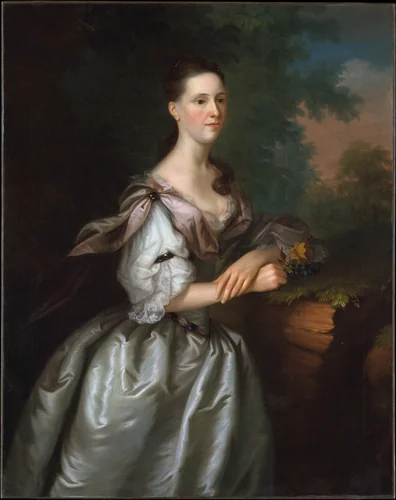
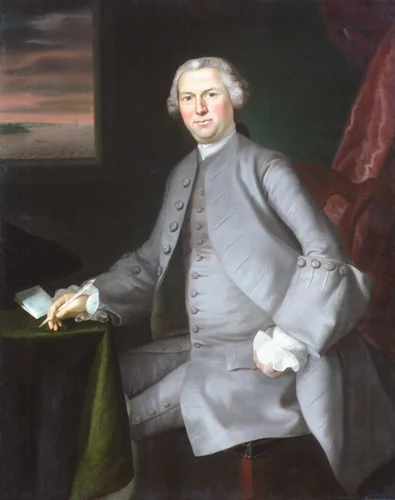
Though his attributed corpus consists of fewer than fifty works, his influence was profound and immediate. Blackburn specialized in highly finished, detailed depictions of status, favoring opulent settings, dark, shimmering backgrounds, and meticulous attention to texture. His skill in rendering costly materials, particularly silks, laces, and velvet, provided his sitters with a compelling visual narrative of their transatlantic refinement. Key examples such as Abigail Chesebrough (Mrs. Alexander Grant) and the luminous Mary Sylvester demonstrate his characteristic reliance on graceful, serpentine compositions and a delicate handling of light, hallmarks of the era’s taste.
Blackburn’s technique and formal compositions established a new, elevated standard for local practitioners. His work proved particularly instructive for the young John Singleton Copley, who absorbed and eventually surpassed Blackburn’s innovations after the Englishman’s unexpected departure. Blackburn’s brief residency thus provided American painting with a necessary stylistic infusion, effectively modernizing the colonial tradition just prior to the Revolutionary period.
Despite his clear stylistic impact and the enduring recognition of his work, the circumstances of Joseph Blackburn’s training and his abrupt exit from the colonies around 1760 remain a historical mystery, adding a certain allure to his sparse historical record. Today, these foundational Joseph Blackburn paintings are preserved in major North American collections, including the National Gallery of Art, the Metropolitan Museum of Art, and the Art Institute of Chicago, securing their place as museum-quality examples of early American portraiture. Furthermore, as many images of his work enter the public domain, they become widely accessible, allowing researchers to study and utilize high-quality prints of this elusive master’s output.
Source: Wikipedia · CC BY-SA 4.0