Joseph Badger
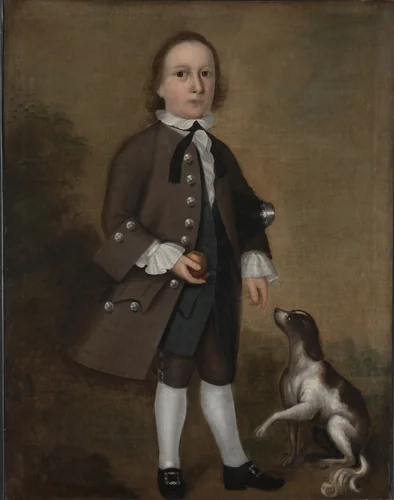
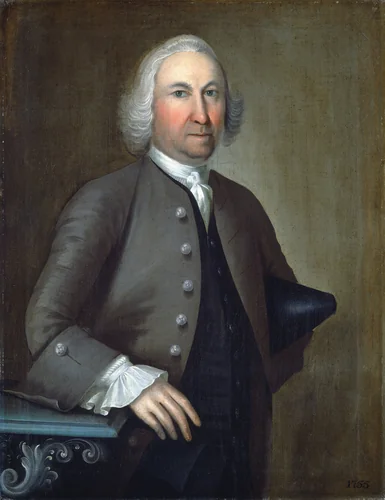
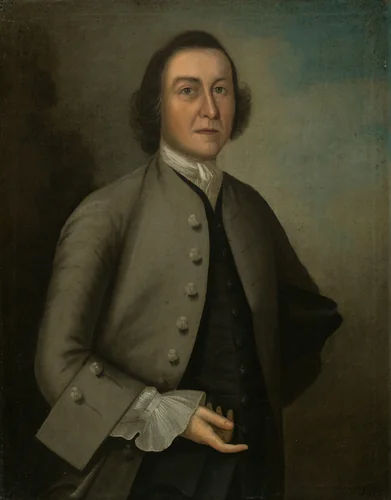
Joseph Badger (1700-1765) was a key 18th-century American portraitist based in Boston, Massachusetts, whose works provide a valuable visual archive of the colonial establishment immediately preceding the Revolutionary period. Documenting local military figures, merchants, and their families between 1730 and 1760, Badger navigated the economic realities of a nascent colonial art market where patronage was often intermittent.
Born in Charlestown, Massachusetts, Badger was the son of a tailor. Though artistically ambitious, he was fundamentally an artisan, maintaining a lifelong career as a house-painter and glazier. To secure a livelihood during periods when commissions for portraits slackened, he regularly accepted work painting commercial signs, heraldic devices, and funereal hatchments. This necessity places Badger firmly within the tradition of the itinerant artisan-painter, though his commitment to portraiture set him apart from the majority of his tradesman peers. Badger and his wife, Katharine Felch, moved to Boston around 1733, where he established himself and became a member of the influential Brattle Street Church.
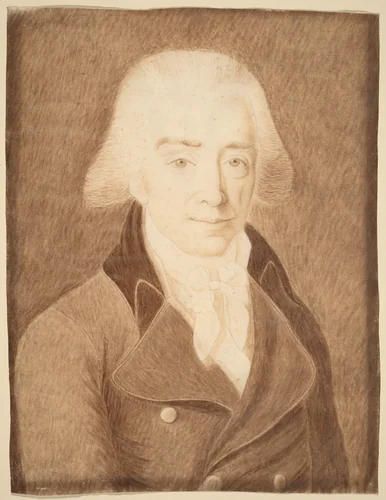
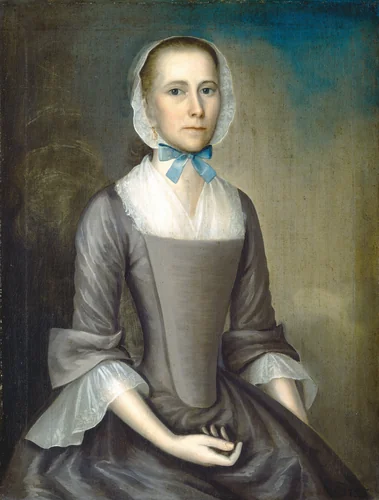
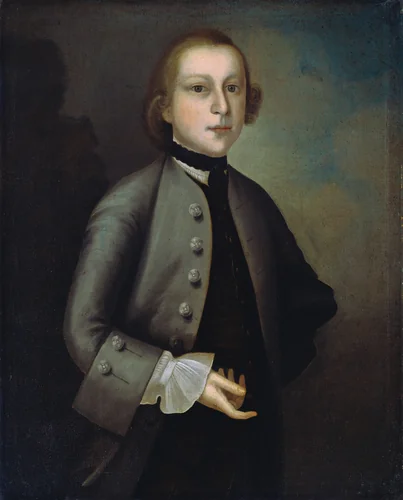
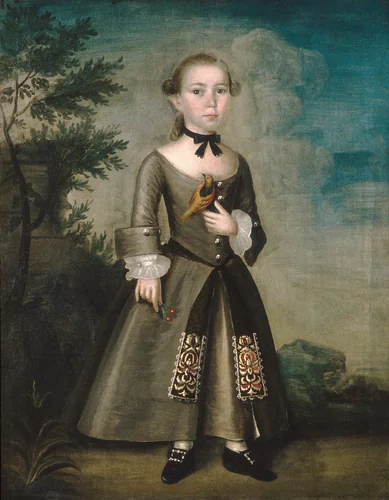
Badger’s artistic output is focused and direct. His signature works, such as Captain Isaac Foster, Dr. William Foster, and Eleanor Wyer Foster (Mrs. Isaac Foster), are characterized by their straightforward presentation of the sitter, emphasizing character over complex background details. These works are foundational to understanding the visual culture of the era and are highly sought after by institutions. Major holdings of his work include the Metropolitan Museum of Art, the National Gallery of Art, and the Cleveland Museum of Art. Today, thanks to the accessibility afforded by the public domain, several original Joseph Badger paintings are available for scholarly study and reproduction as high-quality prints.
While his contemporaries respected his diligence, Badger’s significance was largely overlooked by art historians and connoisseurs in the 19th century until a resurgence of interest following Lawrence Park’s dedicated study in 1918. His career closed abruptly in 1765 when, as reported, the painter was "taken with an Apoplectic Fit as he was walking in his Garden, and expired in a few Minutes after." Badger’s practical approach and commitment to documenting his community ensure that his quiet, museum-quality portraiture remains a vital contribution to early American art history.