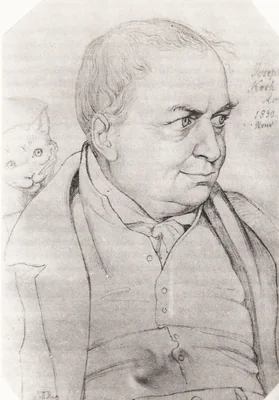
Joseph Anton Koch
Joseph Anton Koch stands as the definitive Austrian landscape painter bridging the ideals of Neoclassicism and the dramatic temperament of early Romanticism. Active across the late eighteenth and early nineteenth centuries, Koch is arguably the most significant exponent of the neoclassical landscape tradition, renowned for infusing the picturesque Italian vista with rigorous classical structure and profound historical resonance.
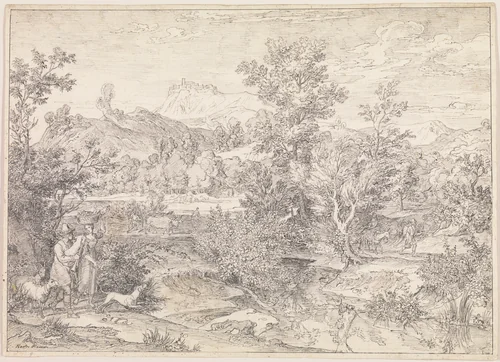
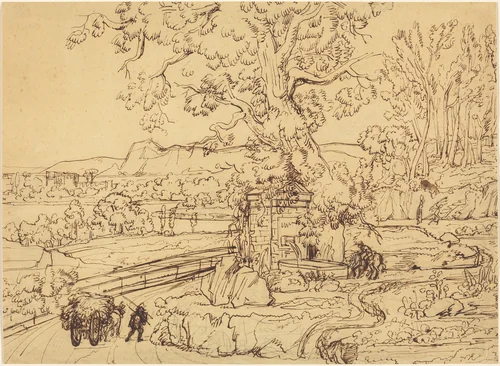
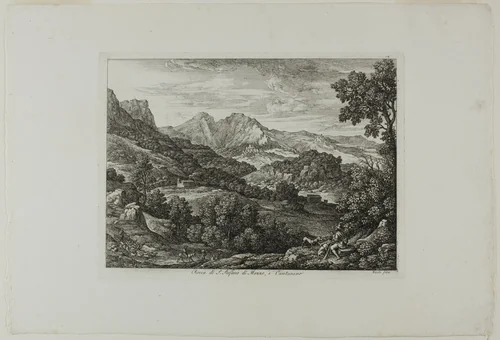
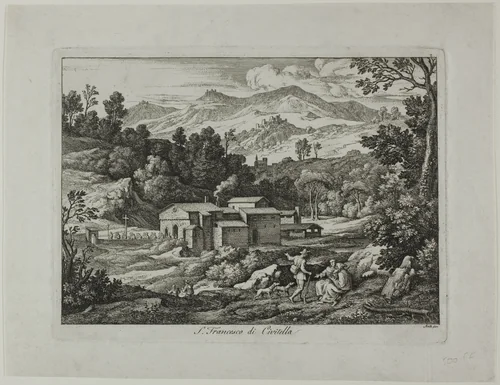
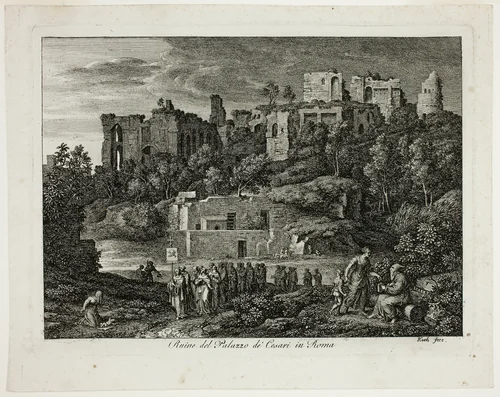
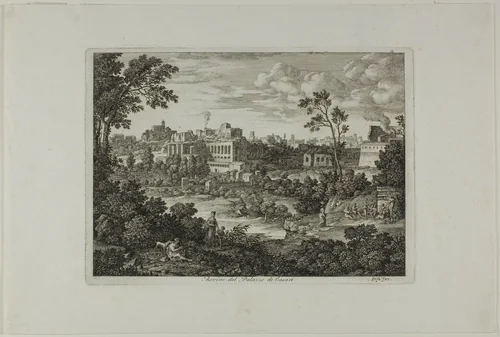
Born in Austria in 1768, Koch trained in Stuttgart and Strasbourg before relocating permanently to Rome, the central magnetic force for all classically inclined artists of the era. Unlike many of his contemporaries who treated Italy as a temporary study excursion, Koch remained, making the Eternal City and its surrounding topography his enduring subject matter. His artistic innovation was rooted in transforming the traditional veduta, or topographical view, into the heroic landscape. Works such as Roman landscape with figures near Paliano and the evocative The Roman Campagna with an Ancient Fountain showcase this method, wherein nature is rendered not merely as scenery but as a stage upon which classical history and enduring moral sentiment unfold. Koch synthesized the idealizing theories of figures like Nicolas Poussin with direct observational drawing, yielding compositions characterized by deep spatial recession and meticulously balanced architectural elements.
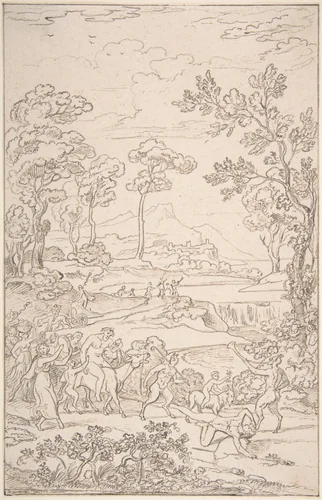
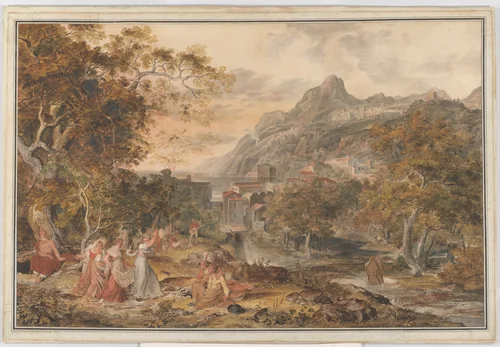
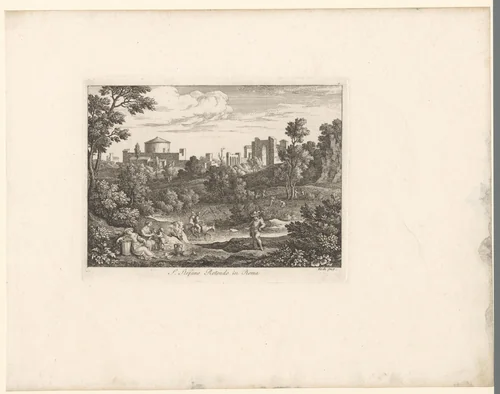
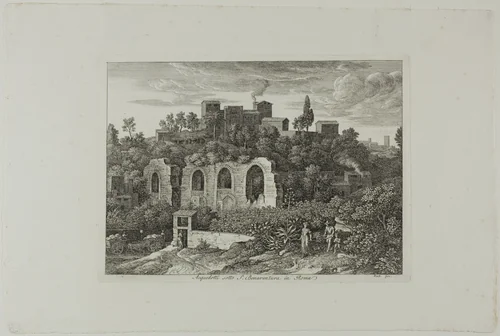
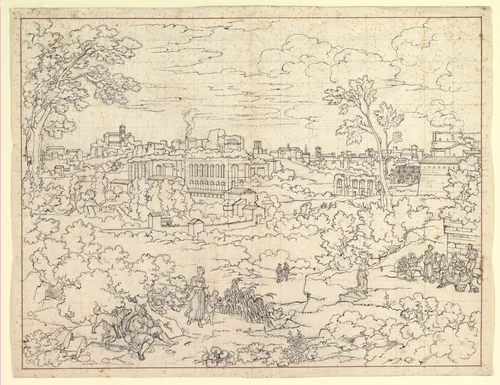
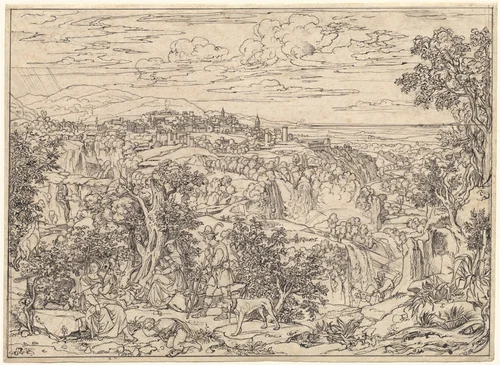
His compositions demonstrate a fascinating pivot from the highly structured academic style toward the nascent emotionality of Romanticism. This shift is evident in works like View of Vietri with Young Country Women Dancing for Shepherds in the Foreground, where the grandeur of the landscape accommodates lively, yet harmoniously integrated, genre scenes. Koch had a particular knack for integrating the human element, treating his figures not as incidental details but as essential components reflecting the majesty and drama of their surroundings. Even seemingly straightforward structural studies, such as Gezicht op de San Stefano Rotonda in Rome, carry a weight and permanence that elevate them beyond mere observation.
Koch’s prolific output extended across painting, drawing, and etching. He was instrumental in defining the iconography of the German expatriate art community in Rome during this period. Today, Koch's works remain highly sought after by institutions, residing in major collections worldwide, including the National Gallery of Art and the Cleveland Museum of Art. Because of this institutional support, high-quality prints and studies of Joseph Anton Koch prints and paintings are often digitized and available within the public domain, allowing new generations to appreciate his pivotal role in the history of landscape art.
Source: Wikipedia · CC BY-SA 4.0