Josef von Führich
Josef von Führich (1800-1876) was a pivotal Austrian painter and draftsman associated with the Nazarene movement. Originating in Rome in the early 19th century, the Nazarenes sought to revitalize German art by rejecting Neoclassicism and embracing the spiritual purity and compositional clarity of early Italian Renaissance and German masters like Perugino and Dürer. Führich acted as a principal carrier of this artistic and moral reformation, applying its high-minded ideals to the development of sacred imagery across Central Europe.
While Führich contributed significantly to large-scale religious commissions, producing numerous altarpieces and frescoes throughout his career, his ultimate fame and enduring significance stem from his mastery of the line. The artist, who dedicated his creative life almost exclusively to religious pictures, acquired his greatest critical and popular appreciation as a draughtsman. His approach to drawing was characterized by rigorous clarity and an expressive precision that often transcended the somewhat academic gravity of his oil paintings.
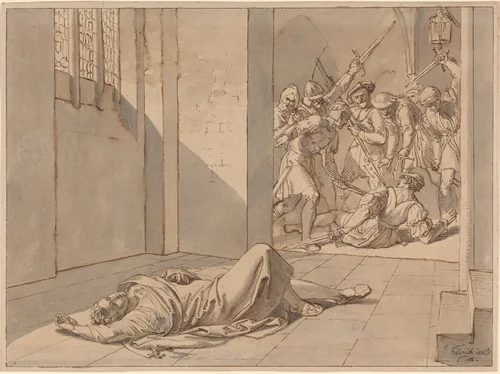
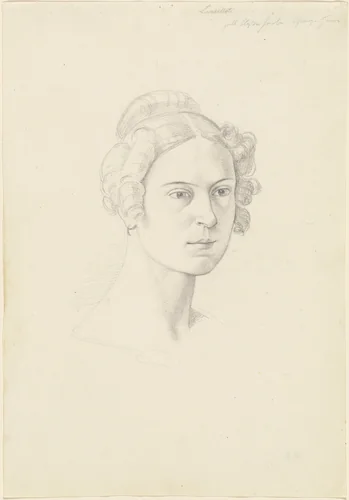
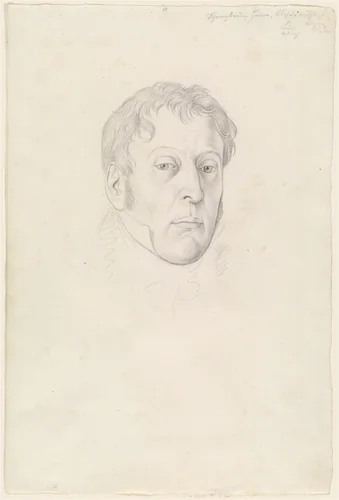
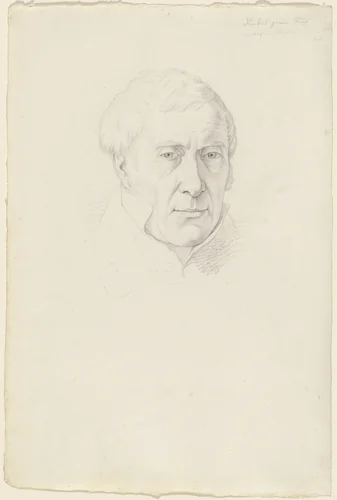
The comprehensive nature of his draughtsmanship is visible in studies ranging from historical drama, such as The Assassination of King Wenzel III, to exacting portraiture. The surviving works in major American collections, including a set of elegant studies of Roman nobility like Giuseppina Massimi, Principessa Lancellotti di Lauro and Principe Massimiliano Massimi, demonstrate that even an artist committed to the sacred mandate found time to capture the contemporary elegance of his patrons. It is a slight irony that the true character of this devoted painter is best revealed in media often relegated to the preparatory stage.
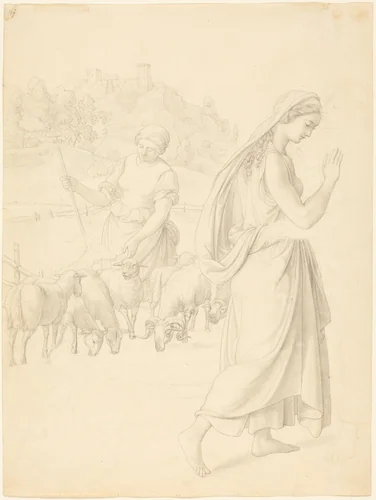
Führich’s legacy remains critical for understanding the visual culture of Romantic-era religious revivalism. His detailed narrative cycles, including compositions such as The Meeting of Jacob and Rachel, reveal an astonishing command of complex figure arrangement and storytelling. Due to the high quality and technical finish of these graphic works, many researchers today utilize Josef von Führich prints to study the evolution of 19th-century drawing techniques. Preserved in museum-quality archives worldwide, his detailed works are often available as high-quality prints, ensuring that the draughtsman’s precise contribution to art history remains accessible.
Source: Wikipedia · CC BY-SA 4.0