José Noguera
José Noguera was a printmaker whose documented career spans the years 1855 to 1868. His known body of work focuses entirely on the production of popular narrative broadsides featuring extensive sequential illustration.
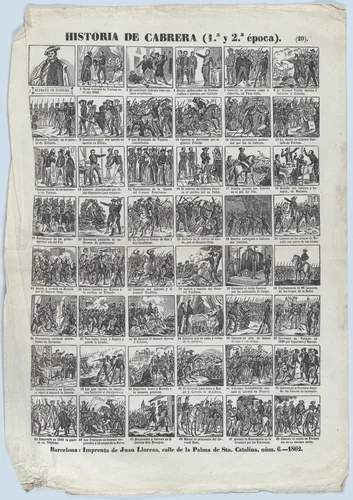
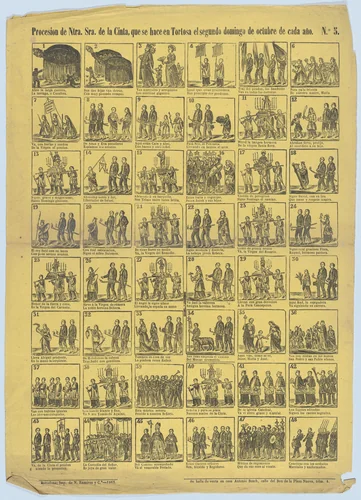
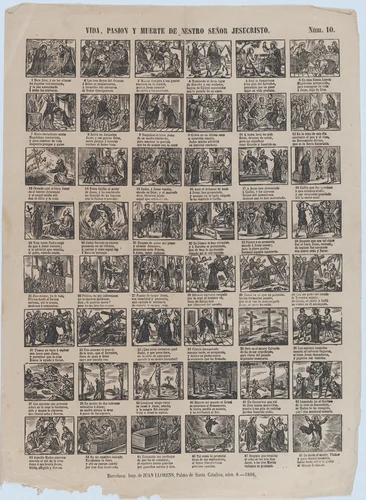
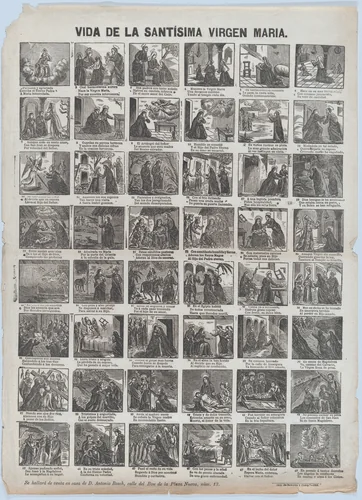
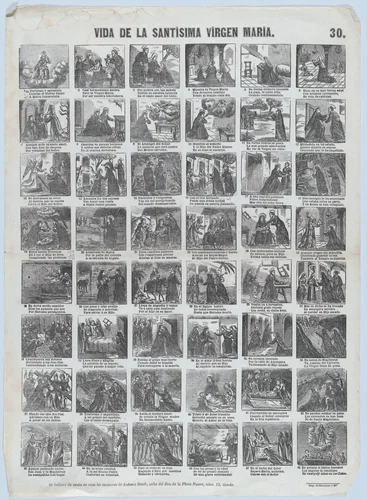
Noguera specialized in complex visual storytelling, typically dividing large sheets into 48 small, sequential scenes designed for widespread circulation and public consumption. Fifteen examples of José Noguera prints are held in major museum collections, establishing his role in documenting mid-nineteenth century popular culture.
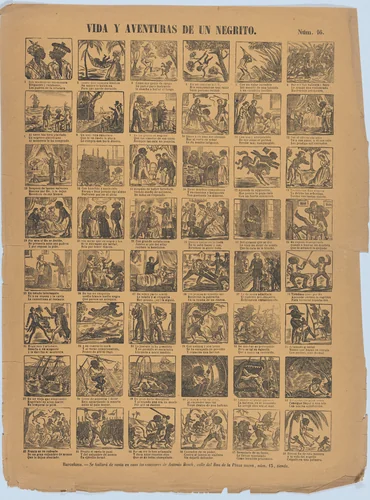
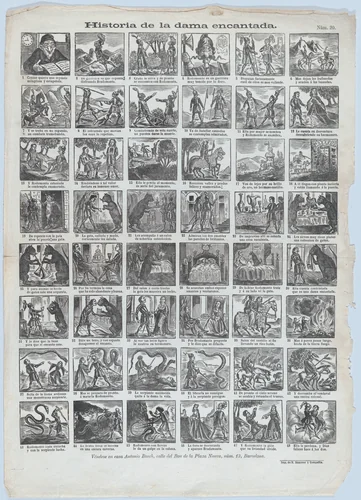
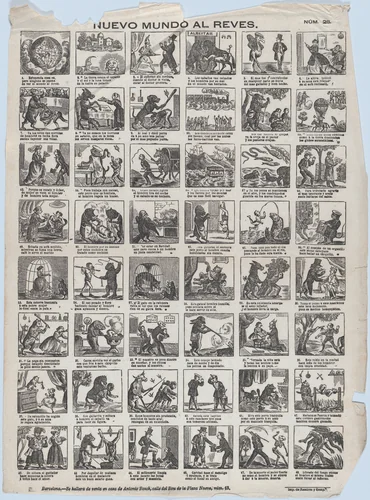
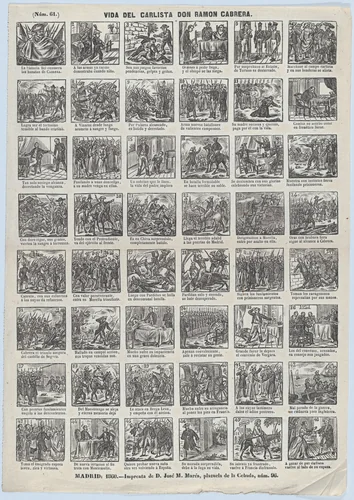
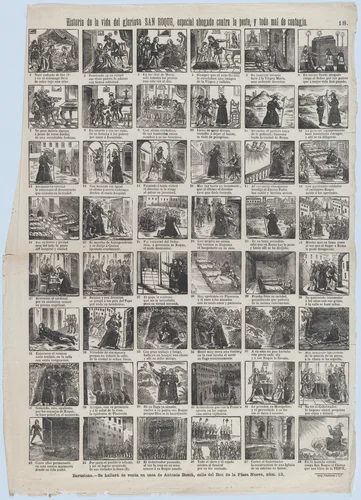
The subjects addressed in Noguera’s broadsides are highly diverse, encompassing religious biographies, current political events, and fantastic folklore. Notable works include the hagiographic Broadside with 48 scenes relating to the life of Saint Roch (Roque) and the politically charged Broadside with 48 scenes relating to life of the Carlist general of Spain, Ramon Cabrera y Griñó. Other key prints exploring societal topics and fictional narratives include the Broadside with 48 scenes relating to the world upside down, the Broadside with 48 scenes relating to the story of the enchanted lady (Dama encantada), and the Broadside with 48 scenes relating to the life and adventures of a black man (negrito).
The primary collection of Noguera’s work resides at the Metropolitan Museum of Art. As these historical works are often preserved in the public domain, the underlying documentation is frequently reproduced as high-quality prints for research and exhibition purposes today.