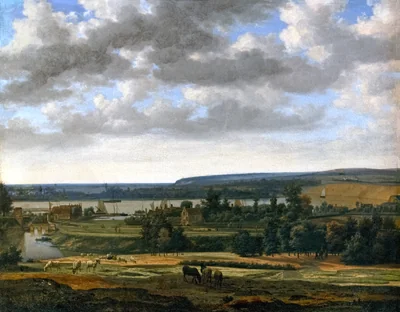
Joris van der Haagen
Joris Abrahamsz. van der Haagen holds a distinct, if sometimes understated, place within seventeenth-century Dutch painting. Active from approximately 1615 to 1663, this specialist was devoted almost entirely to the landscape genre, establishing himself firmly in the tradition of realistic observation pioneered by figures like Jan van Goyen and Salomon van Ruysdael. His highly focused oeuvre consists of several Joris van der Haagen paintings and a significant collection of preparatory drawings, works which are today conserved in major global institutions, including the Rijksmuseum, the Mauritshuis, and the National Gallery of Art.
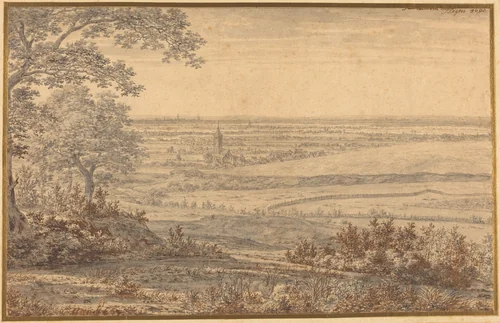
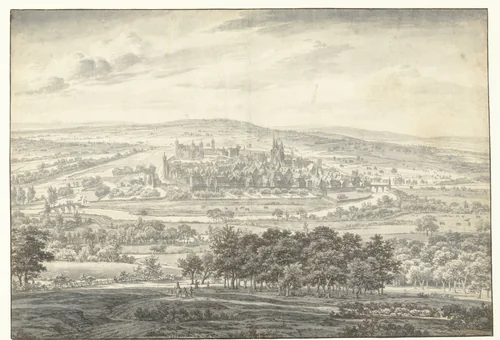
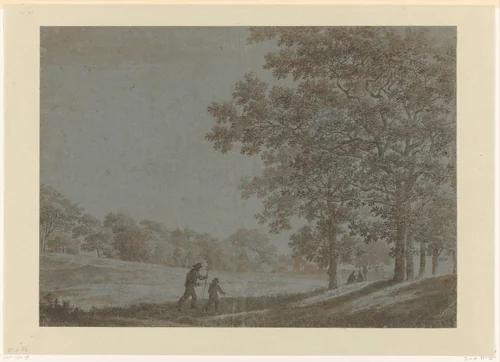
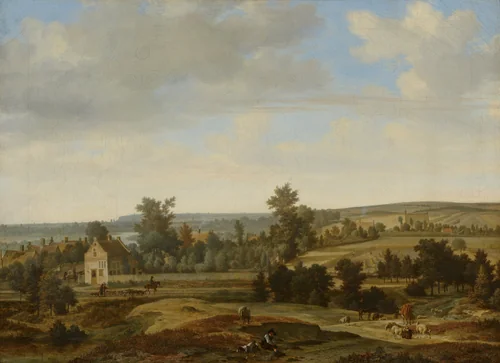
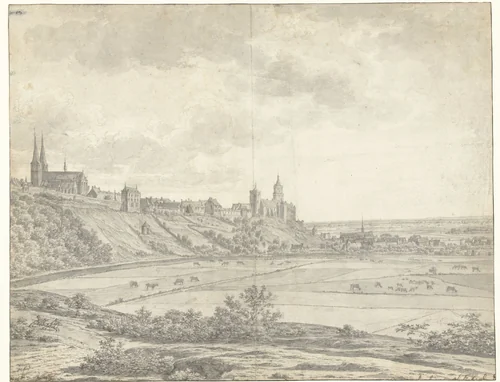
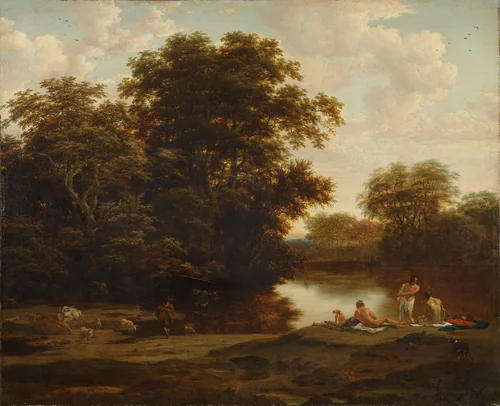
Van der Haagen excelled at capturing the specific atmosphere of dense woodlands and the rolling, atmospheric terrains that characterize the Dutch and German border regions. Moving beyond mere topographical documentation, he achieved a sophisticated naturalism driven by the precise handling of light filtered through forest canopies. Pieces such as the expansive Extensive Landscape Seen from the Edge of a Forest showcase his mastery of receding depth and subtle shadow work, guiding the viewer’s eye deep into the composition along winding tracks.
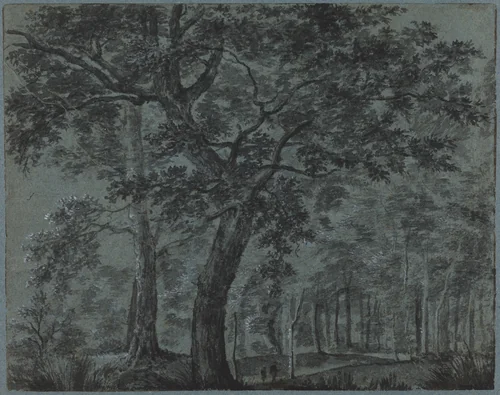
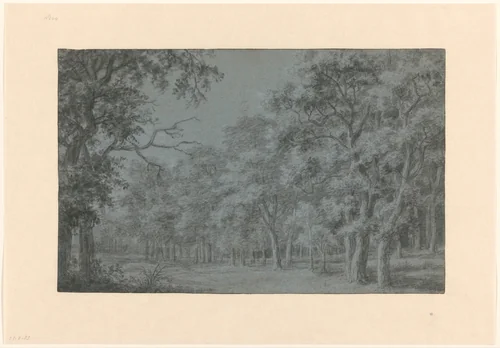
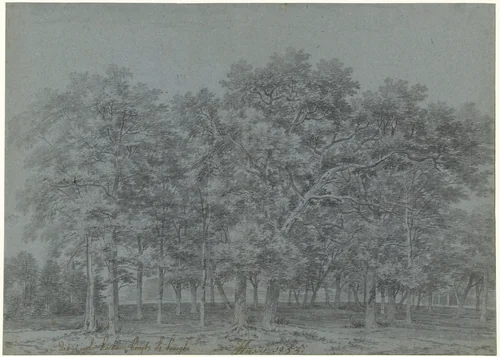
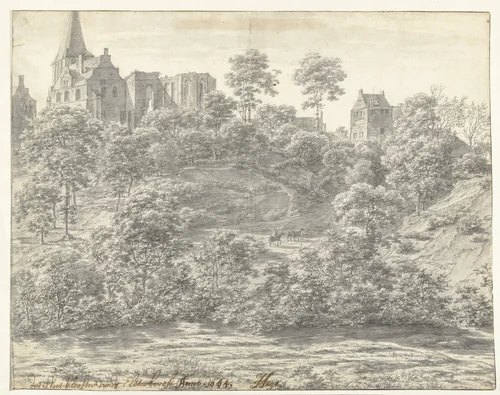
His technical skill in manipulating tone is particularly evident in nocturnal subjects. In works like Woods at Night with Travelers, the subtle interplay of pale moonlight and artificial lantern glow creates a palpable tension around the figures, defining the genre’s capacity for drama even in familiar settings. While many contemporaries chased the grandeur of dramatic coastlines or the prestige of Italianate ruins, Van der Haagen seemed to prefer the intimate theatre of the forest floor, focusing relentlessly on the textures of bark and the shifting density of foliage in works like Bosgezicht.
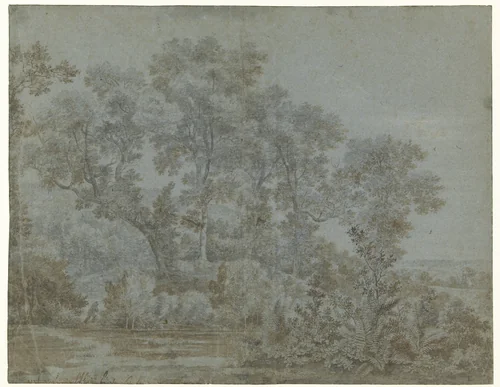
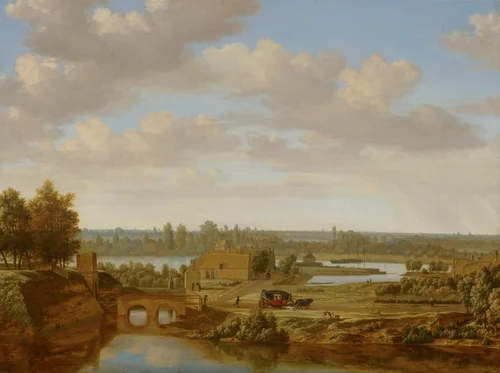
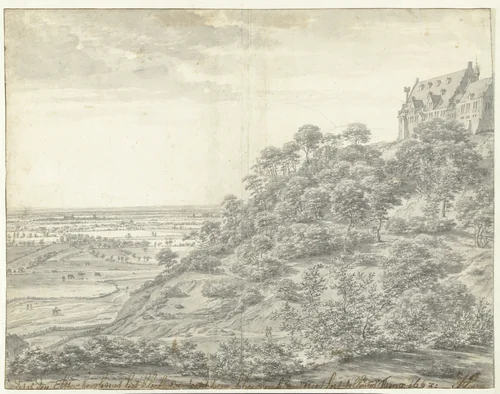
This dedication to local, often secluded, scenery confirms his status as a key figure in the regional landscape movement. The precision visible in works like De Wildbaan bij Arnhem and Gezicht bij Rotterdam demonstrates a consistent artistic vision maintained over nearly fifty years. Although his overall recorded output is modest, the surviving examples confirm his reputation as a keen observer. The enduring value of his artistic output means that reproductions of many of his major works, being in the public domain, are widely available as high-quality prints for scholars and enthusiasts globally.
Source: Wikipedia · CC BY-SA 4.0