John Woodhouse Audubon
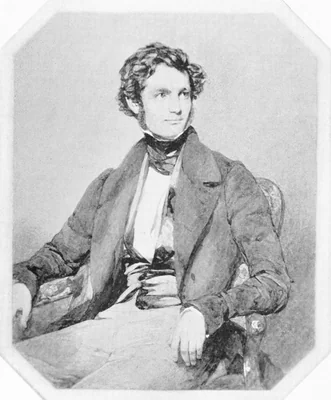
John Woodhouse Audubon (1812-1862) was a significant American painter of the mid-nineteenth century, playing a crucial role in documenting and sustaining the visual exploration of North American fauna initiated by his family. As the second son of the celebrated ornithologist and artist John James Audubon, his artistic career, active from approximately 1830 to 1849, was fundamentally linked to the continuation of the ambitious artistic and scientific legacy established by his father.
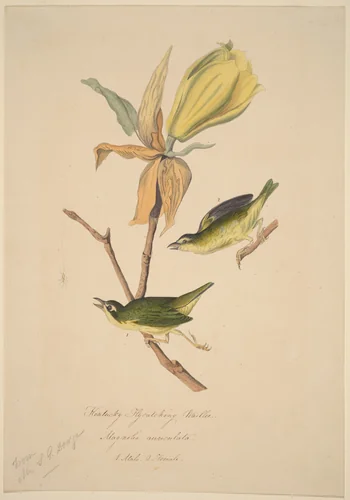
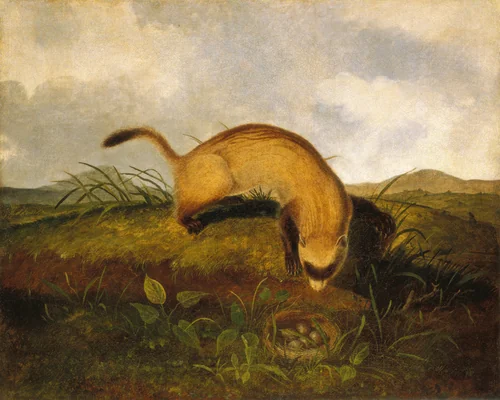
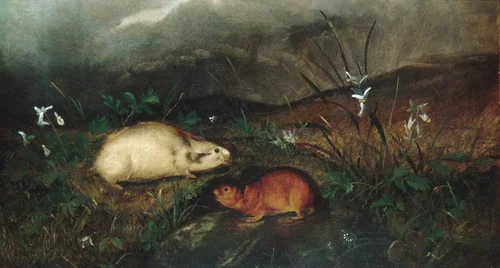
While the elder Audubon focused primarily on ornithology, John Woodhouse Audubon broadened the family's artistic scope, dedicating himself overwhelmingly to the detailed depiction of North American mammals. He adapted the rigorous, life-sized illustrative precision characteristic of the Audubon approach to subjects such as the swift predator depicted in Black-Footed Ferret and the meticulous study of the Hudson's Bay Lemming. These compositions merge scientific exactitude with an energetic realism, establishing his works as fundamental documents of early American natural history. The precise rendering of his aviary subjects, such as the vibrant Kentucky Fly-catching Warbler, demonstrates that he fully inherited his father's exacting eye for plumage and posture.
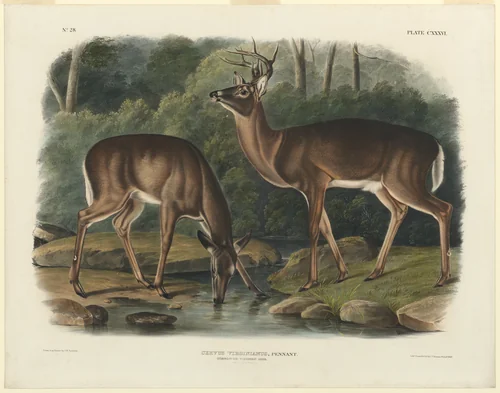
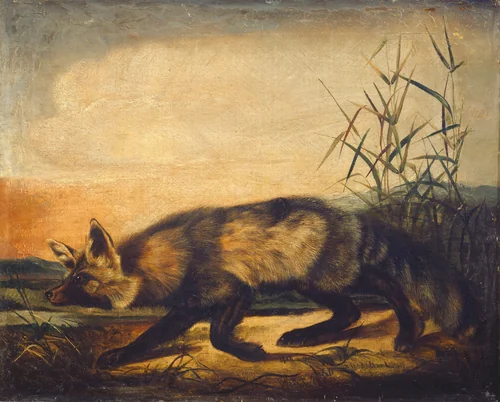
John Woodhouse Audubon’s technical skill allowed his works to transition effectively into the print medium, ensuring wide distribution and high-quality prints during his active years. Today, his paintings and prints, including the striking Cervus Virginianus (Virginia Deer) and the kinetic Long-Tailed Red Fox, are considered essential artifacts of the era. They are housed in major institutional collections, including the Metropolitan Museum of Art, the National Gallery of Art, and the Art Institute of Chicago, confirming their status as museum-quality realism.
While known almost exclusively for his zoological subjects, JWA demonstrated a surprising versatility. He occasionally branched into portraiture and genre scenes documenting the human drama of the westward migration. This willingness to pivot between the delicate rendering of wildlife and the heavy scrutiny of human movement reveals an artist comfortable navigating distinct expressive demands. Many of his key images are now part of the public domain, ensuring that his nuanced contribution to both American painting and scientific illustration remains accessible for study and appreciation.
Source: Wikipedia · CC BY-SA 4.0