John Wilkes
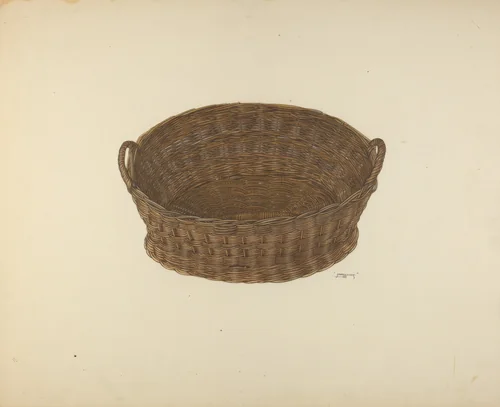
John Wilkes was a dedicated contributor to the Index of American Design (IAD), a pivotal federal arts project active between 1937 and 1939 under the auspices of the Works Progress Administration. The IAD aimed to create a comprehensive visual record of American decorative and utilitarian arts produced from the colonial period through the close of the nineteenth century. Wilkes’ work involved the meticulous rendering of 14 distinct objects, securing their preservation in documentation form. These historically significant records are now held in the permanent collection of the National Gallery of Art.
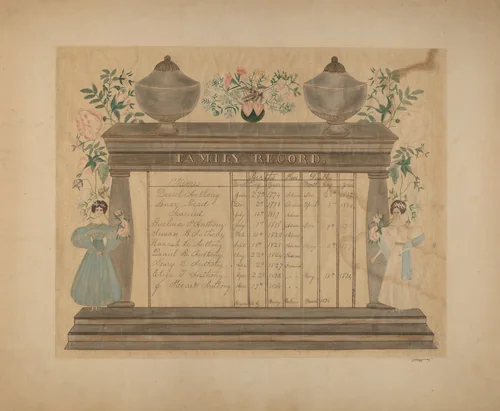
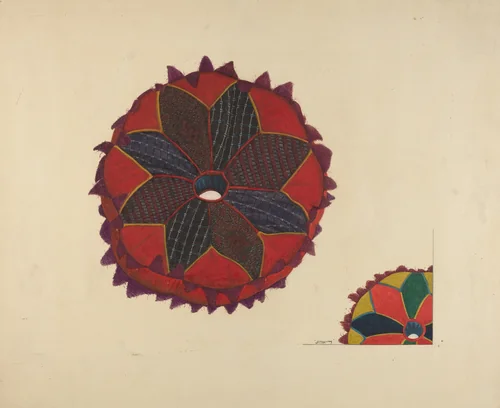
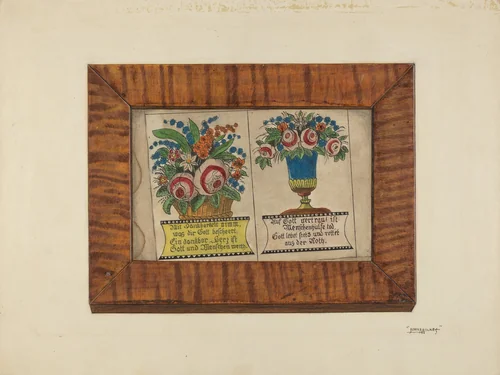
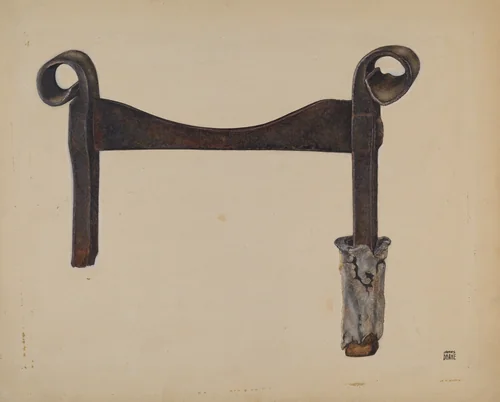
Wilkes’ contribution is notable for its breadth, spanning detailed historical documents to representations of practical, functional objects. His works are not merely sketches but carefully measured, analytical interpretations intended to capture the texture, color, and form of the original artifacts. This detailed approach is evident in his rendering of the Family Record of Susan B. Anthony, which documents the specific graphic style and script of an important American historical artifact. Equally rigorous, though documenting a simpler form, is his study of the Head Pad, a utilitarian object transformed through the vernacular aesthetic.
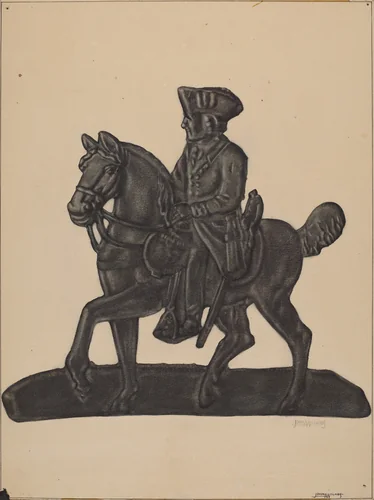
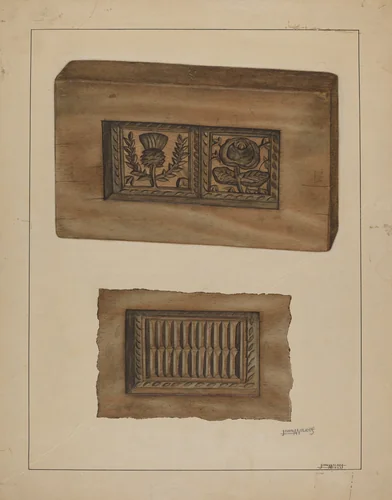
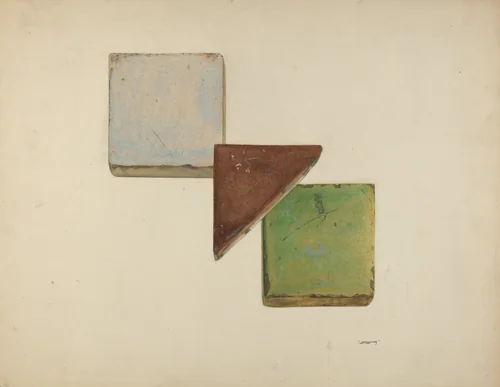
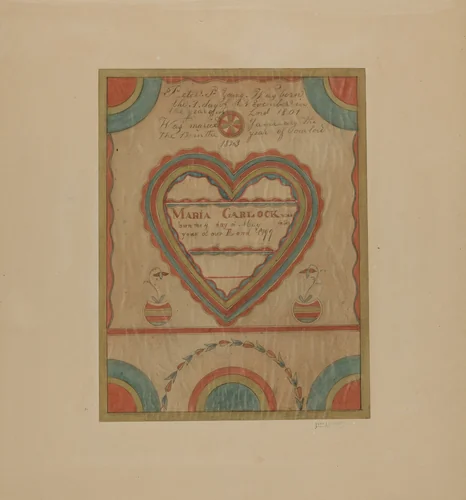
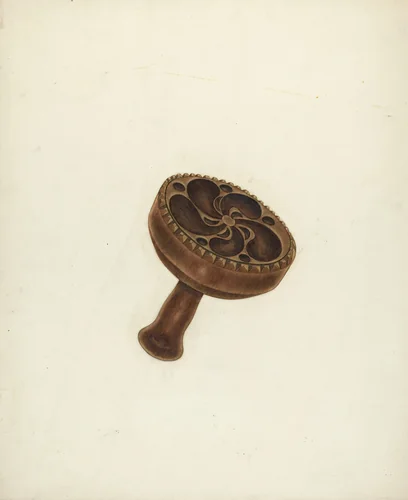
The collection highlights Wilkes’ skill in addressing specialized regional traditions, such as the Zoar Fractur Drawing. Documenting this distinct form of German-American illuminated manuscript demonstrates his commitment to recording the diverse, often-overlooked origins of American craft. The inclusion of objects like the Iron Officer on Horse further illustrates his documentation of folk sculpture, capturing the spirit of vernacular ornamentation. It is an enduring observation of the IAD that its success depended upon artists who could apply the same exacting standards to rendering a ceremonial rifle as they would to a simple Mold.
Though his period of activity was concentrated, Wilkes’ resulting collection of drawings constitutes foundational material for the study of American material culture. Preserved in the public domain, these detailed works ensure that museum-quality representations of historical objects, many of which are fragile or lost, remain accessible for scholarship. The comprehensive IAD collection, including Wilkes’ contributions, is regularly used to produce high-quality prints, allowing these vital historical documents wide, royalty-free circulation.
Source: Wikipedia · CC BY-SA 4.0