John White Alexander
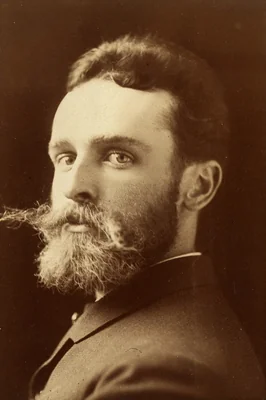
John White Alexander (1856-1911) was a highly regarded American artist whose career spanned the disciplines of portraiture, figure painting, decorative mural work, and illustration. Active in the closing decades of the 19th century, Alexander established a refined style that synthesized American directness with the highly tuned aestheticism prevailing in Parisian art circles.
Alexander’s training and subsequent residence in Europe, particularly France, fundamentally shaped his artistic vision. He developed a highly personalized technique characterized by long, fluid brushstrokes and sophisticated tonal control, often employing restricted palettes dominated by deep blacks, grays, and muted earth tones punctuated by strategic accents of color. This approach allowed him to create atmospheric effects and emphasize the psychological depth of his subjects, successfully bridging the formality of academic portraiture with the suggestive qualities of emerging modernism.
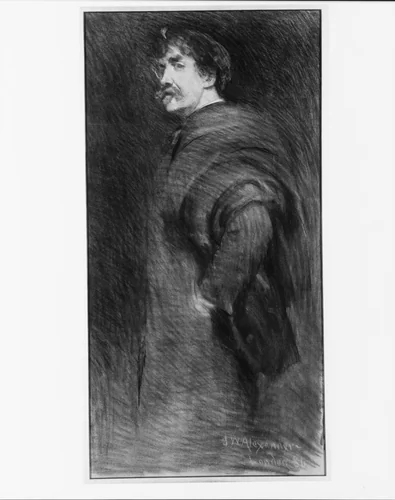
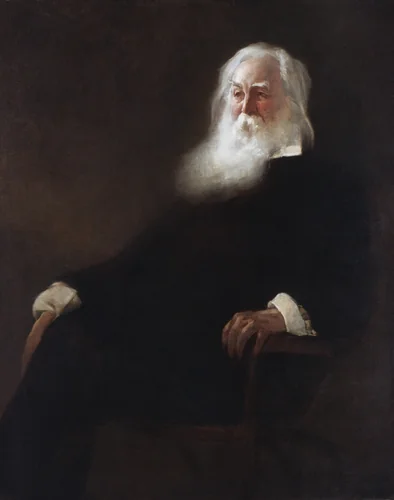
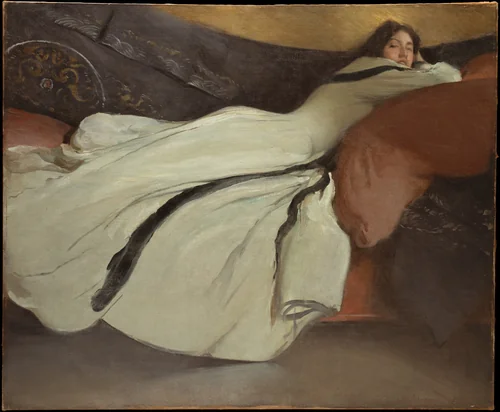
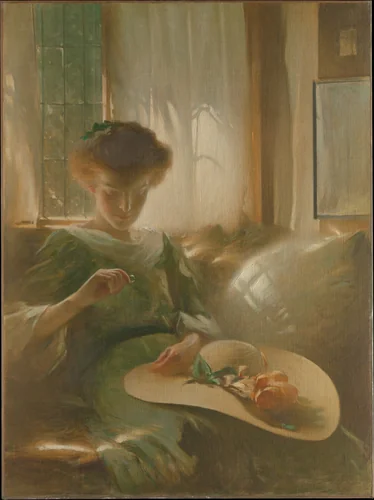
His prominence derived largely from his ability to render striking and deeply characteristic likenesses. Major works such as the portrait of James McNeill Whistler and the commanding image of Walt Whitman exemplify this skill, capturing intellectual intensity while maintaining an elegant compositional structure. Alexander was also a master of the full-length figure study, as seen in the contemplative attitude of Repose, which demonstrates his keen eye for the social weight carried by his sitters’ garments, recognizing that clothing often spoke louder than mere facial expression.
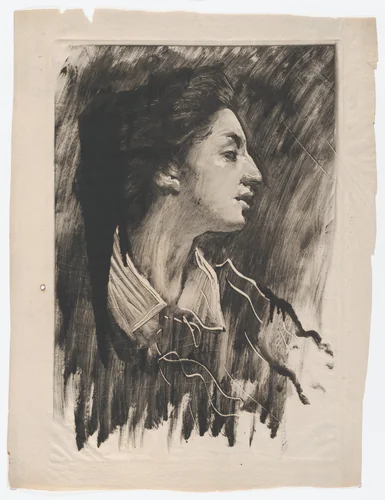
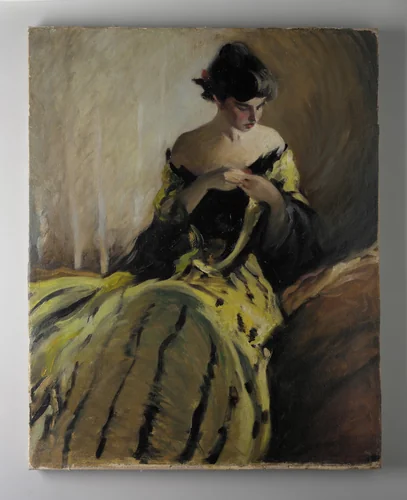
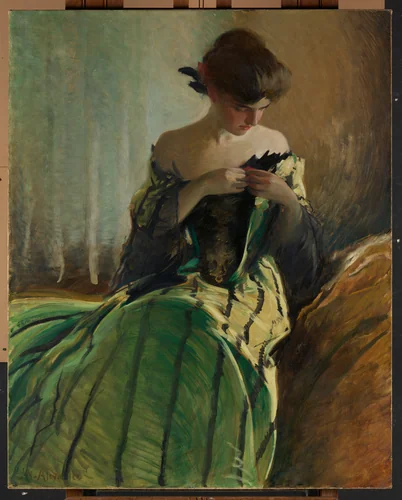
Beyond easel work, Alexander was commissioned for large-scale architectural projects, translating the intimacy of his canvas work into the expansive demands of decorative painting. His legacy is robustly preserved in prestigious collections worldwide, notably the Metropolitan Museum of Art. The enduring technical skill demonstrated in preparatory pieces, such as the evocative Study in Black and Green (Oil Sketch), ensures that John White Alexander paintings and studies remain historically significant. Due to their institutional placement and age, many of his images are now available as royalty-free downloadable artwork, allowing his museum-quality contributions to be appreciated globally by those seeking high-quality prints for study and admiration.
Source: Wikipedia · CC BY-SA 4.0