John Wellborn Root
John Wellborn Root (1850-1891) was a pivotal American architect whose brief but profound career irrevocably shaped the built environment of Chicago and established fundamental principles for modern commercial design. As a founding figure of the influential Chicago School style, Root, alongside his partner Daniel Burnham, was instrumental in developing the technical and aesthetic language of the early skyscraper.
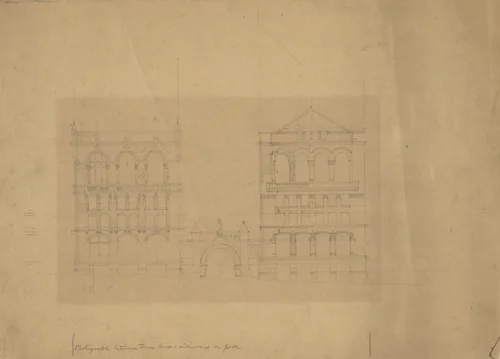
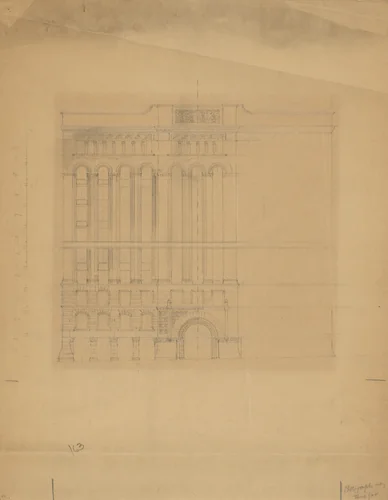
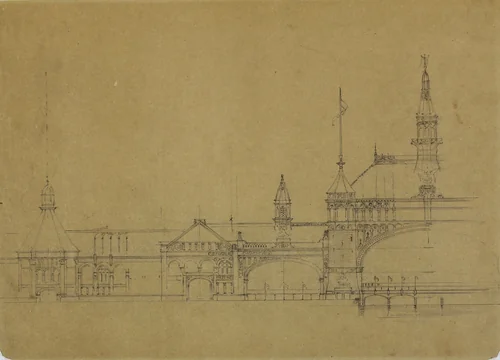
Root's genius lay in synthesizing pragmatic engineering with an imaginative artistic sensibility. His designs addressed the complexities of tall building construction, pioneering solutions for foundation issues in Chicago's marshy soil and adapting structures to utilize nascent steel-frame technology. This synthesis is evident in the surviving records of his works, such as the meticulous Board of Trade Building, Kansas City, Missouri, Front Elevation Study and the exploratory Mills Building, San Francisco, California, Design Sketch. These studies reveal a mind equally concerned with structural integrity and classical proportion.
Although his life was cut short, his influence secured his legacy. Two buildings resulting from his designs have been federally recognized as National Historic Landmarks, with others holding designations as Chicago landmarks and listings on the National Register of Historic Places. His firm’s output defined the look of the burgeoning American metropolis during the late nineteenth century.
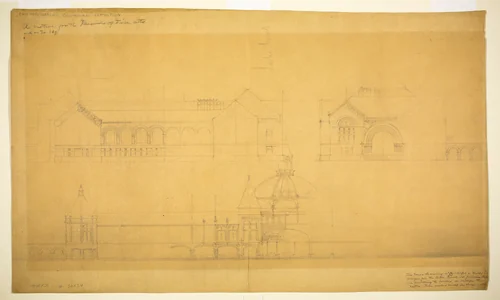
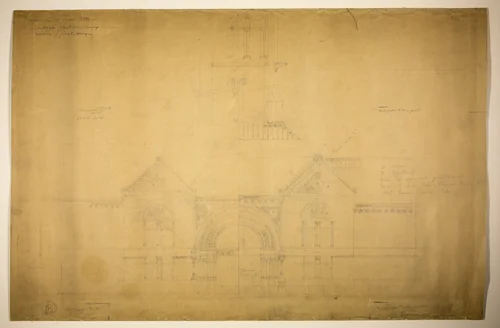
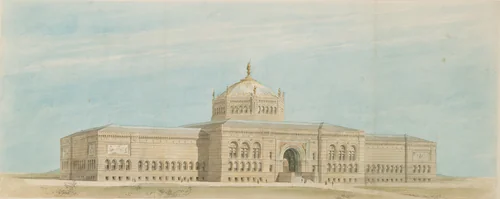
A significant portion of his late career involved preparations for the 1893 World's Columbian Exposition. His preliminary conceptualizations, including the detailed Proposed Fine Arts Museum, World's Columbian Exposition, Chicago, Illinois, Entrance Elevation, suggest a flexibility that belied his reputation as a proponent of strictly functional forms. It is perhaps the highest irony of architectural history that the firm’s plan for the monumental fair, largely developed by Root, was executed after his death; the resulting ‘White City’ became both the zenith of the partnership’s vision and the aesthetic starting point for a subsequent wave of Neo-Classical design nationwide.
Root’s historical significance was formally recognized posthumously in 1958 when he was awarded the AIA Gold Medal. Today, collections such as those held by the Art Institute of Chicago preserve the technical precision of his design process, making his original concept drawings available as downloadable artwork. Researchers and enthusiasts can access these documents as high-quality prints, providing vital insights into the foundational period of American modern architecture.
Source: Wikipedia · CC BY-SA 4.0