John Smibert
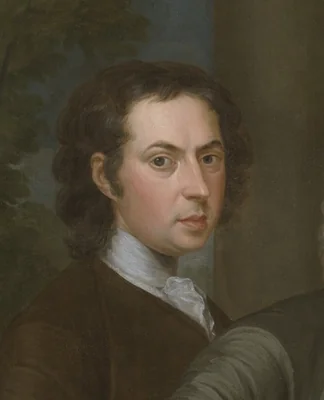
John Smibert (1688-1741) holds a singular and historically crucial place in the development of American colonial painting. The Scottish-born artist, specialized primarily as a portraitist, was the first painter with verifiable formal academic training to establish a sustained practice in British America. His arrival marked a critical inflection point, introducing European standards of technique, sophisticated composition, and nuanced color theory to a region previously served largely by itinerant limners or self-taught artisans.
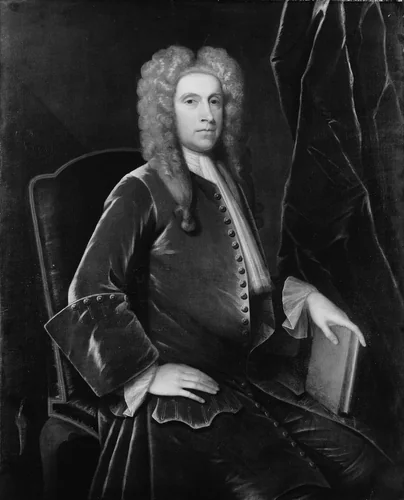
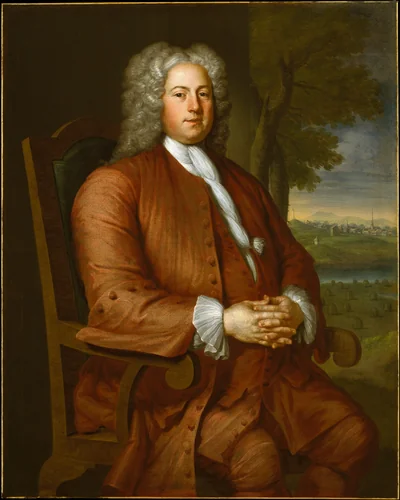
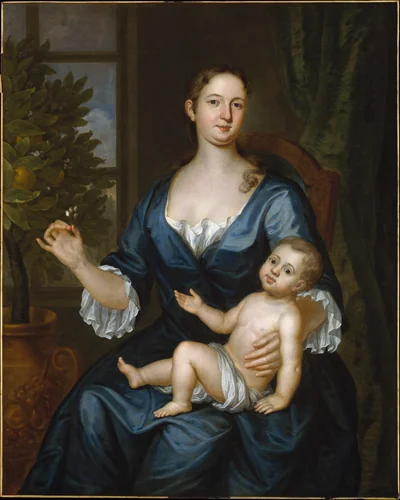
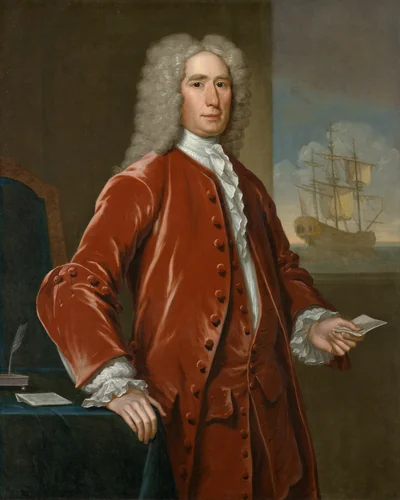
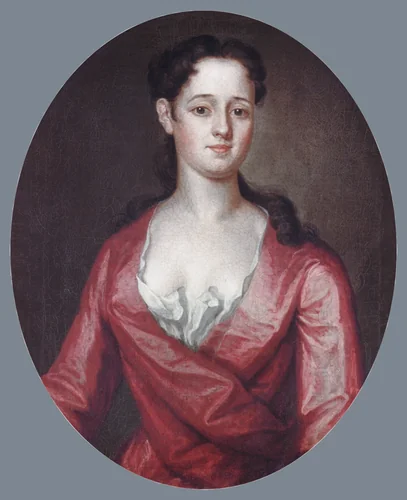
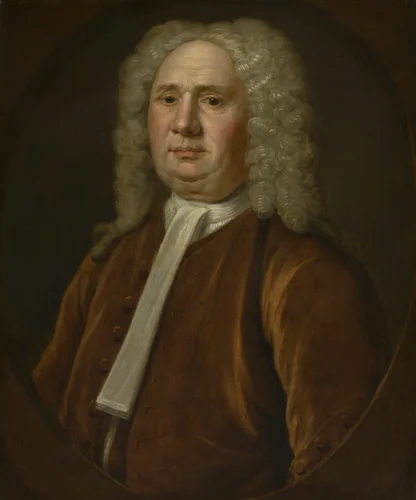
Working actively in the colonies from 1729 until 1737, after a prior period of practice in London and Florence, Smibert specialized in capturing the sober dignity expected of the colonial elite. His compositions, such as the companion pieces Francis Brinley and Mrs. Francis Brinley and Her Son Francis, display a mastery of drapery, pose, and psychological realism that fundamentally elevated the standard of local portraiture. While his sitters rarely exhibit overt joy, the unflinching clarity of works like Richard Bill provides invaluable documentation of early eighteenth-century Bostonian society, positioning him less as a radical innovator and more as a vital conduit for established European aesthetics.
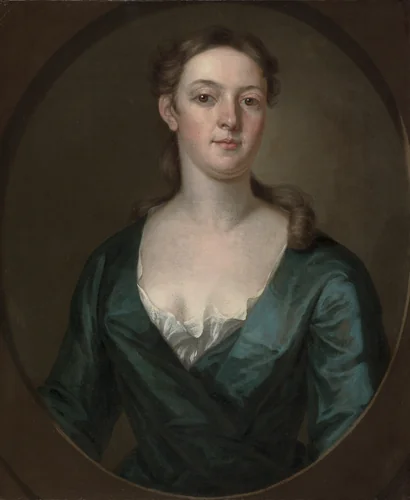
Smibert’s lasting influence extended beyond his direct commissions; he famously brought with him a collection of copies of Old Master paintings and casts of classical sculpture. This resource served as teaching aids for subsequent generations of colonial artists, operating effectively as the first accessible public gallery resource in the colonies and underscoring his dedication to classical principles. Today, the enduring museum-quality of his draftsmanship ensures that major works, including Portrait of a Man and Portrait of a Woman (Judith Colman Bulfinch?), are housed in prestigious institutions like the Metropolitan Museum of Art, the Art Institute of Chicago, and the Cleveland Museum of Art. As many of these John Smibert paintings have since entered the public domain, high-quality prints and downloadable artwork are now widely available, ensuring his seminal contribution to colonial art remains accessible for continuing scholarly study.
Source: Wikipedia · CC BY-SA 4.0