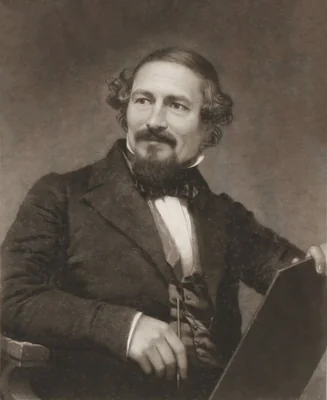
John Sartain
John Sartain (1808-1897) occupies a pivotal position in the history of American printmaking. Born in England, he immigrated to the United States and immediately established himself as the premier practitioner and popularizer of mezzotint engraving, a sophisticated technique that had previously seen only limited, often mediocre, application on the continent. Sartain’s innovation fundamentally altered the dissemination of visual culture in the mid-19th century, ensuring that high-quality prints of important contemporary figures and events were widely accessible.
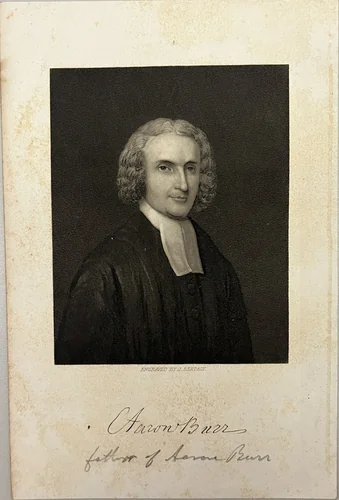
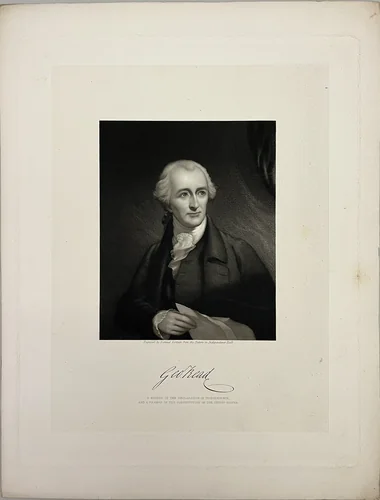
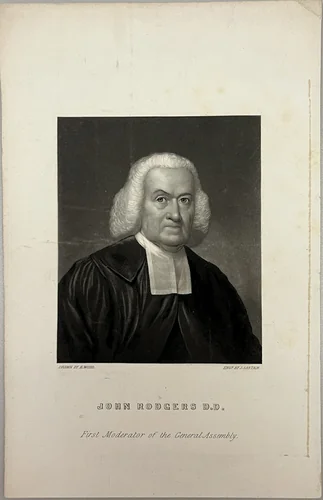
Mezzotint, derived from the Italian for "half-tone," is technically challenging but renowned for its ability to produce rich, velvety blacks and an exceptionally subtle range of mid-tones. Sartain mastered this method, translating existing paintings and original drawings into nuanced, museum-quality prints. His technical skill allowed him to capture the gravitas of American political and clerical figures with uncommon depth, making his reproductions highly sought after by publishers and collectors alike. Among his key works are the forceful portraits of American luminaries, including Aaron Burr, George Read, and John Rodgers D.D., which remain crucial records of their subjects.
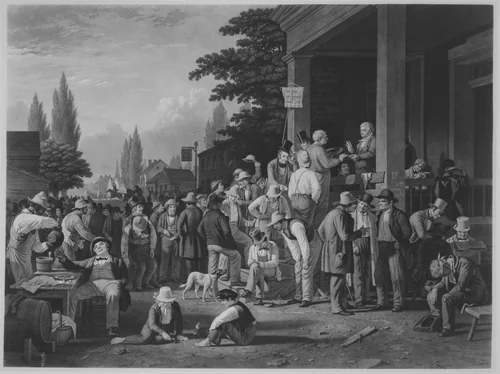
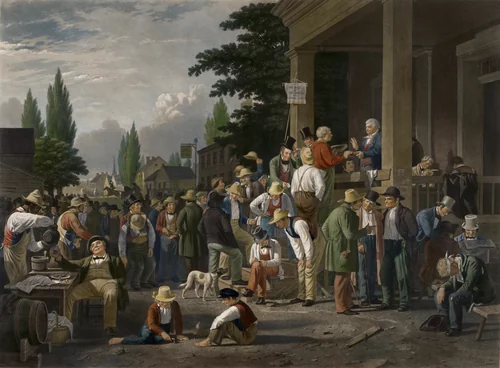
Sartain maintained a prolific output throughout his active decades, spanning 1828 to 1859, effectively establishing the technical standard for high-quality prints distributed across the burgeoning nation. Beyond the formality of political portraits, he demonstrated a versatile command of genre scenes, perhaps best exemplified by his meticulous representation of The County Election. His entrepreneurial approach to printmaking was equally pioneering; Sartain was one of the earliest artists to truly understand the industrial potential of reproductive engraving for both artistic and commercial markets.
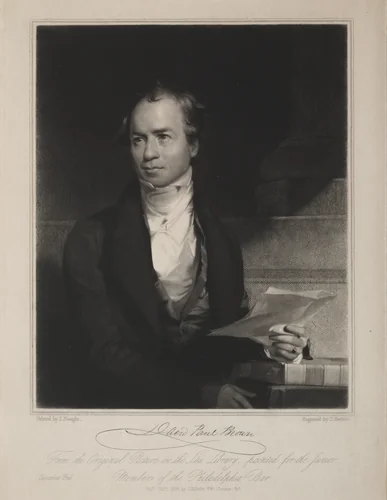
It is worth noting, however, that despite founding a major dynasty of American engravers, John Sartain rarely depicted himself with the same rich tonal gravitas he lent to figures like David Paul Brown; he seemingly preferred the role of critical intermediary over central subject. His historical significance is cemented by his representation in prestigious collections such as the Metropolitan Museum of Art, the Cleveland Museum of Art, and the Art Institute of Chicago. His influential body of work, frequently available as royalty-free images in the public domain, continues to define the visual record of the era.
Source: Wikipedia · CC BY-SA 4.0