John Ruskin
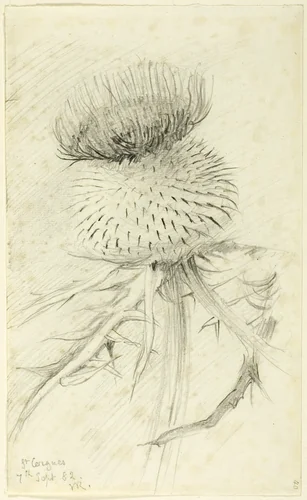
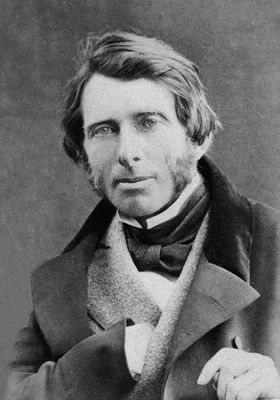
John Ruskin (1819-1900) stands as the defining polymath of the Victorian era, shaping public discourse not only on art and architecture but also on subjects as diverse as political economy, education, geology, and myth. While remembered primarily as an authoritative writer, lecturer, and influential critic, his technical skill as a draughtsman provided the essential foundation for his critical methodology. Ruskin viewed drawing not merely as a skill but as a moral imperative, requiring rigorous, truthful observation.
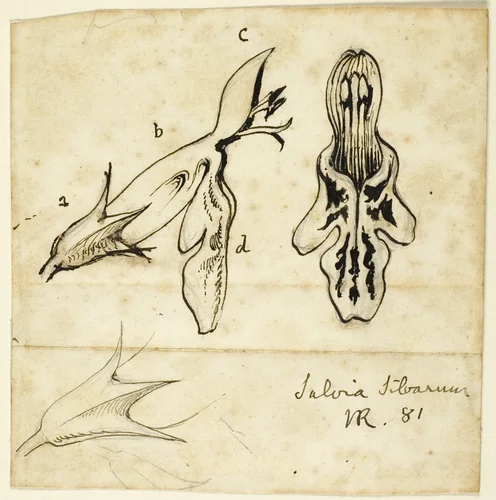
Ruskin’s active artistic period was relatively concise, focusing primarily between 1829 and 1845. His small but focused corpus, which includes 11 known drawings, 2 paintings, and 2 prints, demonstrates his lifelong pursuit of visual truth and detail. These works often function as precise topographical or architectural studies, crucial documents supporting his critical works, such as The Stones of Venice.
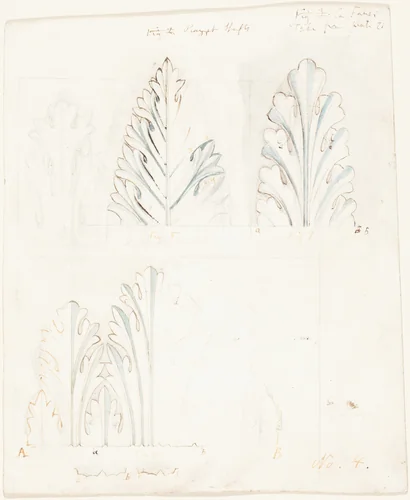
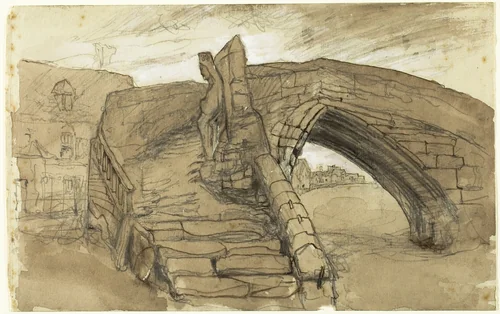
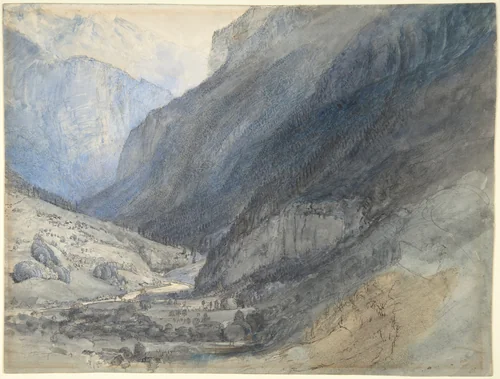
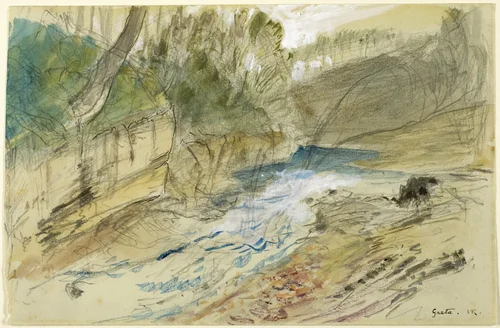
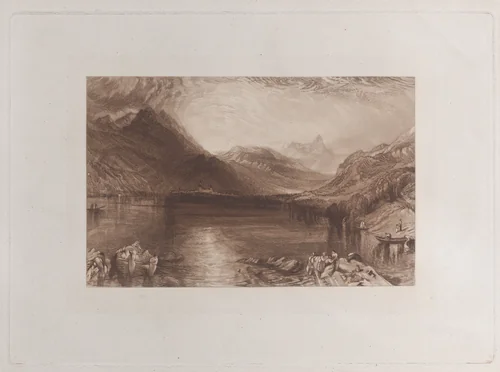
His drawings frequently captured the majesty of the continental landscape, reflecting his geological fascination. Pieces like Bergkam aan het Meer van Genève showcase the precision and patience inherent in his method. Similarly, his architectural renderings, such as the meticulous Gezicht op S. Anastasia te Verona, over de Adige, and the focused study of a Byzantine Column Capital, serve as powerful arguments for the intrinsic value and moral quality of historical structure.
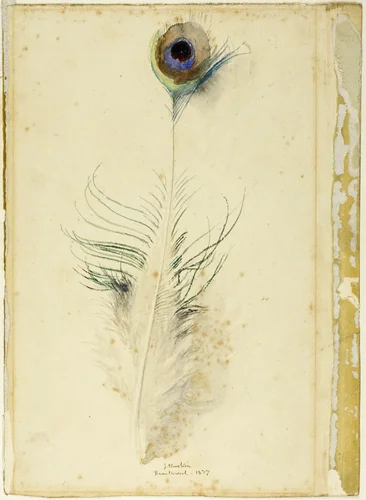
Ruskin was a masterful watercolourist, producing what are effectively museum-quality studies that combine scientific precision with atmospheric effects. One suspects that had his critical career not exploded into international prominence, he could have enjoyed a highly distinguished career solely as a topographical artist. While few John Ruskin paintings exist, his preparatory drawings and lithographic prints remain widely accessible. Due to their age and historical importance, many of these works are now in the public domain, allowing institutions like the Metropolitan Museum of Art and the Art Institute of Chicago to share high-quality prints and downloadable artwork globally.
Source: Wikipedia · CC BY-SA 4.0