John Quidor
John Quidor (1801-1881) stands as a distinct figure in 19th-century American art, utilizing the visual vernacular of genre painting to translate the emergent mythology of the young nation. Active primarily between 1829 and 1863, he remains best known for his dynamic, often eccentric interpretations of popular literature, ensuring his significant presence in major collections, including the National Gallery of Art and the Metropolitan Museum of Art.
Quidor’s relatively modest known oeuvre, comprising approximately thirty-five surviving canvases, is heavily weighted toward the fantastical narratives penned by Washington Irving, particularly those rooted in Dutch New York and the haunting landscape of the Hudson Valley. Unlike many of his contemporaries who favored neoclassical historical painting, Quidor consciously drew inspiration from the narrative satire and dramatic lighting of 18th-century English artists. He studied the detailed genre work of William Hogarth, the stark atmospheric contrasts favored by Joseph Wright of Derby, and the political and social commentary found in the graphic satires of Isaac Cruikshank and James Gillray.
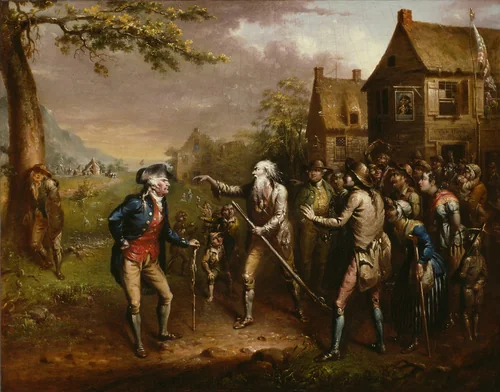
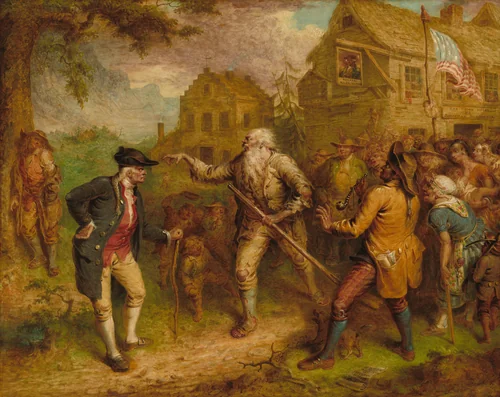
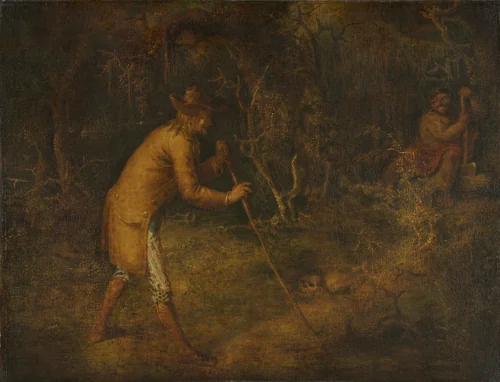
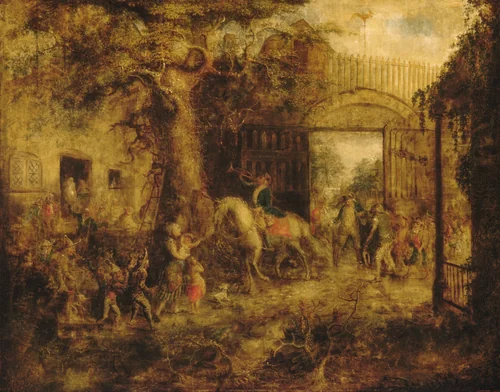
This blend of literary American subject matter and European expressive technique resulted in works that possess a unique theatrical quality. Canvases such as Rip Van Winkle, The Return of Rip Van Winkle, and the deeply moody The Devil and Tom Walker move beyond simple illustration. Instead, they operate as elaborate stage sets, often employing chiaroscuro to heighten the sense of mystery, fear, or boisterous comedy inherent in Irving’s writing. Quidor possessed a rare talent for injecting his figures with a certain sly, visual humor, reflecting the witty narrative voice of the literature he depicted. Even his less fantastical scenes, like The Vigilant Stuyvesant's Wall Street Gate, are infused with a sense of dramatic anticipation.
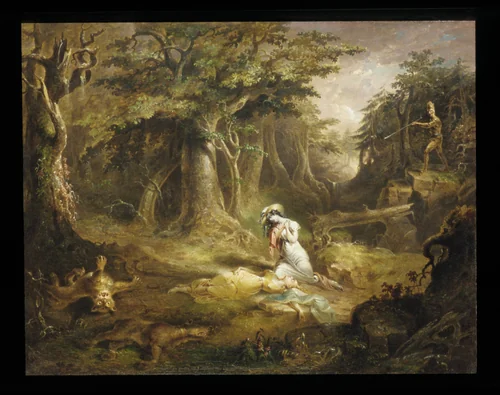
The lasting significance of Quidor lies in his successful translation of nascent American identity into a visually complex and engaging style. Today, high-quality prints of Quidor’s most recognized John Quidor paintings, such as Leatherstocking's Rescue, are frequently sought after for museum-quality collections. Given the age of the works, many of these images now reside in the public domain, ensuring that the visual drama he pioneered remains widely accessible to scholars and admirers of early American art.
Source: Wikipedia · CC BY-SA 4.0