John Oster
John Oster, whose professional life spanned disciplines as disparate as professional sports and fine art documentation, remains a pivotal, if lesser-known, contributor to the American preservation efforts of the 1930s. Although widely recognized in a later era as a successful football coach and former professional player who operated primarily as a midfielder, Oster’s brief but impactful tenure (1935-1939) within the federally funded Index of American Design (IAD) secured his lasting place in the history of graphic documentation. His meticulous renderings of historic artifacts are now held in the permanent collection of the National Gallery of Art.
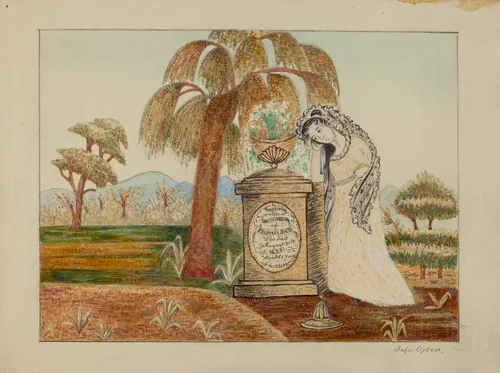
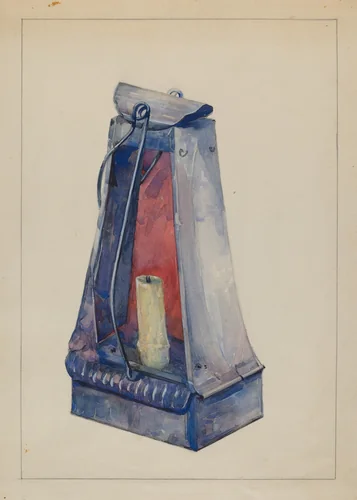
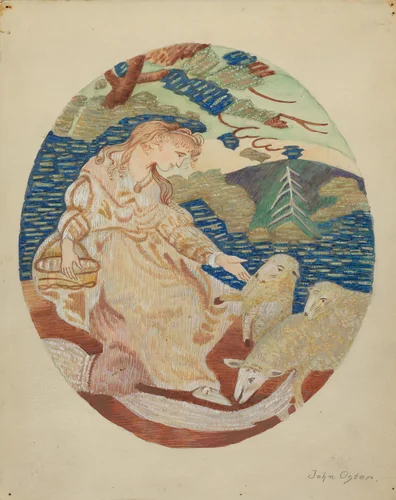
The Index of American Design project was an ambitious New Deal initiative aimed at creating a comprehensive visual catalog of native, decorative, and folk art produced in the United States prior to 1900. Oster was commissioned to produce eight detailed plates for the index. His commitment centered not on the development of original artistic compositions, but on the precise, faithful reproduction of extant objects, thereby ensuring their intellectual preservation during a period of significant economic and cultural flux.
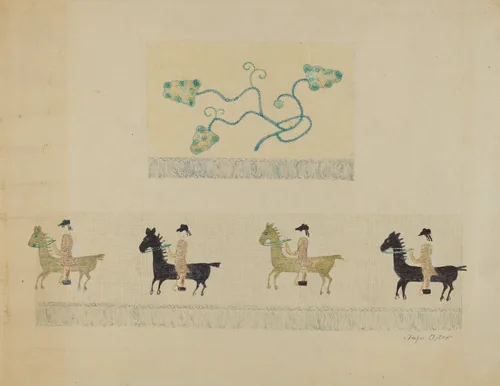
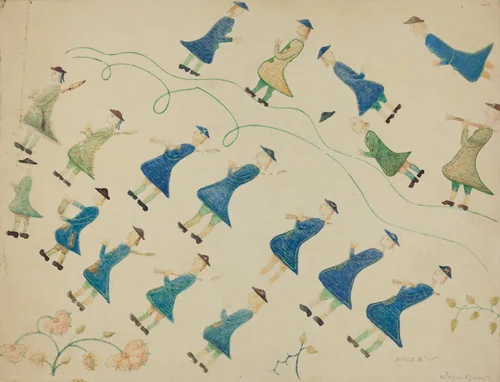
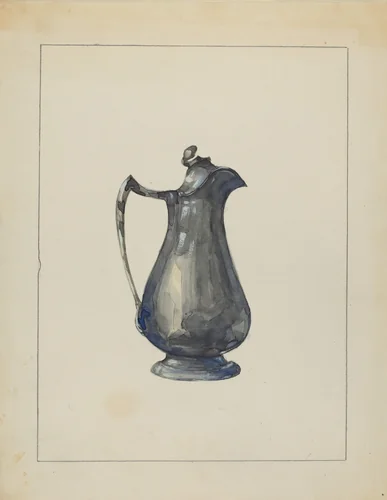
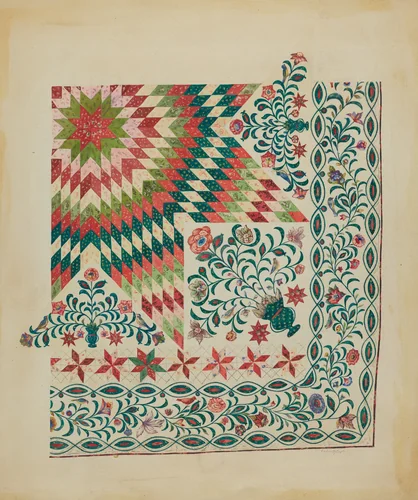
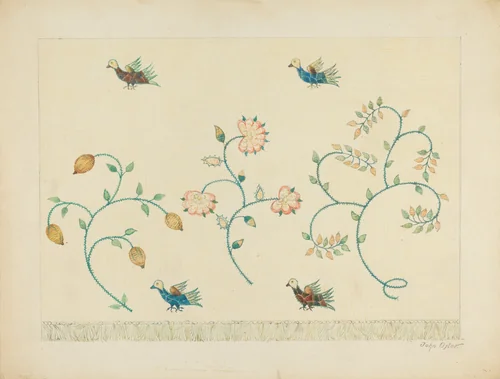
Oster's works demonstrate rigorous attention to pattern, texture, and the intrinsic qualities of the original materials. His commissioned pieces required versatility across media documentation. Among the surviving documents are multiple examples of textile art, including the two delicate studies titled Crewel Embroidery and the richly detailed Applique and Patchwork Quilt. He also captured the reflective surfaces of metalwork with his depiction of the Pewter Pitcher. These watercolor and graphite renderings, celebrated for their sharp accuracy, allow scholars and enthusiasts alike access to objects that might otherwise be ephemeral. The eight designs contributed by Oster during his four years of active documentation provide critical visual evidence of early American domestic artistry.
The Index, being a federal undertaking, ensures that Oster’s original documents are part of a massive public domain collection. This accessibility guarantees that researchers and collectors can obtain high-quality prints for study and display. While his renown may rest primarily on his athletic achievements, his highly focused period working on the Index resulted in museum-quality visual artifacts that continue to inform our understanding of 18th and 19th-century American material life. For those seeking John Oster prints for educational purposes, his work remains an invaluable royalty-free resource.
Source: Wikipedia · CC BY-SA 4.0