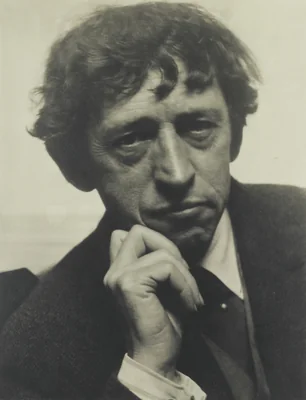
John Marin
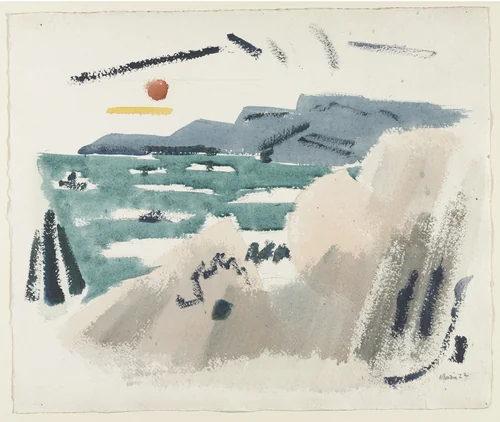
John Marin (1870-1953) stands as one of the pivotal figures in defining early American Modernism. Known primarily for his highly individualized abstract landscape paintings and pioneering watercolors, Marin fundamentally shifted the perception of graphic and aquatic media from mere preparatory sketches to definitive fine art.
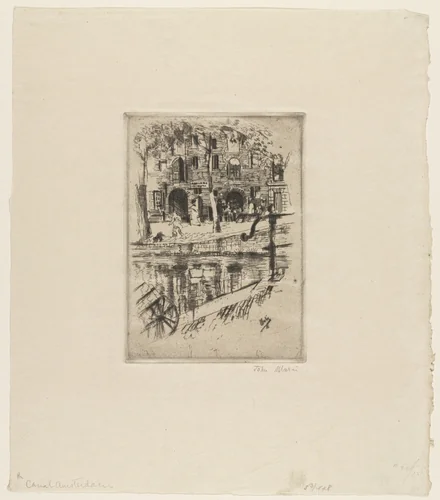
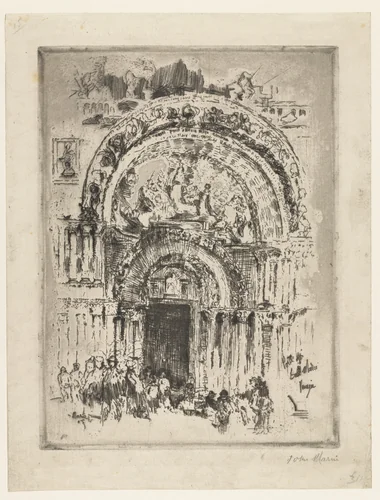
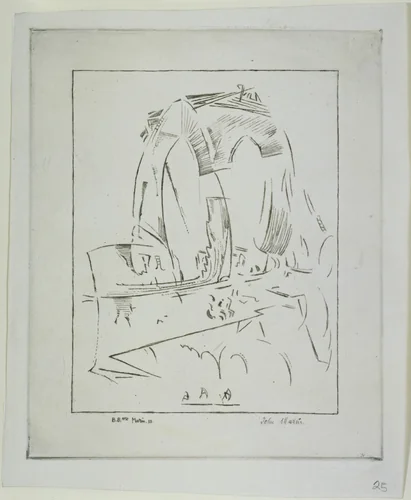
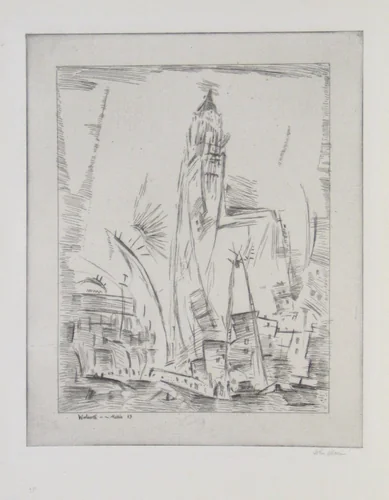
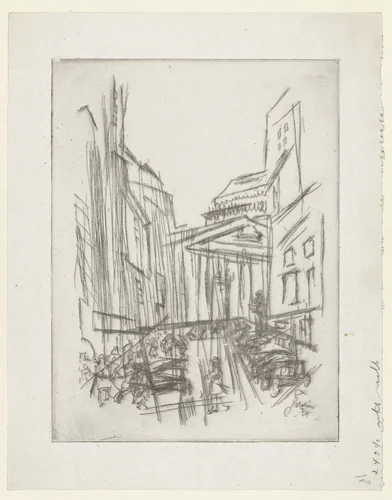
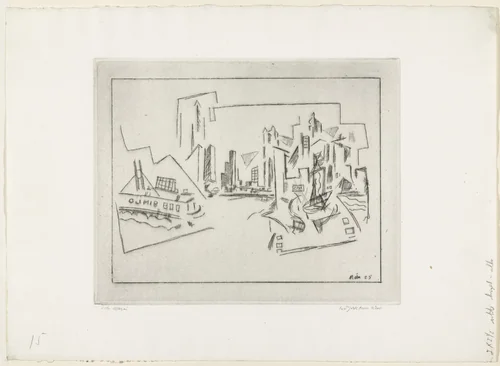
Active in a crucial period of transatlantic exchange, Marin’s early work, dating from 1906 through the early 1920s, documents his synthesis of European architectural form with burgeoning abstract expression. His etchings and prints from this period, represented by works like Canal, Amsterdam and the evocative study of atmosphere in Portal of St. Mark's, Venice, reveal a deep engagement with established compositional structure. Yet, even in these early works, Marin employed a distinctive linear economy that implied motion rather than static representation.
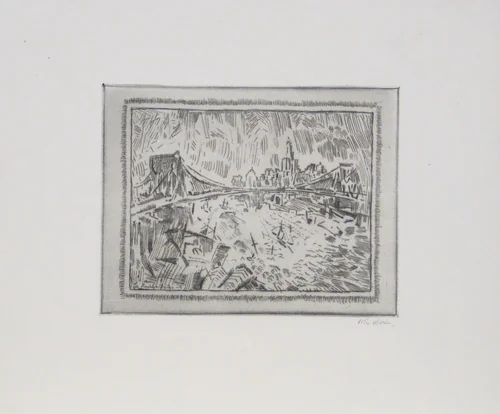
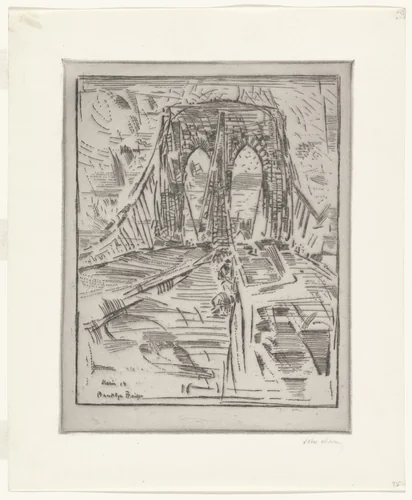
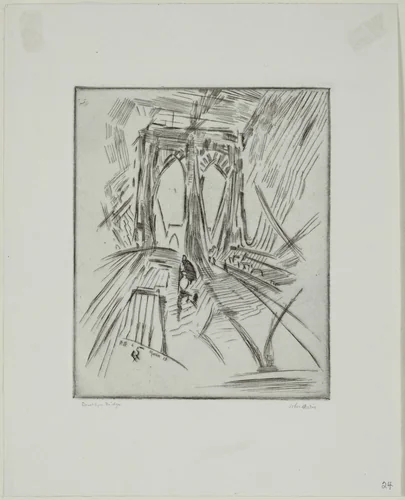
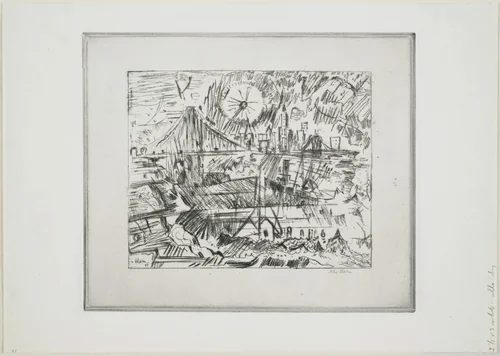
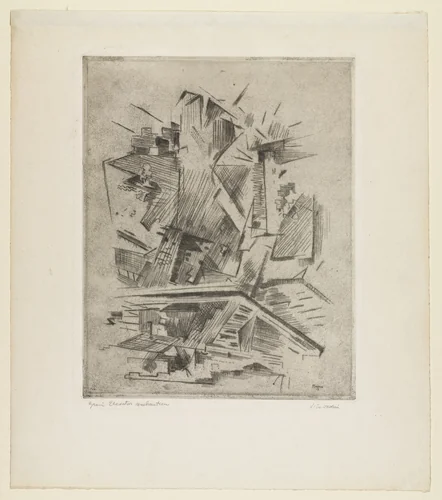
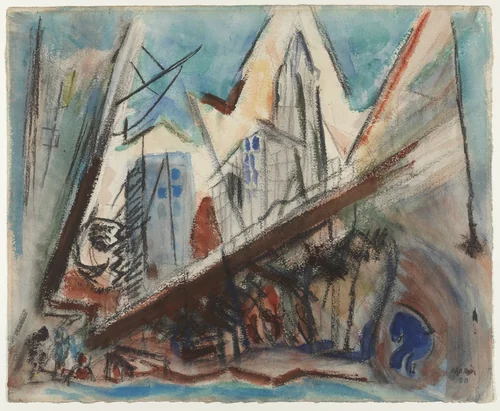
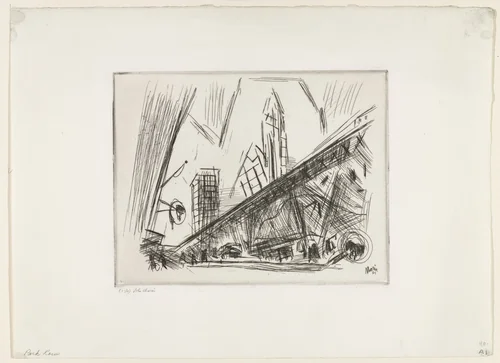
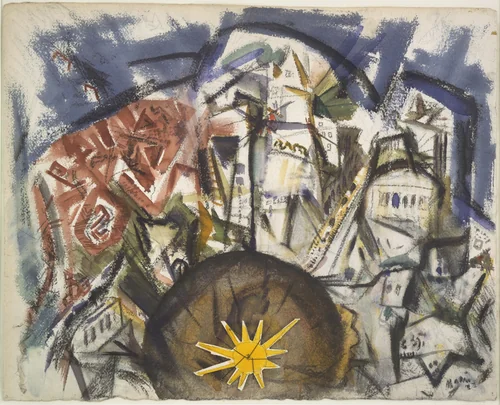
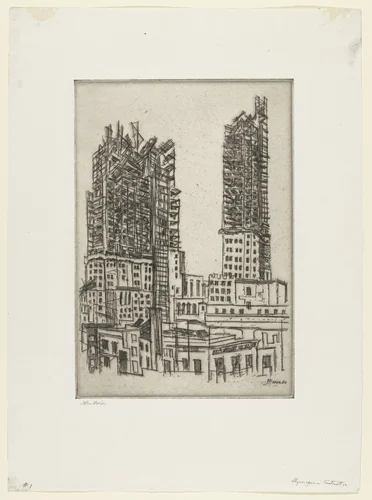
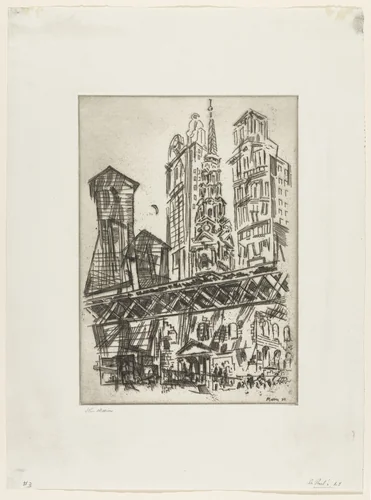
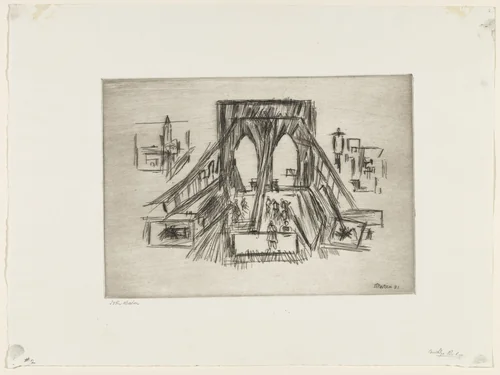
Upon returning to the United States, Marin pivoted his focus to the dynamic energy of the American metropolis and the rugged, unconstrained power of the American landscape. The Brooklyn Bridge became his enduring obsession, a structure he explored repeatedly through both graphic media and painting. Prints and drawings, including his stark and powerful rendition of Brooklyn Bridge and the unique texture of Brooklyn Bridge (Mosaic), demonstrate his move toward fracturing and tilting the visual plane, conveying the noise, vibration, and vertical thrust of the modern city. He treated the steel girders and suspension cables not as fixed infrastructure, but as living, vibrating lines of force.
Marin’s dedication to this dynamic abstraction established him as a cornerstone of the movement that would lead to Abstract Expressionism. Unlike many peers fixated on the weight of oil, Marin utilized the speed and transparency of watercolor to create compositions that felt immediately kinetic—an intellectual rigor concealed beneath an apparent spontaneity. His innovative approach secured his place in prestigious institutions; his works are core holdings in major collections, including the Museum of Modern Art. The accessibility of these early works as John Marin prints and drawings, often available as downloadable artwork through the public domain, allows contemporary audiences to appreciate the foundational role he played in pushing American art toward the twentieth century. He remains celebrated not just for his museum-quality output, but for challenging the very limitations of the paper surface.
Source: Wikipedia · CC BY-SA 4.0