John Mackie Falconer
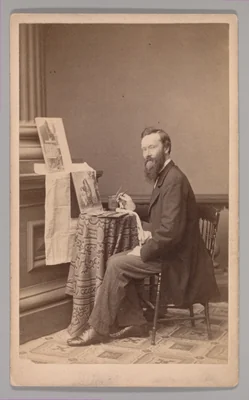
John Mackie Falconer (1820-1903) holds a secure place among the most rigorous and prolific transatlantic draftsmen of the 19th century. Born in Edinburgh, Scotland, in 1820, he emigrated to the United States in 1836, bringing a refined European sensibility, honed in etching and watercolor, to the rapidly developing American visual landscape. Active for over four decades, his technical skill and astute topographical eye documented crucial American and Canadian landmarks, ensuring his work is preserved today in institutional collections, including the Metropolitan Museum of Art and the National Gallery of Art.
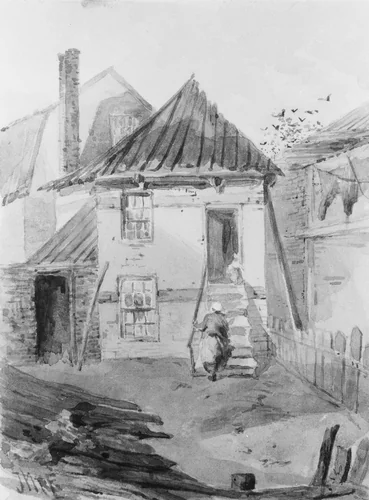
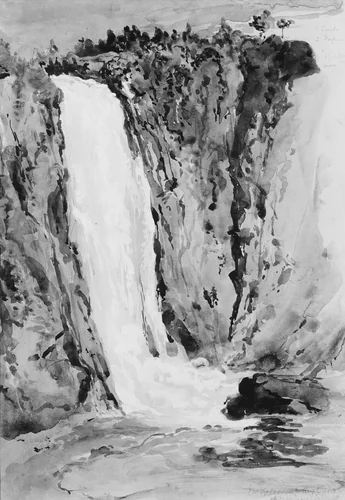
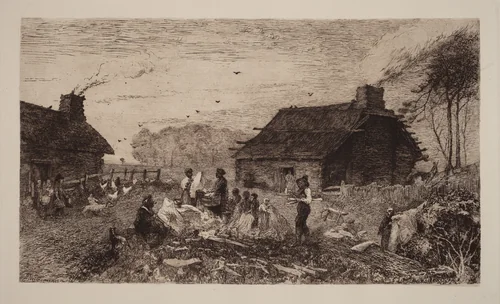
Falconer specialized in the demanding medium of etching, leveraging its capacity for precise detail and rapid reproduction, though he was equally adept with oil painting and delicate watercolors. His subjects spanned military history, natural wonders, and the expansion of American infrastructure. This breadth is evident in surviving works, which range from the historical documentation of structures like Barracks at Fort Pitt (preserved within the important Cropsey Album) to the dramatic natural scenery captured in Montmorency Falls, Canada.
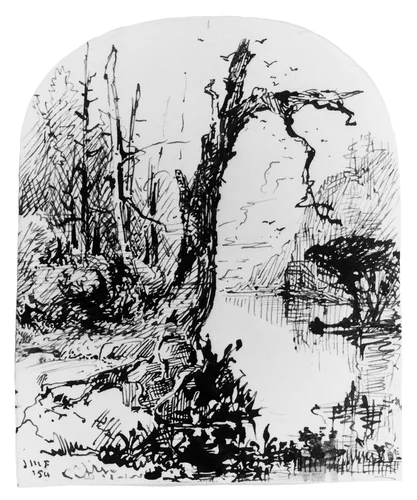
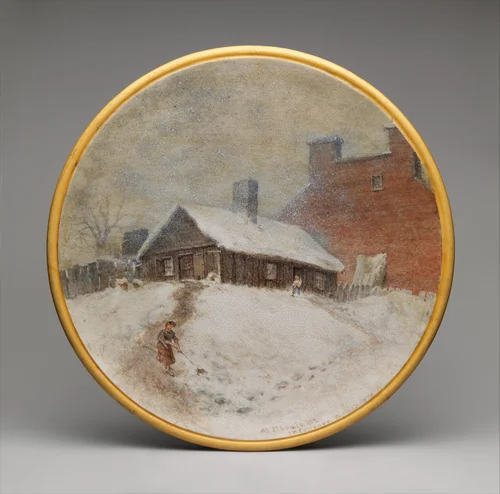
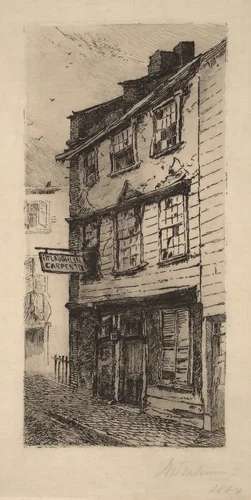
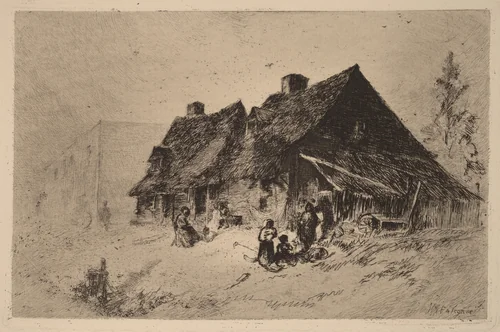
His dedication to meticulous rendering made John Mackie Falconer prints function not only as finely executed aesthetic objects but as valuable historical records of vanishing architectural forms and specific geographic locations. What subtly distinguishes Falconer’s overall practice is his dual interest in the sweeping picturesque and the highly particular. He was capable of executing atmospheric Lake Scene with Trees, yet maintained an uncanny interest in architectural specificity, exemplified by detailed urban studies such as 78 Cross Street, Boston, Massachusetts. It is as if he believed the most expansive natural landscape and the exact coordinates of a specific dwelling held equal weight for historical posterity.
Falconer’s enduring commitment to detail ensured that a substantial volume of his work survives. Today, many of these preparatory studies and final works are available in the public domain. This accessibility allows contemporary audiences to examine his nineteenth-century vision through museum-quality high-quality prints and downloadable artwork that vividly capture the visual texture of the era, affirming Falconer’s historical stature as a master American printmaker.
Source: Wikipedia · CC BY-SA 4.0