John Lewis Krimmel
John Lewis Krimmel (1786-1821) holds a singular and crucial place in American art history as the nation's progenitor of sustained genre painting, a distinction that earned him the moniker, "the American Hogarth." Born in the Holy Roman Empire, Krimmel immigrated to Philadelphia in 1809, immediately integrating himself into the dynamic cultural landscape and quickly becoming a member of the influential Pennsylvania Academy of the Fine Arts.
While his early output reflected traditional influences, absorbing the grand manner history painting popularized by Benjamin West and adopting the compositional structure of European social observers like Scotland’s David Wilkie and England’s famed William Hogarth, Krimmel soon pivoted. He abandoned the neoclassical aspirations dominating the establishment, choosing instead to focus his meticulous attention on the bustling, unpredictable reality of contemporary Philadelphia life.
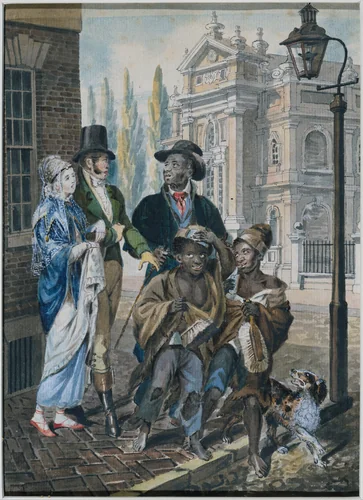
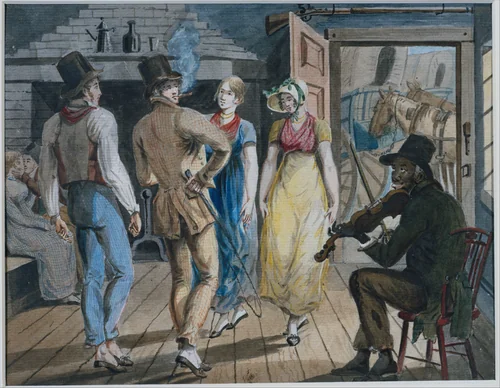
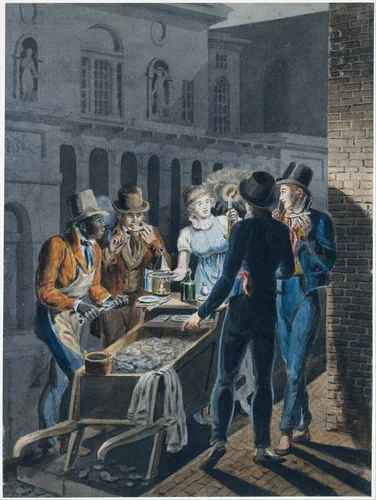
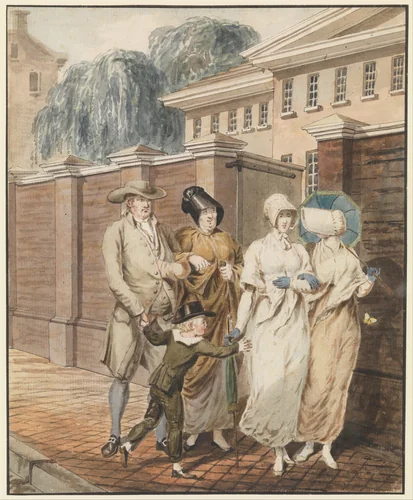
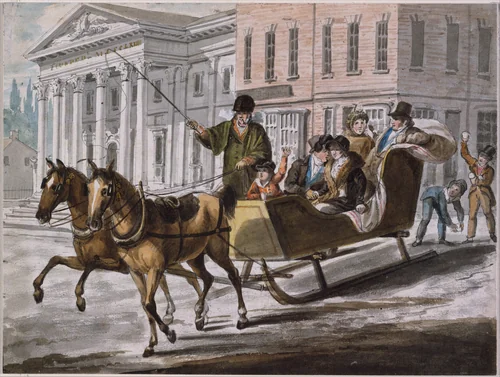
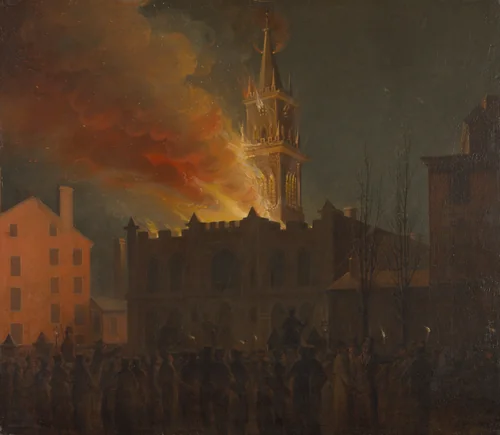
Krimmel became known for his tour de force depictions of everyday existence, capturing the dynamic interactions between various strata of society with sharp detail and often humorous insight. Works like Merrymaking at a Wayside Inn and Worldly Folk Questioning Chimney Sweeps and Their Master before Christ Church, Philadelphia reveal a painter intensely focused on narrative complexity, documenting street theater, social hierarchy, and boisterous public gatherings. These John Lewis Krimmel paintings offer unique visual documentation of early American urban culture in a period where such subjects were largely ignored by fine artists.
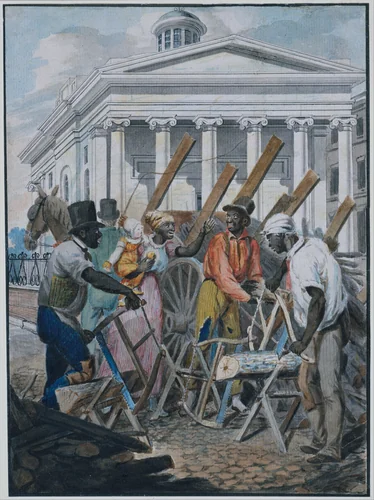
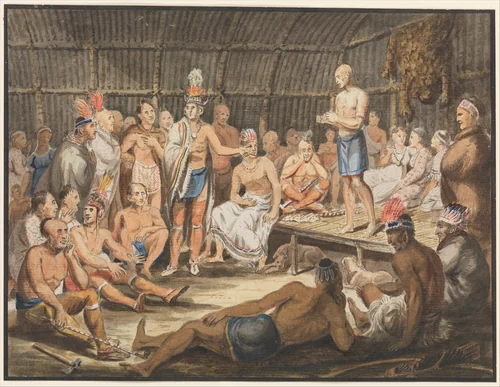
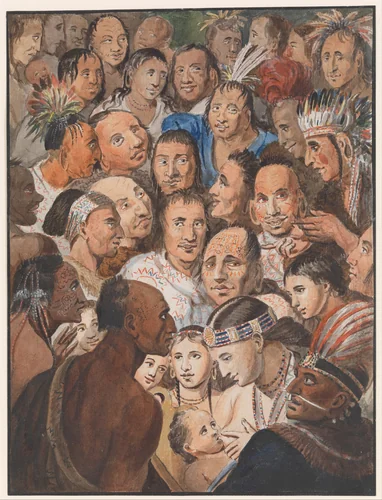
His chosen subjects were often challenging or unusual for the period, demonstrating a commitment to documenting the full spectrum of the new republic. For instance, the canvas Black Sawyers Working in front of the Bank of Pennsylvania, Philadelphia provides a rare, unvarnished glimpse into the laboring lives of the city’s African American population. Equally important is his depiction of Exhibition of Indian Tribal Ceremonies at the Olympic Theater, Philadelphia, an unsettling record of the era’s fascination with performative displays of indigenous culture. Krimmel’s observational ability was so fine-tuned that his oeuvre often functioned less as idealized fine art and more as proto-photojournalism, a subtle, necessary corrective to the staid portraiture that dominated the era. These museum-quality works, held in major collections including the Metropolitan Museum of Art and the Art Institute of Chicago, remain crucial visual records; many are now in the public domain, available as downloadable artwork for those seeking high-quality prints.
Source: Wikipedia · CC BY-SA 4.0