John K. Hillers
John Karl Hillers was a pivotal American government photographer whose extensive documentation of the Western United States in the late nineteenth century provided foundational visual material for geological, ethnological, and artistic studies. Active primarily between 1871 and 1889, Hillers secured his reputation through rigorous fieldwork, often contributing to ambitious scientific expeditions, including the crucial U.S. Topographical and Geological Survey of the Colorado River of the West. His output was instrumental in bridging the gap between functional scientific record and compelling artistic composition.
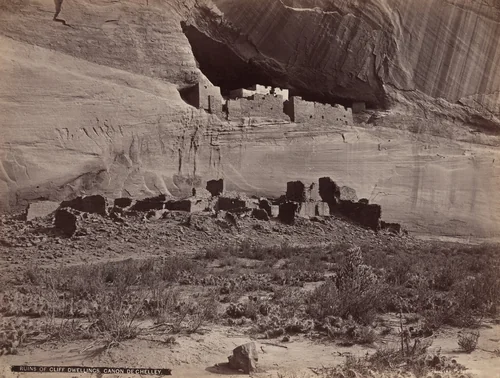
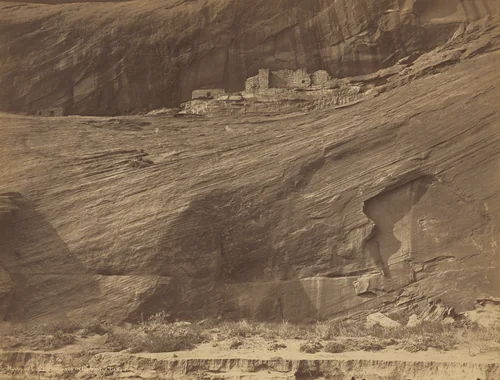
Working under the intense conditions of late-nineteenth century exploration, Hillers captured vast, complex landscapes alongside intimate portraits of indigenous peoples. His compositions, such as the haunting Ruins of Cliff Dwellings, Canyon de Chelly, demonstrate a profound understanding of monumental form and the effects of light on ancient architecture. While created primarily for official reports, the technical clarity and compositional strength of John K. Hillers prints quickly established them as museum-quality artifacts.
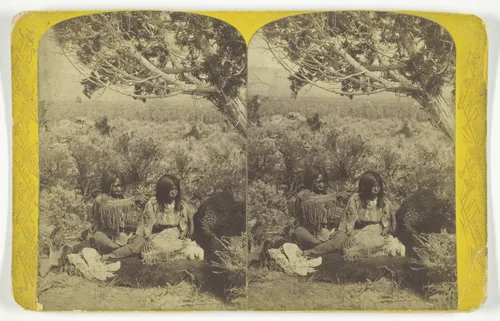
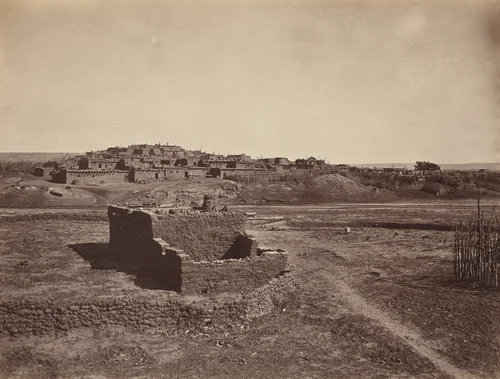
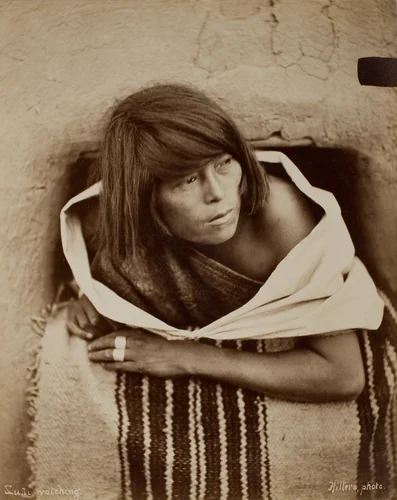
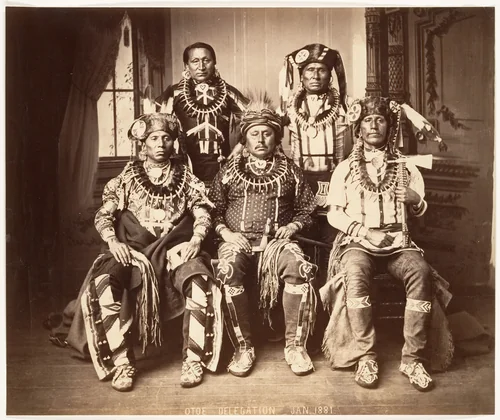
Hillers excelled particularly in ethnographic portraiture, documenting cultures that were rapidly changing due to Western expansion. Works like the series of images from Zuni Pueblo or the focused gaze of Zuni, Watching transcend simple record-keeping, offering empathetic views of individuals. Occasionally, Hillers captured moments of unexpected intimacy, such as the image titled Utah Ute Indian and Lady "Courting" in N.E. Utah. Such titles, surviving alongside the photographs, provide a wry, understated observation on the reality of documenting human interaction amidst the rigid structures of government surveys.
His systematic approach to visual documentation proved invaluable for future generations of historians and artists. Today, original examples of his work reside in prestigious institutions including the Art Institute of Chicago, the National Gallery of Art, and the Metropolitan Museum of Art. Because of their historical and artistic significance, many of these high-quality prints are now in the public domain, securing Hillers’ legacy as one of the essential early chroniclers of the American West.
Source: Wikipedia · CC BY-SA 4.0