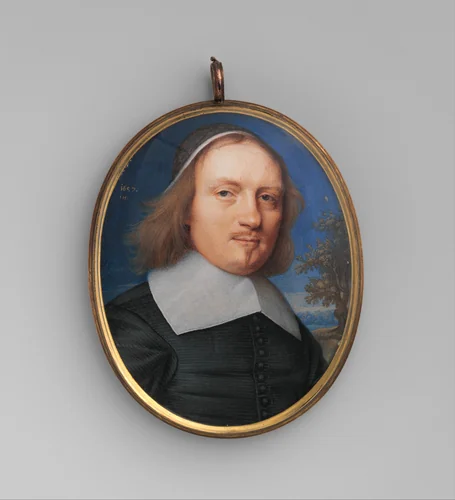
John Hoskins
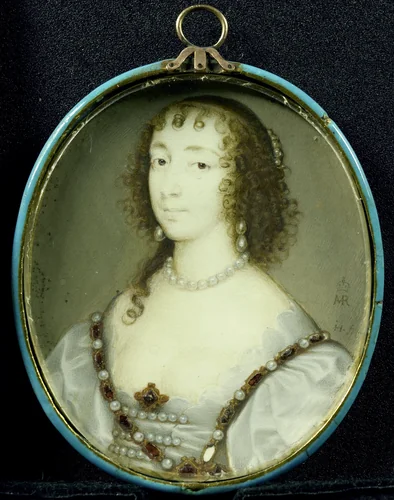
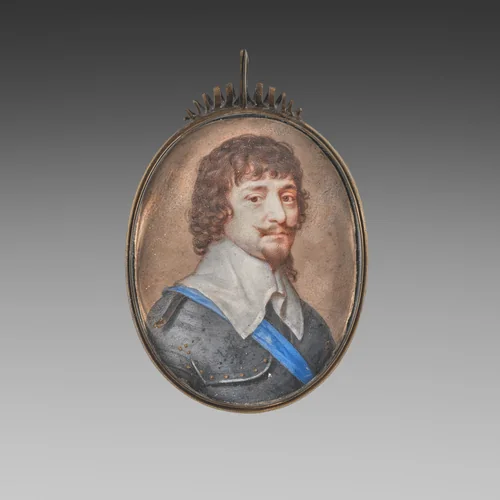
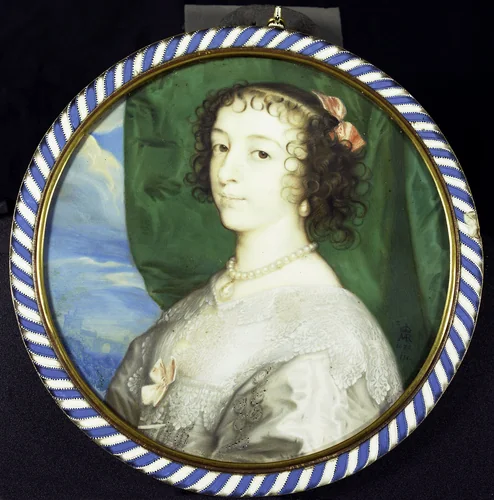
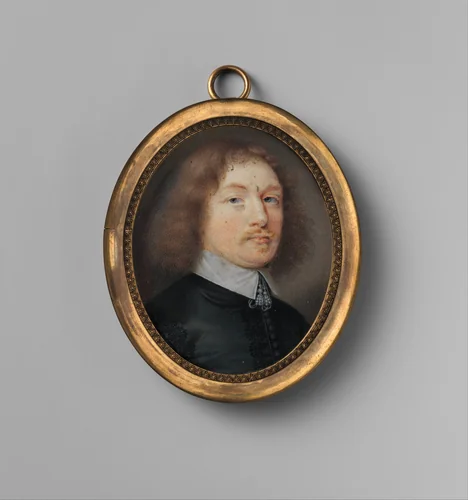
John Hoskins (active 1610-1657) stands as one of the most significant English miniature painters of the mid-17th century, providing a detailed visual record of the Caroline court and its subsequent aristocratic diaspora. Primarily focused on the production of intimate, sophisticated likenesses, Hoskins maintained a prolific career that bridged the earlier, highly decorative styles of Nicholas Hilliard with the international baroque influences introduced by figures like Anthony van Dyck.
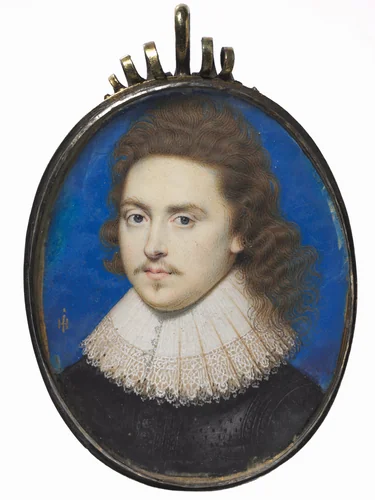
Working across nearly five decades, Hoskins established himself as the leading miniaturist in London. His technique involved a masterful handling of pigment on vellum, creating a luminous finish that emphasized the luxurious textures and delicate lace of his sitters’ clothing. He subtly moved away from the linear precision favored by previous generations, adopting a softer, more painterly modeling that lent his subjects a refined three-dimensionality.
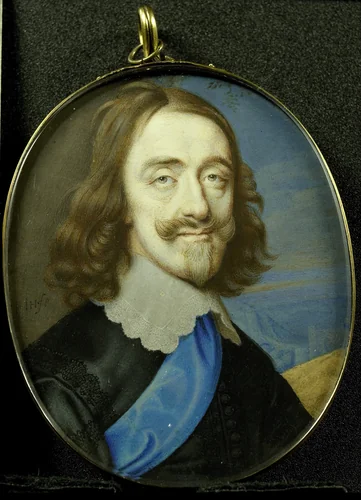
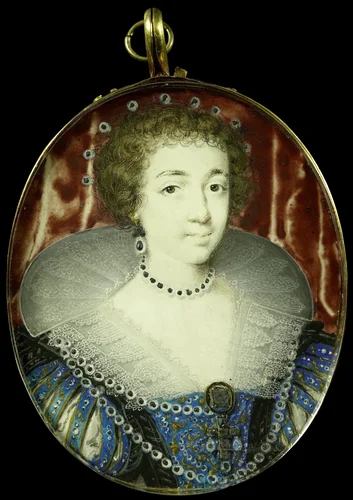
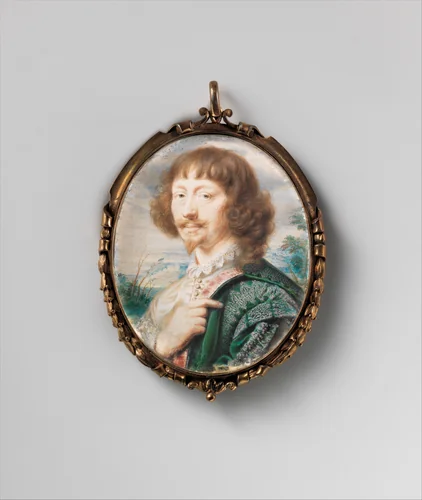
A crucial body of his œuvre is comprised of portraits of the Stuart monarchy and their inner circle. Hoskins produced multiple, authoritative images of King Charles I and his consort, Henriëtte Maria van Frankrijk, documenting the couple's shift toward increasingly elegant and formal continental fashions. Other notable commissions include portraits of key courtiers, such as the detailed depiction of Endymion Porter (a prominent art collector and royal advisor), whose likenesses affirm Hoskins’s exceptional skill in capturing aristocratic gravitas within the constraints of miniature scale.
The importance of Hoskins’s work is attested by its consistent presence in world-class repositories, including the Rijksmuseum, the Metropolitan Museum of Art, and the Cleveland Museum of Art. His enduring commitment to professional consistency, which saw him maintain a high output throughout the turbulent years leading up to and during the English Civil War, speaks to an artist whose focus remained rigorously fixed on the execution of museum-quality commissions, regardless of political instability. These foundational John Hoskins paintings are frequently utilized for educational purposes, and many of the original likenesses are now considered downloadable artwork residing securely in the public domain, allowing access to high-quality prints of his essential contributions to English art history.