John Gregory Crace
John Gregory Crace stands as a distinguished figure in the history of British and Commonwealth decorative arts, specializing in the opulent interior architectural schemes that defined high-status commissions of the early nineteenth century. Though his active period is narrowly documented around 1825, the impact and sheer complexity of his surviving designs, many now preserved as museum-quality works within institutions such as the Metropolitan Museum of Art, confirm his position among the era's leading ornamentalists.
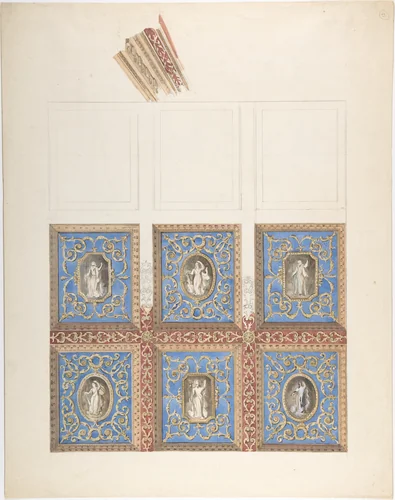
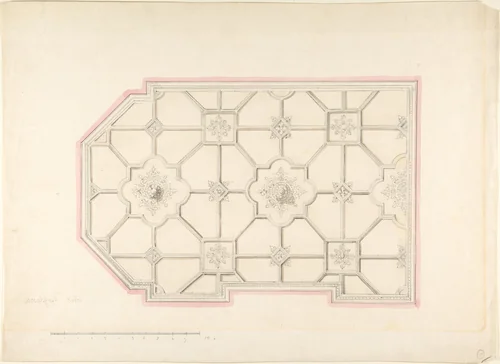
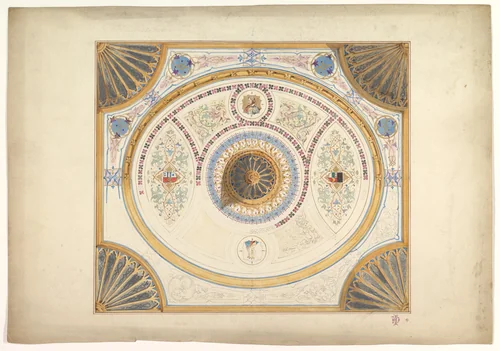
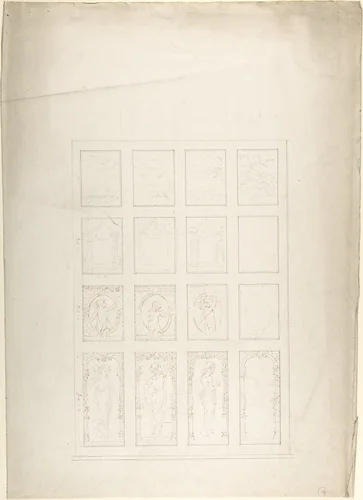
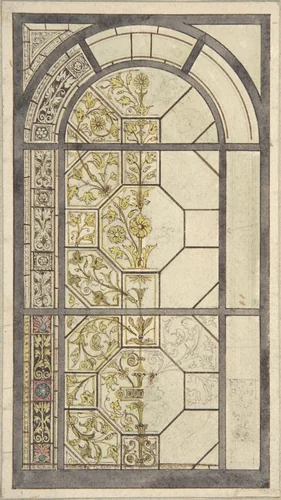
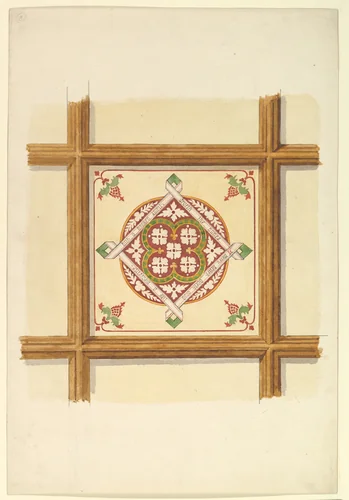
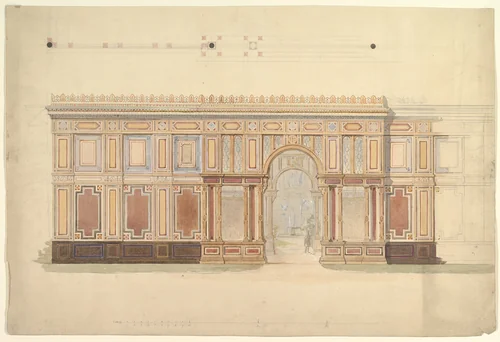
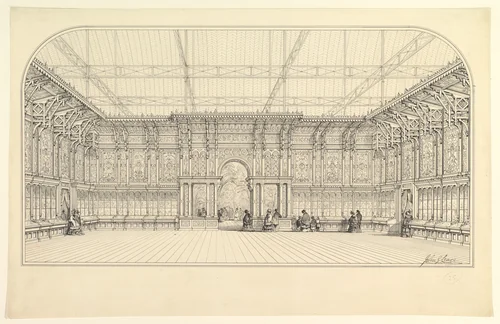
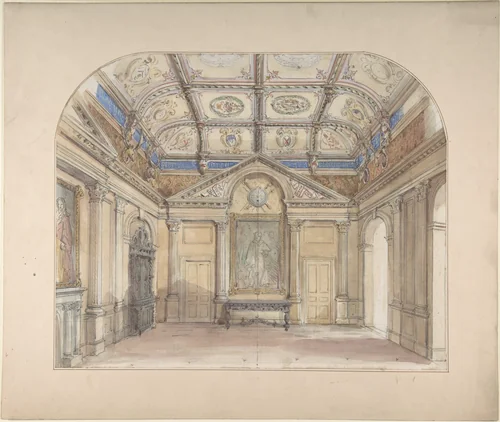
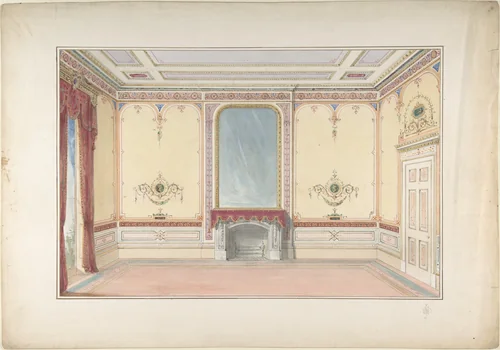
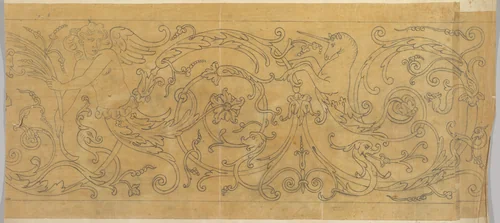
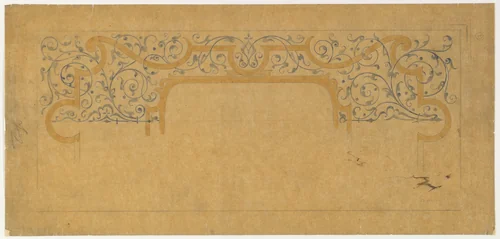
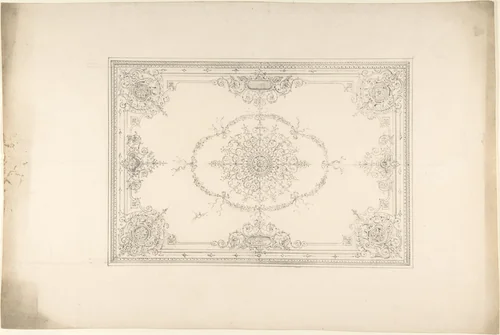
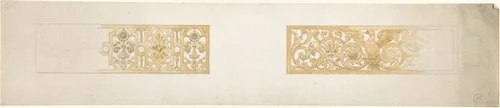
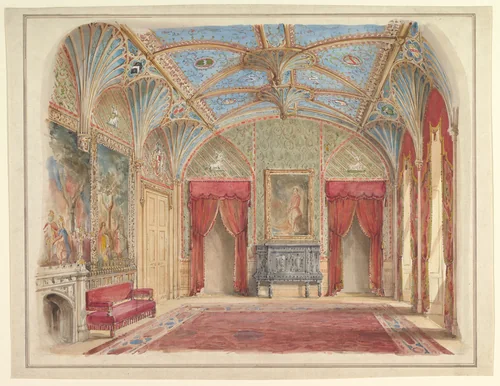
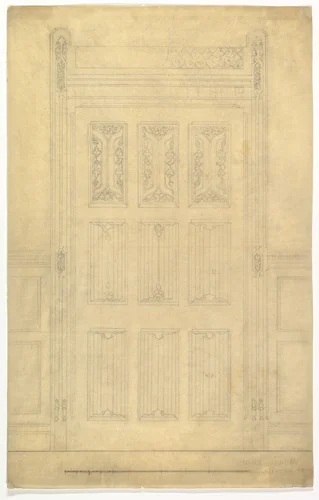
Crace’s expertise lay in the synthesis of structural design and surface treatment, often merging neoclassical rigor with emerging Gothic Revival sensibilities. His preparatory drawings served as essential blueprints for craftsmen, detailing complex polychromy, relief carving, and paneling. Key examples include the technical virtuosity displayed in the Design for Ceiling with Two Portraits and Fan Supports at Corners, and the grand scale envisioned in the Carved and Painted Ceiling with Six Figural Medallions, for Cleish Castle. These renderings reveal a masterful understanding of perspective and scale, essential for ensuring that decoration enhanced, rather than overwhelmed, the architectural space.
The surviving corpus of Crace’s production, including 14 highly detailed drawings and a rare print, provides invaluable insight into the professional practices of high-end designers during the Georgian era. Even a seemingly minor document, such as his carefully rendered Business Card, speaks volumes about the formality and expectation of commercial presentation at the time. Scholars and enthusiasts today benefit from the availability of these rare objects, ensuring that high-quality prints and related materials are frequently accessible through the public domain collections where his work resides.
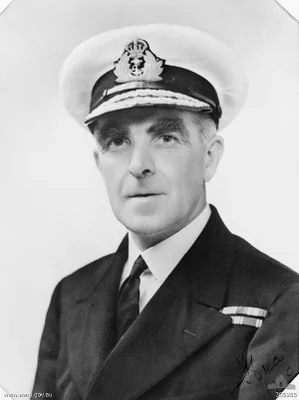
It is through these delicate drawings and architectural plans that we primarily understand Crace’s artistic career. Yet, his identity carries a fascinating and unexpected biographical dimension. Later records associated with the name John Gregory Crace indicate a radical departure from the drafting table: he eventually rose to prominence as a Vice-Admiral in the Royal Navy, commanding Task Force 44 during the pivotal 1942 Battle of the Coral Sea. This highly unusual duality—a practitioner of subtle decorative grace who also oversaw a major force in modern naval combat—lends a truly unique dimension to the legacy of John Gregory Crace prints and drawings.
Source: Wikipedia · CC BY-SA 4.0