John George Brown
John George Brown (1831-1897) occupied a unique and highly visible position in late nineteenth-century transatlantic art, operating successfully as both a British citizen and a defining American painter of urban life. Active primarily in New York, Brown dedicated his expansive career to the genre scene, capturing the vitality, occasional hardships, and everyday moments of modern industrialized society. His works, which include major oil compositions and widely circulated published illustrations, ensured his significant cultural presence during his lifetime.
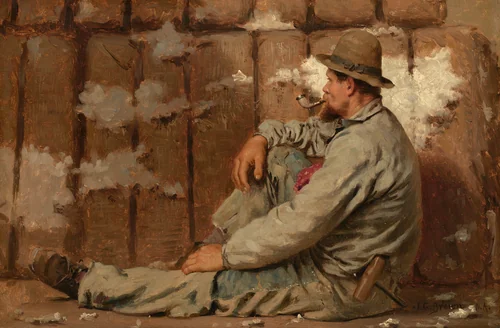
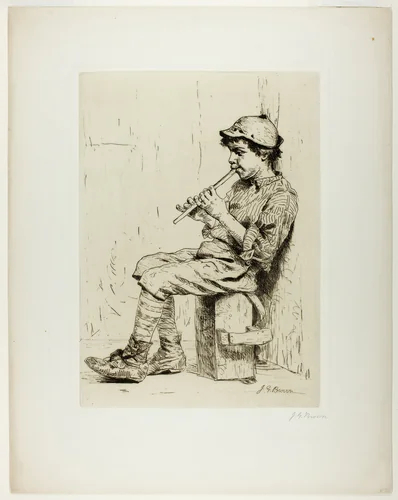
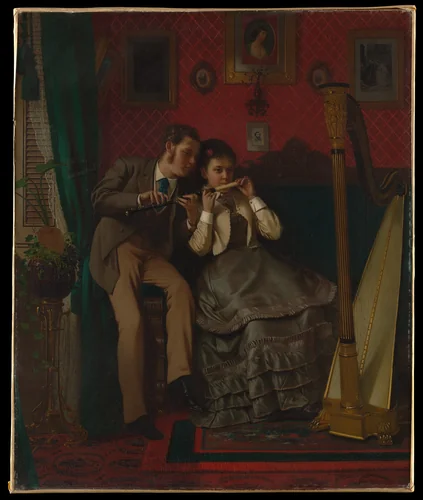
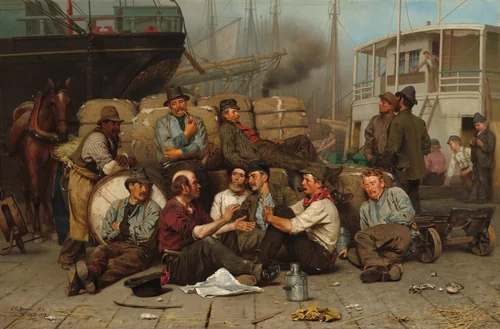
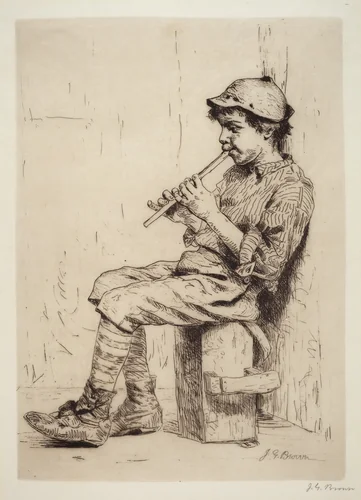
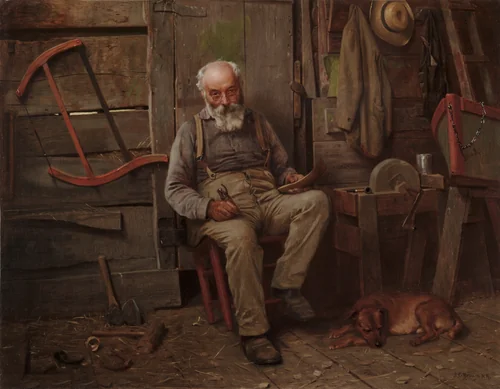
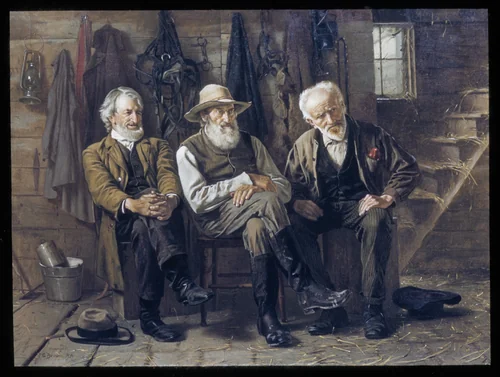
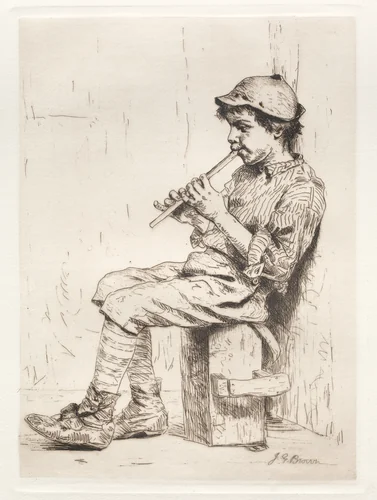
Brown mastered the depiction of the quotidian, focusing primarily on figures engaged in momentary repose, conversation, or simple, honest labor. Pieces such as A Longshoreman and the more intimate Boy Playing a Flute exemplify his facility for academic figure drawing and adept use of atmospheric, interior lighting. While his style often featured sentimental elements, particularly in his popular depictions of street urchins and newsboys, Brown was technically disciplined. He approached his subjects, whether the tired laborers in The Longshoremen's Noon or the domestic study in The Music Lesson, with an unwavering eye for narrative detail. His popular success, which was considerable, sometimes positioned him in contrast to the emerging currents of modernism, a critical indifference he seemed to endure with comfortable prosperity.
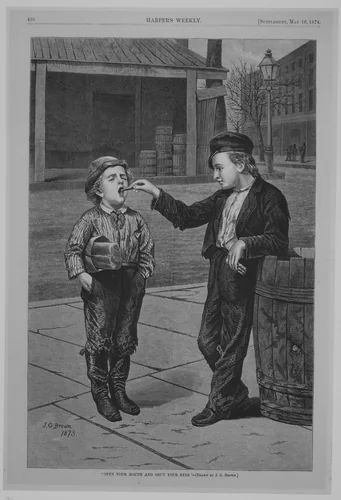
Brown’s reputation extended far beyond the traditional gallery walls. His frequent work in illustration, such as the widely published print Open Your Mouth and Shut Your Eyes (which appeared in Harper's Weekly), circulated his signature imagery to the broader American public. This duality of formal painting and mass media dissemination solidified his artistic footprint. Today, Brown’s legacy is preserved in major institutions across the country. Institutions including the Art Institute of Chicago, the National Gallery of Art, and the Cleveland Museum of Art maintain key examples of his output, affirming his standing as a major exponent of narrative American painting. Furthermore, many John George Brown paintings and prints are now part of the public domain, making high-quality prints and downloadable artwork readily available for contemporary study and appreciation.
Source: Wikipedia · CC BY-SA 4.0