John Frederick Peto
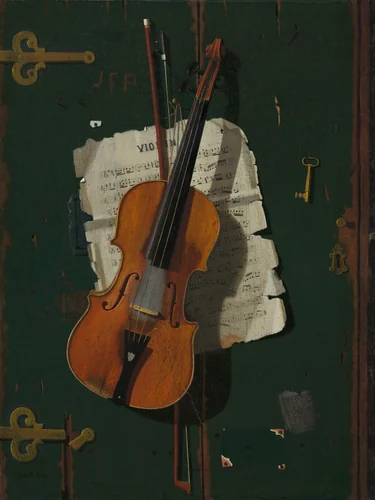
John Frederick Peto (1854-1907) was a master American painter whose short but impactful career focused exclusively on trompe-l'œil, the demanding technique of illusionism designed to deceive the viewer into perceiving three dimensions. Active primarily between 1880 and 1895, Peto operated in a nuanced stylistic space that ensured his distinct contribution to American still life painting, even though his importance was largely overlooked for several decades following his death.
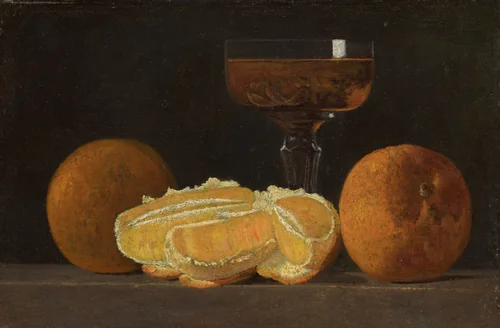
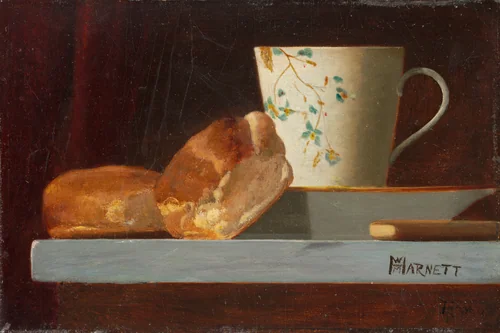
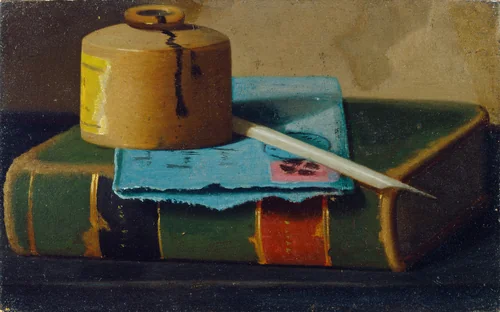
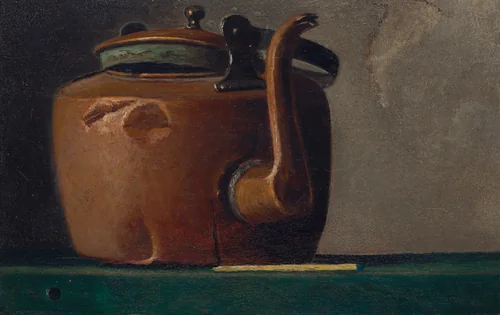
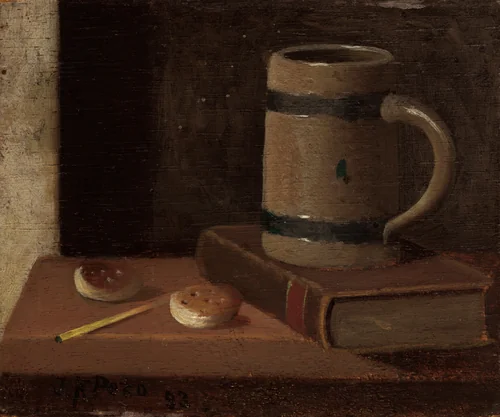
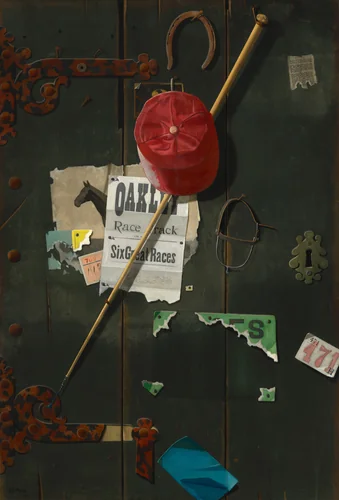
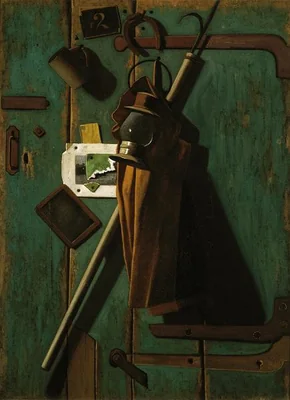
Peto’s subject matter differentiated him significantly from contemporaries like William Harnett. While the latter often depicted crisp, lavish arrangements of objects representing wealth or status, Peto focused on the overlooked, the discarded, and the well-worn accoutrements of daily existence. His canvasses, such as Still Life with Oranges and Goblet of Wine or the domestically focused An English Breakfast, frequently depict items bearing the marks of use and decay: tattered books, faded photographs, or letters loosely stacked and sealed. Peto was not merely reproducing reality; he was chronicling the passage of time.
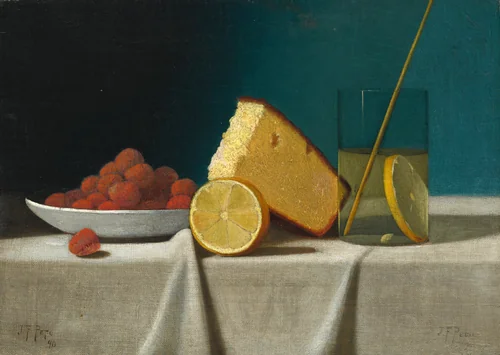
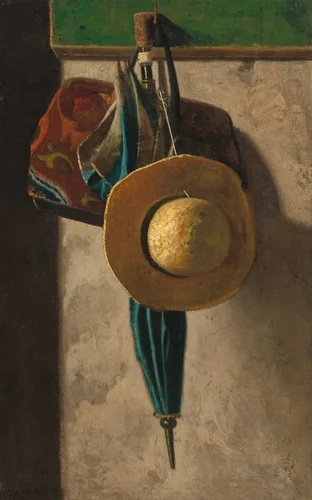
Works such as Still Life with Cake, Lemon, Strawberries, and Glass and Straw Hat, Bag, and Umbrella eschew grandiosity in favor of intimate, often melancholic arrangements. He preferred a shallow compositional depth, sometimes exaggerating the flatness of the picture plane only to pierce it with the stark illusion of palpable texture—a cracked surface or a frayed ribbon. This preference for the prosaic imbues the John Frederick Peto paintings with a quiet, distinctly American strain of realism. He possessed a unique talent for transforming visual debris into captivating meditations on memory and absence.
Peto remains historically defined by his eventual, comprehensive rediscovery in the mid-twentieth century. Previously, his work was frequently misattributed or entirely forgotten, often confused with that of Harnett. Today, thanks to critical reassessment, his oeuvre is recognized as essential to understanding post-Civil War American realism. Peto’s commitment to texture and shadow secures his legacy as an innovator whose influence extends beyond illusionism. His surviving works, documented at ten paintings in this database, are held in prestigious venues, including the National Gallery of Art. Many of his compositions are now in the public domain, making high-quality prints widely available, ensuring that his subtly observed reality remains accessible to the global audience.
Source: Wikipedia · CC BY-SA 4.0