John F. Peto
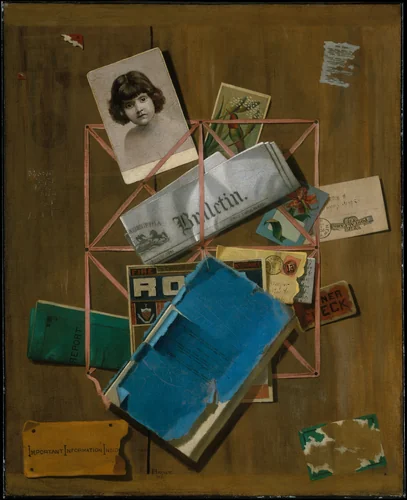
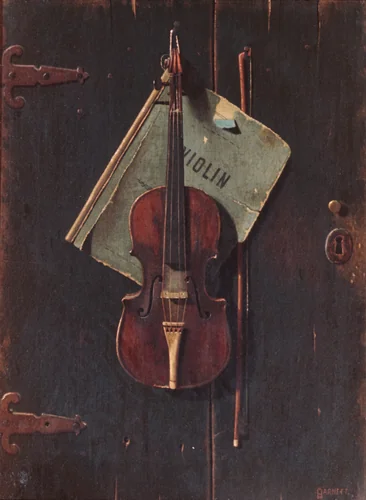
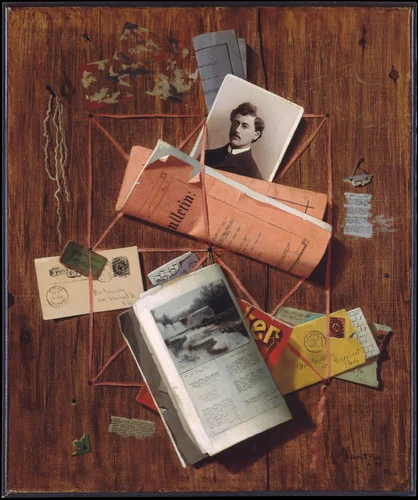
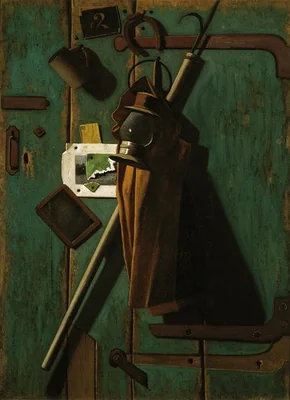
John Frederick Peto stands as a pivotal figure in late 19th and early 20th century American painting, specializing almost exclusively in the highly skilled optical illusion known as trompe-l’œil (to deceive the eye). Active primarily between 1878 and 1906, Peto dedicated his practice to rendering flat surfaces, typically simple wooden boards, card racks, and doors, with startling dimensional accuracy.
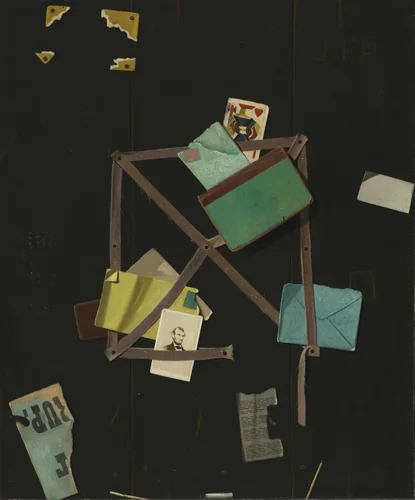
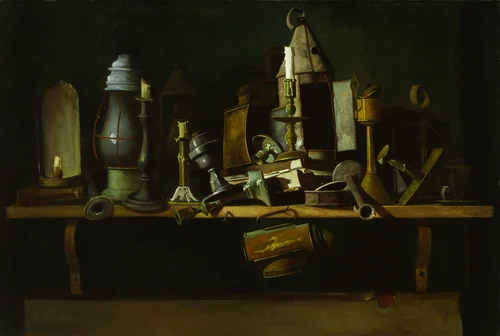
Unlike some contemporaries who pursued grander still life subjects, Peto focused on the overlooked detritus of everyday life: tattered letters, tarnished instruments, and common office paraphernalia. In works such as Card Rack with a Jack of Hearts and Old Souvenirs, the subtle wear, accumulated dust, and intentional imperfections are rendered with painstaking, almost obsessive precision. This commitment to the quiet decay of objects, rather than their pristine form, lends his work a distinct, reflective depth that moves beyond mere technical virtuosity. His canvases often suggest narrative through accumulation, inviting the viewer to contemplate the passage of time through forgotten remnants. A particular innovation lies in his treatment of light; in pieces like Lights of Other Days, Peto manipulates illumination to maximize the illusory effect, making the wooden texture and shadow play utterly convincing.
Peto’s place in art history is defined by both brilliance and obscurity. Despite achieving professional success during his lifetime, his specific artistic contributions were largely obscured for decades following his death. His output was often critically conflated with, or entirely overshadowed by, that of his Philadelphia associate and fellow trompe-l’œil painter, William Harnett. It was not until the mid-20th century that scholars undertook the rigorous process of attributing and distinguishing Peto's oeuvre, resulting in his overdue recognition as an independent and deeply original American master.
Today, Peto’s secure place in the American canon is evidenced by his inclusion in prestigious institutions, including the Metropolitan Museum of Art, the Art Institute of Chicago, and the Cleveland Museum of Art. His John F. Peto paintings, once forgotten, now represent the sophisticated apogee of late American still life. Fortunately for enthusiasts worldwide, many of these museum-quality compositions are in the public domain, meaning high-quality prints and downloadable artwork are readily accessible for study and appreciation.
Source: Wikipedia · CC BY-SA 4.0